

Personalized sports therapy is a customised rehabilitation approach that delivers faster recovery and better performance outcomes by treating each person's unique body, goals, and injury profile. The industry term for this is individualized rehabilitation, and it sits at the heart of what separates genuinely effective sports care from generic, one-size-fits-all treatment. If you are dealing with a sports injury or chronic pain, the benefits of personalized sports therapy go well beyond simply reducing discomfort. They include faster healing, lower re-injury risk, and real improvements in how your body moves and performs. Sportsinjurydublin has built its entire approach around this principle.
1. What makes personalized sports therapy more effective than standard methods?
Standard physical therapy tends to focus on managing symptoms. Personalized sports therapy shifts the aim to root cause treatment and performance, which is a fundamentally different goal. That difference shows up in outcomes.
Research from 2021 and 2024 confirms that customised rehab improves recovery outcomes and decreases re-injury rates compared to generic protocols. Faster return-to-play and significantly better pain reduction are consistent findings. That is not a small distinction when you are trying to get back on the pitch.
The process starts with a proper assessment. Therapists evaluate:
- Movement mechanics and gait patterns
- Muscle strength and imbalances
- Sport-specific demands and personal goals
- Pain levels and functional capacity
From there, the plan evolves. Dynamic adjustments based on ongoing feedback prevent both over-treatment and under-treatment during recovery. You are not following a fixed six-week protocol. You are following a plan that responds to you.
Pro Tip: Ask your therapist to explain what they are measuring and why at each session. Understanding your own progress data keeps you engaged and helps the plan stay accurate.
2. Key recovery benefits you can actually feel
The advantages of tailored sports therapy become tangible quickly. People report improved flexibility, range of motion, and recovery speed within 7–14 days of consistent personalised therapy. Two weeks is not a long time to notice a real difference.
Here is what that looks like in practice:
- Reduced pain and swelling through targeted manual therapy and load management
- Improved range of motion via progressive mobility work matched to your current capacity
- Faster tissue healing because exercises are calibrated to the right intensity at the right time
- Lower re-injury risk through sport-specific rehab approaches that address underlying weaknesses
- Better sleep and energy as pain decreases and movement improves
Tailored load management is particularly important here. Too much too soon re-injures tissue. Too little too late delays recovery. A personalised plan threads that needle precisely because it is built around your body's actual response, not an average patient's expected response.
Evidence from 2022 shows that sport-specific rehab reduces re-injury rates and extends athletic career longevity. That is a compelling reason to invest in a proper plan rather than hoping a generic programme does the job.
3. How personalized therapy improves athletic performance beyond recovery
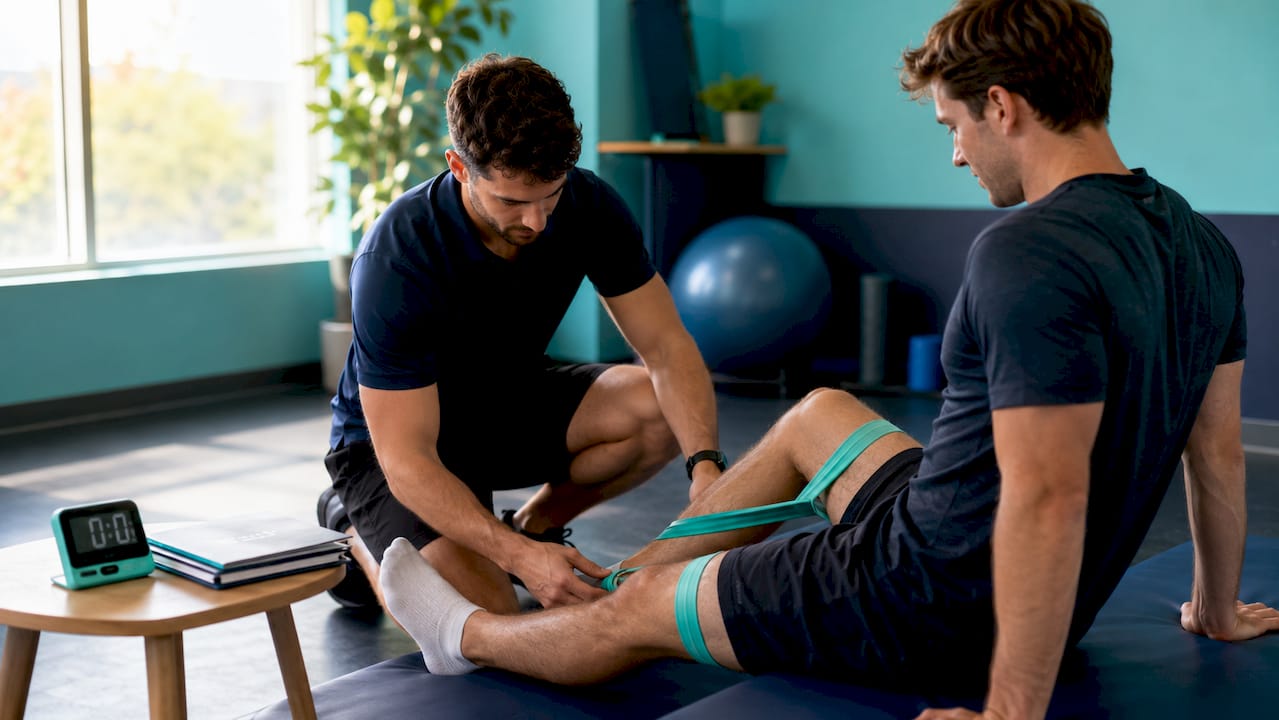
Recovery and performance are not separate goals. Personalised rehabilitation bridges both by including sport-specific movements that prepare the athlete for real demands, not just pain-free walking.
The performance benefits of individualized sports performance therapy include:
- Biomechanical correction: identifying and fixing movement faults that cause injury in the first place
- Strength and balance improvements: targeted exercises that rebuild capacity where it is actually lacking
- Sport-specific functional training: movements that replicate the demands of your sport, not generic gym exercises
- Injury prevention education: understanding your own risk factors so you can manage them long-term
Identifying movement imbalances through personalised therapy prevents future injuries by correcting underlying dysfunctions rather than masking them. This is the bit that generic protocols almost always miss. They get you out of pain. They do not fix why you got injured in the first place.
Physiotherapists develop tailored progressive exercise programmes that rebuild strength, improve flexibility, and restore sport-specific function. The word "progressive" matters. The programme grows with you rather than staying static.
4. How the personalized therapy process works from assessment to adjustment
The process behind effective customised sports injury recovery follows a clear structure, even if it feels different for every person.
| Stage | What happens |
|---|---|
| Initial assessment | Movement screening, gait analysis, strength testing, and goal setting |
| Plan design | Therapy roadmap built around your specific findings and timeline |
| Active treatment | Manual therapy, targeted exercises, and modalities matched to your needs |
| Progress monitoring | Regular reassessment of pain, mobility, and functional data |
| Dynamic adjustment | Plan modified based on your actual response, not a fixed schedule |
Initial evaluations include movement screening and gait analysis used to tailor recovery plans that evolve over time. This is not a one-off assessment. It informs every decision that follows.
Holistic care plays a bigger role than most people expect. Addressing lifestyle factors like sleep, nutrition, and mental health alongside physical therapy greatly enhances recovery quality and speed. If you are sleeping four hours a night and eating poorly, your tissue simply will not heal at the rate your therapy plan assumes. A good therapist accounts for that.
Pro Tip: Track your sleep and energy levels alongside your pain scores between sessions. Sharing that data with your therapist gives them a much clearer picture of how your recovery is actually progressing.
5. Recovery is not linear, and personalized therapy knows that
Here is something worth saying plainly: injury recovery is rarely linear. You will have good weeks and frustrating weeks. A personalised plan manages those plateaus by making assessment-driven adjustments rather than sticking rigidly to a static protocol.
Generic programmes cannot do this. They are designed for an average patient who does not exist. When you hit a plateau on a generic plan, there is no mechanism to respond. You just keep doing the same exercises and hoping something changes.
Effective recovery plans rely on constant data-informed adjustments, ensuring you do the right work at the right time. That phrase, "the right work at the right time," is the entire argument for personalised therapy in one line.
6. Who benefits most from personalized sports therapy?
The short answer is: more people than you might think. Personalised athletic rehabilitation is not just for professional athletes. It is relevant across a wide range of situations.
You are a strong candidate for tailored therapy if you are dealing with:
- Acute sports injuries such as hamstring strains, ligament sprains, or muscle tears
- Chronic pain conditions including back pain, hip pain, or recurring joint issues
- Post-operative rehabilitation following surgery on a knee, shoulder, or ankle
- Overuse injuries like shin splints or tendinopathy that keep coming back
- Performance plateaus where you are training hard but not improving
Recreational athletes benefit just as much as professionals. The primary advantage of personalised therapy is treating the person and their unique biomechanics rather than just the injury. That principle applies whether you run marathons or play five-a-side on a Thursday evening.
The effectiveness of custom sports therapy also extends to people who are not injured at all. If you have movement restrictions, postural issues, or a history of recurring niggles, a personalised assessment can identify and address those before they become proper injuries. That is sports therapy for injury prevention at its most practical.
Key takeaways
Personalized sports therapy outperforms generic rehabilitation because it treats the individual's unique biomechanics, adapts dynamically to real progress, and addresses both recovery and performance in one integrated plan.
| Point | Details |
|---|---|
| Faster recovery timeline | Tailored programmes produce measurable improvements in flexibility and pain within 7–14 days. |
| Lower re-injury risk | Sport-specific rehab corrects underlying movement faults rather than just managing symptoms. |
| Dynamic plan adjustments | Therapy evolves based on your actual response, preventing plateaus and over-treatment. |
| Holistic care matters | Sleep, nutrition, and mental health are factored in alongside physical treatment for better outcomes. |
| Suitable for all levels | Recreational athletes and professionals alike benefit from individualized rehabilitation approaches. |
Why I think generic rehab is holding people back
I have seen this pattern more times than I can count. Someone picks up an injury, follows a standard protocol they found online or received from a busy clinic, feels "okay" after six weeks, and then re-injures themselves three months later. And they are genuinely baffled. They did everything right, didn't they?
Not quite. They did everything average. And average does not account for the fact that their left hip is weaker than their right, or that their gait shifts under fatigue, or that they have been sleeping terribly since the injury and their recovery is running at half speed. A personalised plan catches all of that. A generic one does not.
What I find genuinely exciting about where sports therapy is heading is the increasing use of movement data and ongoing reassessment to keep plans accurate over time. The future of this field is not a better generic protocol. It is a smarter, more responsive individual one. If you are serious about getting back to full function, or about performing at your best without constantly breaking down, a tailored approach is not a luxury. It is the logical choice.
The sports rehabilitation services at Sportsinjurydublin reflect exactly this philosophy. Worth exploring if you are ready to stop guessing and start recovering properly.
— Mark
Sportsinjurydublin: personalized therapy for real recovery
If you are ready to move beyond generic treatment, Sportsinjurydublin offers a genuinely individualized approach to sports injury recovery and performance. Every client receives a thorough initial assessment covering movement mechanics, strength, and personal goals before a single exercise is prescribed.
From tailored recovery sessions and deep tissue sports massage to advanced options like shockwave and laser therapy, every treatment is selected based on what your body actually needs. The clinic serves everyone from elite athletes to people simply wanting to move without pain. If you are dealing with a sports injury or chronic pain, book an appointment and get a plan built around you.
FAQ
What are the main benefits of personalized sports therapy?
Personalized sports therapy delivers faster recovery, lower re-injury rates, and improved athletic performance by addressing each person's unique biomechanics and goals rather than following a generic protocol.
How quickly does personalized therapy show results?
Most people report measurable improvements in flexibility, range of motion, and pain levels within 7–14 days of consistent, tailored therapy.
Is personalized sports therapy only for professional athletes?
No. Recreational athletes, people with chronic pain, and anyone recovering from surgery or an overuse injury benefit equally from an individualized rehabilitation approach.
How does a personalized therapy plan adapt over time?
Therapists regularly reassess pain levels, mobility, and functional data, then adjust the plan accordingly. This prevents plateaus and ensures you are always doing the right work for your current stage of recovery.
Can personalized sports therapy prevent future injuries?
Yes. By identifying and correcting movement imbalances and biomechanical faults, tailored therapy addresses the underlying causes of injury rather than just treating the symptoms.