
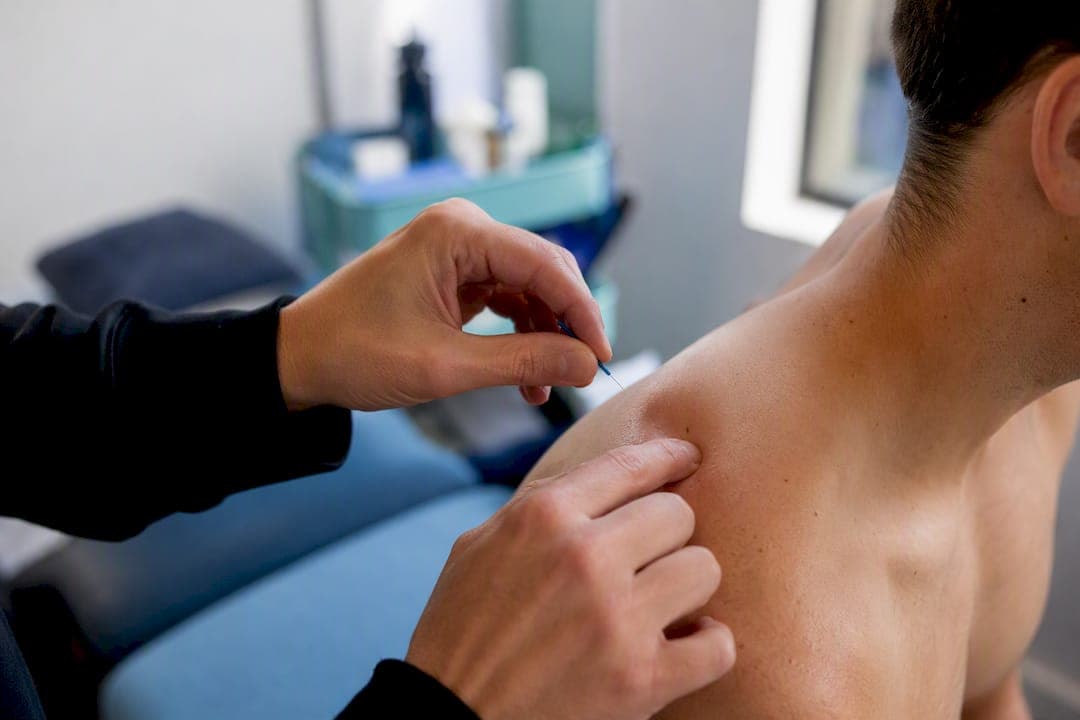
Dry needling for a stiff, aching shoulder does seem to cut pain in the short term, sometimes dramatically, for a lot of people (one trial saw scores drop from 6.30 to 2.40 within a week). But the effect fades unless it's paired with actual rehab work, and results depend heavily on who's holding the needle. Think of it as a really good head start, not the finish line.
TL;DR:
- Short-term pain relief from dry needling is real and can last about a week, especially when targeting specific trigger points by a trained clinician.
- Objective imaging shows that dry needling causes physiological changes, such as increased blood flow and improved shoulder rotation, confirming its direct effects.
- Combining dry needling with structured physiotherapy provides more stable, longer-lasting improvements than needling alone, with measurable gains in pain and mobility.
- Longer-term benefits tend to diminish after three months if dry needling is not integrated into a comprehensive rehabilitation program.
- Proper technique and targeted treatment are crucial, and therapy should focus on movement and strengthening exercises to sustain results over time.
Table of Contents
- What the best trials and reviews say about dry needling shoulder treatment
- How dry needling works on a sore or tight shoulder
- What actually happens during a session (and the risks worth knowing)
- Fitting dry needling into a proper shoulder rehab plan
- How Sportsinjurydublin approaches dry needling for shoulder pain
- The final verdict on dry needling for your shoulder
- Key studies and clinical resources on dry needling
- An editorial take on where the evidence actually points
- Ready to get your shoulder properly assessed?
- Sources
What the best trials and reviews say about dry needling shoulder treatment
Right, let's get into the actual data, because "it works" isn't good enough when there's a needle involved.
The strongest piece of evidence here is a double-blind, sham-controlled trial from 2021, which is about as rigorous as this kind of research gets (neither the patient nor the assessor knew who got the real treatment). Patients with myofascial shoulder pain who received a single session of dry needling saw their pain intensity drop significantly on a standard pain scale, and that benefit held for at least seven days. The number needed to treat was approximately two, indicating a meaningful benefit for about every other person treated. That's a strong signal for a treatment that takes about fifteen minutes.
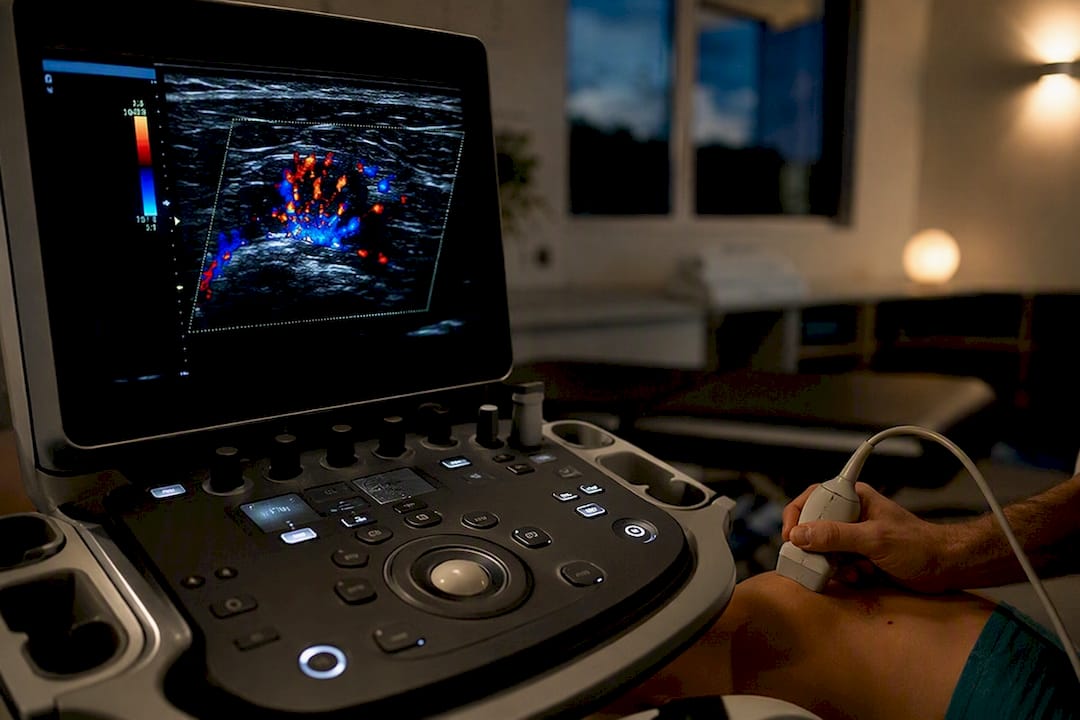
Separately, imaging studies have backed this up with something you can actually see on a screen rather than just a patient's self-reported score. Doppler ultrasound trials found that real dry needling changed blood flow velocity in the infraspinatus muscle and produced immediate gains in shoulder rotation externally and internally compared with sham needling. That's objective, not placebo waffle.
Here's where it gets more honest, though. When researchers look past the first week and compare dry needling added to good physiotherapy against physiotherapy on its own, the picture gets murkier. A well-designed randomised trial found that combining dry needling with individualised physical therapy produced only small immediate post-treatment differences, and those differences weren't clinically meaningful by the three-month mark. In other words, the needle helps you feel better fast, but if your physiotherapy is already solid, it may not add much once the dust settles.
A systematic review focused specifically on subacromial shoulder pain (the "impingement" type most weekend warriors know all too well) pulled the various strands together and found that dry needling combined with conventional physiotherapy produced more stable, effective results than either approach used alone, with measurable improvements across pain scores, range of motion, and function questionnaires like the SPADI.
So what's the honest summary?
- Single sessions produce real, measurable short-term pain relief, often within days.
- Objective imaging confirms physiological changes, not just "feeling better" reporting.
- Longer-term studies show the advantage over physiotherapy alone shrinks, sometimes to nothing, by three months.
- The strongest outcomes across the research pool come from combining needling with structured rehab, not using it in isolation.
Key figures worth remembering: pain reduction of 6.30 to 2.40 within one session, effects lasting roughly a week, and an NNT of about 2.1 for meaningful relief.
How dry needling works on a sore or tight shoulder
Here's the bit that actually explains why sticking a thin needle into a knot in your shoulder does anything at all.
Muscles develop what clinicians call trigger points, small, hyperirritable spots in a taut band of muscle fibre. Some are "active" (they hurt on their own and refer pain elsewhere, like a rotator cuff knot that makes your whole arm ache). Others are "latent" (tender when pressed, silent otherwise). A broad review of trigger-point theory links these points to local ischaemia (reduced blood flow) and irregular acetylcholine activity at the muscle fibre, which is basically a fancy way of saying the muscle gets stuck in a mini spasm cycle it can't switch off.
When a needle hits an active trigger point dead on, you often get a local twitch response, an involuntary flicker of the muscle fibre. Clinicians treat that twitch as a good sign; it suggests the needle found its target. From there, a few things seem to happen:
- Mechanically, the needle disrupts the taut band and may nudge stuck connective tissue back into a more normal state.
- Locally, blood flow tends to increase, which is exactly what the Doppler trials picked up when they measured changed velocity in the infraspinatus after real needling versus sham.
- More broadly, needling appears to trigger endorphin release and modulate pain signals at the spinal cord and brain level, dialling down the volume on the pain signal rather than just numbing the area.
Pro Tip: If your therapist doesn't get a twitch response on the first pass, that's not necessarily a failure, it might just mean they're aiming for a broader release rather than one specific knot. Ask them what they felt, most good clinicians are happy to explain their reasoning.
Worth being straight with you here: none of this mechanistic detail guarantees you'll get lasting relief. The physiology explains why the short-term effect is real. It doesn't explain away the longer-term data showing the benefit narrows over time.
What actually happens during a session (and the risks worth knowing)
Most people picture acupuncture and assume it's the same gentle, barely-there sensation. It's not quite that. Here's what you're actually signing up for.
During the session, you'll usually feel a brief, sharp sensation as the needle reaches the trigger point, sometimes followed by a muscle twitch that can feel like a small electric jolt or cramp. It's quick and most patients describe it as more surprising than painful. Afterwards, it's common to feel some local soreness for a day or two, similar to how a deep tissue massage or hard gym session leaves you tender.
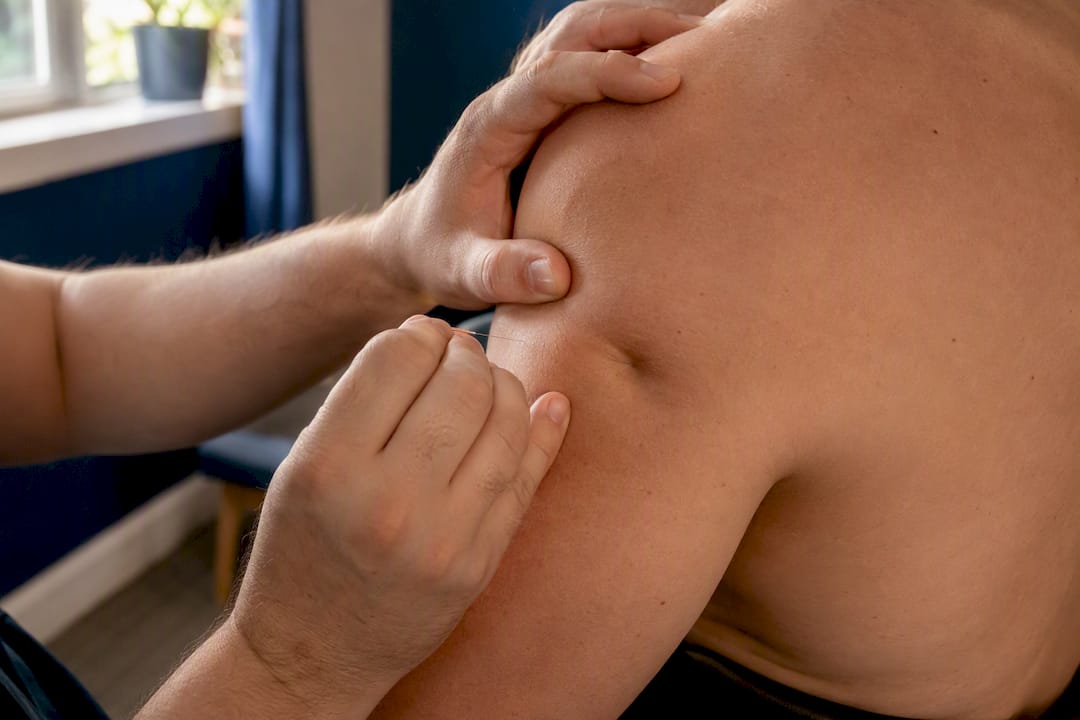
On safety, the research here is reassuring but conditional. Reviews of clinical practice confirm that dry needling is generally safe when performed by properly trained clinicians, with the most common side effects being minor soreness and occasional bruising that clears up within a few days. Rare but serious complications, like a punctured lung near the shoulder blade or nerve injury, have been documented, and they're almost always tied to poor technique or inadequate anatomical knowledge rather than the treatment itself being inherently risky.
Here's what to watch for and expect:
- During treatment: a quick, localised pinch, occasionally a twitch response, rarely more than mild discomfort.
- In the first 24 to 48 hours: soreness similar to post-exercise muscle ache, sometimes light bruising at the needle site.
- Red flags that need medical review: worsening pain rather than easing, unusual shortness of breath, numbness or tingling spreading down the arm, or swelling that doesn't settle within a few days.
- The non-negotiable: always confirm your practitioner has recognised training in dry needling technique and shoulder anatomy specifically, not a general wellness qualification.
If you're curious how this compares to a more familiar treatment, our piece on dry needling versus acupuncture breaks down where the techniques overlap and where they genuinely differ.
Fitting dry needling into a proper shoulder rehab plan
This is where dry needling earns its keep, or doesn't, depending on how it's used.
The smartest way to think about it: dry needling is a gateway, not a destination. It buys you a window, often just a few days, where pain is lower and movement is easier. What you do inside that window determines whether the improvement sticks or evaporates. Skip the exercise and you're just paying for repeat needle sessions indefinitely.
A sensible clinical sequence looks like this:
- Assessment first. A proper clinician checks range of motion, strength, and function (often using a validated tool like the SPADI questionnaire) before ever picking up a needle.
- Targeted needling. Treatment focuses on the specific muscles driving your pain pattern, commonly the infraspinatus, upper trapezius, or subscapularis for shoulder complaints.
- Immediate mobility work. Because pressure pain thresholds often improve right after treatment, good clinicians use that window for gentle mobility drills while your shoulder is more cooperative.
- Home exercise prescription. You leave with specific movements to do, not just a "see how it feels" shrug.
- Progressive loading. Over subsequent sessions, exercises get harder as pain allows, building the strength that actually prevents the problem coming back.
On timelines, patient guidance from sources like Harvard Health typically points to 8 to 16 weeks of physiotherapy for common shoulder issues like subacromial impingement. Dry needling doesn't shortcut that window; it just makes the early weeks more tolerable so you can actually do the exercises without gritting your teeth through every rep.
Pro Tip: Before your first session, ask your clinician two things: what specific muscles they plan to target, and what exercises you'll be doing alongside the needling. If the answer to the second question is vague, that's worth noting.
For a broader look at what pairs well with needling between sessions, our guide to muscle recovery techniques covers practical options, and the team at Vitality's active recovery guide has some solid examples of progressive mobility work that translates well to shoulder cases too.
How Sportsinjurydublin approaches dry needling for shoulder pain
At Sportsinjurydublin, dry needling is never handed out as a blanket fix. Every client starts with an individualised assessment that looks at posture, movement patterns, lifestyle, and activity level, not a generic checklist, because a desk worker's frozen shoulder and a swimmer's impingement need genuinely different plans.
That assessment determines whether needling is even the right tool. Sometimes manual therapy or dry cupping makes more sense first; sometimes needling paired with immediate mobility work is exactly what unlocks progress. The therapist selects based on what's driving the specific pain pattern, not habit.
What you can expect from a consultation:
- A hands-on assessment of your shoulder's range of motion, strength, and pain triggers before any treatment decision is made.
- A clear explanation of why dry needling is (or isn't) recommended for your specific case.
- A rehabilitation plan that extends beyond the needle, covering exercise progression and realistic milestones.
- Case selection that prioritises safety, meaning needling is only used where the anatomy and presentation genuinely support it.
If you're wondering whether your shoulder issue fits this treatment, the clinic's page on dry needling for sports injuries walks through common presentations, and the dry needling overview covers what a typical course of treatment looks like from start to finish.
The final verdict on dry needling for your shoulder
The evidence supports real, short-term pain relief for many people with shoulder pain, particularly when a trained clinician targets the right trigger points. Treat it as a valuable adjunct that opens a window for rehab, not a standalone cure.
Your practical next steps:
- Ask about training. Confirm your clinician has specific dry needling qualifications and shoulder anatomy experience.
- Plan the rehab, not just the needle. Book sessions with a clear exercise progression attached, not needling in isolation.
- Know when to escalate. If pain worsens, or you notice numbness, tingling, or breathing changes, get it checked promptly.
Realistically, expect noticeable relief within days of a session, but lasting change over 8 to 16 weeks of consistent, progressive rehab work.
Key studies and clinical resources on dry needling
- The 2021 sham-controlled trial showing measurable short-term pain reduction.
- The Doppler blood-flow trial confirming physiological changes after needling.
- The subacromial syndrome systematic review on combined treatment outcomes.
- NHS guidance on shoulder pain for conservative care basics.
An editorial take on where the evidence actually points
The conventional pitch around dry needling oversells the needle and undersells the plan around it. Every headline-grabbing statistic, that pain drop from 6.30 to 2.40, comes from a single session studied in isolation. Real recovery doesn't happen in isolation.
What gets underestimated is timing. The genuine skill in dry needling isn't the insertion technique, it's recognising the narrow window afterwards when pain is down and using it immediately for mobility and loading work. Clinics that needle and send you home with nothing else are wasting half the treatment's value.
If you take one thing from the research, take this: ask less about whether dry needling works, and more about what happens in the fifteen minutes after the needle comes out. That's where the actual recovery gets built, or doesn't.
— Mark
Ready to get your shoulder properly assessed?
Reading about trigger points and Doppler studies is one thing. Getting someone qualified to actually find yours is another.
That means your first visit isn't just "get needled and go." It's a full assessment of what's actually driving your shoulder pain, followed by a plan that might include dry needling, manual therapy, or targeted exercise progression, whichever fits your case rather than whichever's quickest to deliver. If you're an athlete eyeing a return to sport, that structured approach carries through into a dedicated return to sport rehabilitation programme built around your specific movement demands.
If your shoulder's been nagging at you for more than a couple of weeks, or you're not sure whether it needs hands-on treatment at all, the clearest next step is booking an assessment. Find out when to see a sports therapist and get a proper plan built around your shoulder, not a generic one.
This article is general information, not a substitute for advice from a qualified doctor. Consult a qualified healthcare professional about your own circumstances before acting on anything here.
Sources
- Dry needling has lasting analgesic effect in shoulder pain: a double-blind, sham-controlled trial
- The effects of dry needling on muscle blood flow of the infraspinatus muscle in individuals with shoulder pain - a randomized clinical trial
- A systematic review of the effectiveness of dry needling in subacromial syndrome