

Strength training is defined as the systematic application of progressive resistance to build muscular capacity, and its role in injury prevention is one of the most well-supported findings in sports medicine. Structured strength and neuromuscular training reduces sports injury risk by 30–70%, with ACL injuries cut by up to 57%. That is not a small margin. Whether you are returning from a hamstring tear, managing a dodgy knee, or simply trying to stay on the pitch longer, building genuine muscle strength is the single most effective thing you can do to protect your body. The American College of Sports Medicine and recent 2026 meta-analyses both confirm this. So let's get into why it works, what the research actually says, and how to do it properly.
What is the role of strength in injury prevention?
Strength training protects the body by changing the physical properties of your muscles, tendons, ligaments, and bones. These are not vague "feel good" benefits. They are measurable structural adaptations that make your tissues genuinely harder to damage.
Muscle and tendon adaptations
Resistance training triggers muscle hypertrophy, which means your muscle fibres grow thicker and more resilient. Tendons respond by increasing collagen density, which makes them stiffer and better at absorbing load. Eccentric training improves fascicle length and builds resilience in hamstring muscles specifically, which reduces injury during explosive sprinting and change-of-direction movements. This matters enormously for footballers, GAA players, and runners alike.

Neuromuscular benefits
Beyond the tissue itself, strength training sharpens your nervous system's ability to recruit motor units quickly and coordinate muscles across joints. Better inter-muscular coordination means your body responds faster to unexpected loads, like landing awkwardly or changing direction at speed. That split-second neuromuscular response is often the difference between a clean landing and a rolled ankle.
Here is a quick summary of how different tissues adapt to strength training:
| Tissue | Adaptation | Injury prevention benefit |
|---|---|---|
| Muscle fibres | Hypertrophy and increased fibre diameter | Greater load absorption capacity |
| Tendons | Increased collagen density | Reduced tendon strain under load |
| Ligaments | Improved stiffness and tensile strength | Better joint stability |
| Bone | Increased mineral density at stress points | Lower fracture risk |
| Nervous system | Faster motor unit recruitment | Quicker stabilisation responses |
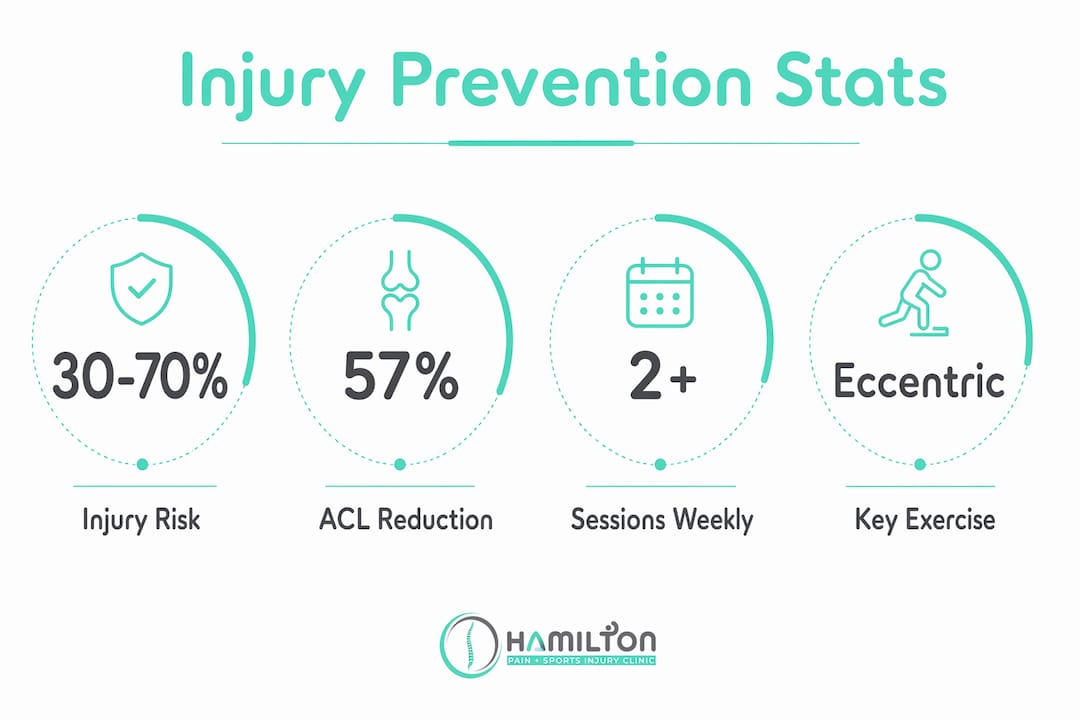
Strength training ensures muscle balance and proper biomechanical function, which prevents the faulty movement patterns that quietly accumulate into overuse injuries. Think of it as building a better chassis for your body.
Pro Tip: Eccentric exercises, like the Nordic hamstring curl, are particularly effective for muscles prone to tearing. If you are not including at least one eccentric movement per session, you are leaving a lot of protection on the table.
What does research say about strength training and injury rates?
The evidence here is genuinely impressive, and it keeps getting stronger (no pun intended). Meta-analyses published in 2026 confirm that structured strength programmes reduce overall sports injury risk by 30–70%, depending on the sport, the training design, and the athlete's baseline. That range is wide, but even the lower end is significant.
ACL injuries, which are among the most feared in sport, are reduced by up to 57% with neuromuscular training programmes. For context, ACL reconstruction typically means six to nine months off sport, significant rehabilitation costs, and a meaningful risk of re-injury. Preventing even a fraction of those injuries has enormous practical value.
Performing 90–120 minutes of strength training weekly is associated with a 13% reduction in all-cause mortality. That is a dose-response relationship worth paying attention to. You do not need to be in the gym every day. Two solid sessions per week, targeting all major muscle groups, delivers measurable protection.
Here are the best practice recommendations that emerge consistently from recent research:
- Perform resistance training at least twice per week, targeting all major muscle groups, as recommended by the American College of Sports Medicine.
- Include neuromuscular warm-up protocols before training and competition to activate stabilising muscles.
- Prioritise eccentric loading for muscle groups at high injury risk, particularly hamstrings and quadriceps.
- Use multicomponent programmes that combine strength, balance, and agility work for the greatest injury reductions.
- Monitor weekly training load and avoid sudden volume spikes, which are the leading cause of programme-related injuries.
The dose-response relationship is real. More training generally means more protection, up to a point. Quality and consistency matter more than sheer volume.
How do you safely implement strength training to prevent injuries?
Right, so you are sold on the idea. Now comes the bit where people often go wrong. Sudden increases in training volume are the top cause of injury during strength programmes. The training itself is not the problem. The problem is doing too much, too soon.
Here is a practical framework for getting started safely:
-
Establish your baseline. Before adding load, spend two to three weeks practising movement quality. Squats, hinges, pushes, and pulls with bodyweight or very light resistance. Your nervous system needs to learn the patterns before your muscles can safely express force.
-
Apply the 10% rule. Do not increase your total weekly training volume by more than 10% from one week to the next. This applies to sets, reps, and load. It feels slow. It works.
-
Balance opposing muscle groups. For every pushing movement, include a pulling movement. For every quad-dominant exercise, include a hamstring-dominant one. Muscle imbalances are a major driver of knee pain and lower limb injuries.
-
Include sport-specific loading. A cyclist needs different strength priorities than a GAA midfielder. Tailor your exercises to the demands of your sport and the positions your body regularly moves through.
-
Get supervised, at least initially. Supervised strength training reduces injury rates more effectively than unsupervised sessions. A good coach or therapist catches form errors before they become injuries.
Pro Tip: If you are returning from injury, treat your first eight weeks of strength training as rehabilitation, not performance. The goal is tissue tolerance, not personal bests.
Injury prevention should be integrated into all training aspects rather than bolted on as an afterthought. That mindset shift alone changes how you approach every session.
Common myths about strength training for injury prevention
A few misconceptions keep cropping up, and they are worth addressing directly because they lead people astray.
"Lifting heavier is always better." Nope. Quality of movement and correct mechanics are paramount. Poor form under heavy load causes overuse injuries despite strength gains. The bar does not care how much is on it if your spine is rounding on every rep.
"I just need to get stronger, not do all that balance stuff." Strength without coordination is incomplete. Training must incorporate coordinative stimuli to ensure effective injury reduction. A muscle that is strong in isolation but cannot fire at the right moment during sport is not doing its job.
Here are the most common myths, and what the evidence actually says:
- Myth: Volume alone drives injury prevention. Reality: High volume without quality movement increases injury risk, not reduces it.
- Myth: Strength training is only for performance, not protection. Reality: Strength training improves posture, stability, and balance, protecting joints and helping manage chronic conditions like arthritis.
- Myth: You need to train daily to see injury prevention benefits. Reality: Two sessions per week targeting all major muscle groups is sufficient for meaningful protection.
- Myth: Strength training is too risky for people already injured. Reality: With appropriate supervision and progressive loading, strength training is a core component of injury rehabilitation, not something to avoid.
The consistent theme across all the research is this: gradual, consistent, well-structured training beats sporadic intense effort every single time. There are no quick fixes here, but the good news is that the bar for meaningful protection is genuinely achievable.
Key takeaways
Strength training reduces injury risk by 30–70% when applied consistently, progressively, and with attention to movement quality across all major muscle groups.
| Point | Details |
|---|---|
| Injury risk reduction | Structured strength training cuts sports injury risk by 30–70%, with ACL injuries reduced by up to 57%. |
| Tissue adaptations | Muscles, tendons, ligaments, and bones all adapt structurally to resist damage under load. |
| Optimal weekly dose | 90–120 minutes of resistance training per week delivers significant injury prevention and longevity benefits. |
| Progressive loading | Never increase weekly training volume by more than 10% to avoid programme-related injuries. |
| Multicomponent training | Combining strength, balance, and agility work produces the greatest reductions in injury rates. |
Mark's take: the thing most people get backwards
Here is something I see constantly at the clinic. People come in injured, we get them better, and then they go straight back to their sport without ever addressing why they got hurt in the first place. The injury was the symptom. The underlying cause, almost always, was a strength deficit somewhere.
What I have noticed over years of working with athletes and everyday active people is that the ones who stay injury-free are not necessarily the most talented or the most flexible. They are the ones who do their strength work consistently, even when it feels boring, even when they would rather just go for a run or kick a ball. (Anecdotal evidence time, shhhhh.)
The other thing I would say is this: do not wait until you are injured to start. I know that sounds obvious, but the majority of people who come through our door at Sportsinjurydublin only started thinking about strength training for runners or sport-specific conditioning after something went wrong. Prevention is genuinely easier than cure, and it takes less time than you think.
If you are currently managing something like shin splints or a recurring hamstring issue, the answer is almost never rest alone. Targeted strength work, done correctly, is usually the missing piece. Get that sorted and you will be in a much better place.
— Mark
Strength-based rehabilitation at Sportsinjurydublin
At Sportsinjurydublin, we work with people at every stage, from those managing their first sports injury to athletes building back after surgery. Our approach is built around individualised assessment and progressive strength programming, not generic protocols.

Whether you need a tailored sports rehabilitation programme or complementary treatments like deep tissue massage or shockwave therapy to support your recovery, we put together a plan that fits your body, your sport, and your goals. No two people are the same, and your programme should reflect that. Get in touch with the team at Sportsinjurydublin to book a consultation and start building the strength that keeps you moving.
FAQ
How much does strength training reduce injury risk?
Structured strength training reduces sports injury risk by 30–70%, with ACL injuries specifically reduced by up to 57% through neuromuscular training programmes.
How often should I strength train to prevent injuries?
The American College of Sports Medicine recommends at least two sessions per week targeting all major muscle groups. Research also links 90–120 minutes of weekly resistance training to significant health and longevity benefits.
Can strength training help if I am already injured?
Yes. With appropriate supervision and progressive loading, strength training is a core part of injury rehabilitation. Supervised sessions reduce injury rates more effectively than unsupervised training.
What type of strength training is best for injury prevention?
Multicomponent programmes combining strength, balance, and agility produce the greatest injury reductions. Eccentric exercises, like the Nordic hamstring curl, are particularly effective for high-risk muscle groups.
Is it safe to start strength training without a coach?
It is safer with one. Poor movement mechanics under load cause overuse injuries regardless of strength gains. At least initially, working with a qualified professional helps you build the right foundations.