

Sports injury rehabilitation is the structured, phased process of restoring full physical function after injury, combining early protection with progressive loading to reduce pain, rebuild strength, and prevent re-injury. Clinically, it is also called sports rehabilitation or sports physical therapy, and those terms are used interchangeably throughout this guide. Approximately 8.6 million sports injuries occur annually in the US alone, and 30–40% of athletes experience re-injury within 12 months. That statistic should make every injured athlete sit up straight. Structured rehab can cut re-injury risk by 50% and shorten recovery time by up to 30%. Those are numbers worth paying attention to.
What is sports injury rehabilitation and why does it matter?
Sports injury rehabilitation is defined as a criteria-based recovery process guided by functional milestones rather than a fixed calendar. The goal is not simply to stop the pain. The real objectives are to restore full range of motion, rebuild strength and neuromuscular control, and return the athlete to sport with confidence and durability.
The POLICE protocol (Protection, Optimal Loading, Ice, Compression, Elevation) replaced the old RICE method as the clinical standard for acute injury management. The key shift is that POLICE prioritises controlled, early loading over total rest. That matters because complete rest causes deconditioning, which makes the eventual return to sport harder and riskier.
Tailored programmes built around individual functional milestones outperform generic, time-based protocols. A footballer recovering from a hamstring strain and a cyclist managing back or neck pain need different progressions, different loads, and different sport-specific drills. One-size-fits-all rehab is, frankly, not rehab at all.
What are the phases of sports injury rehabilitation?
Evidence-based rehabilitation follows four phases, each with defined goals and progression criteria. Moving through them too quickly is the most common mistake athletes make.
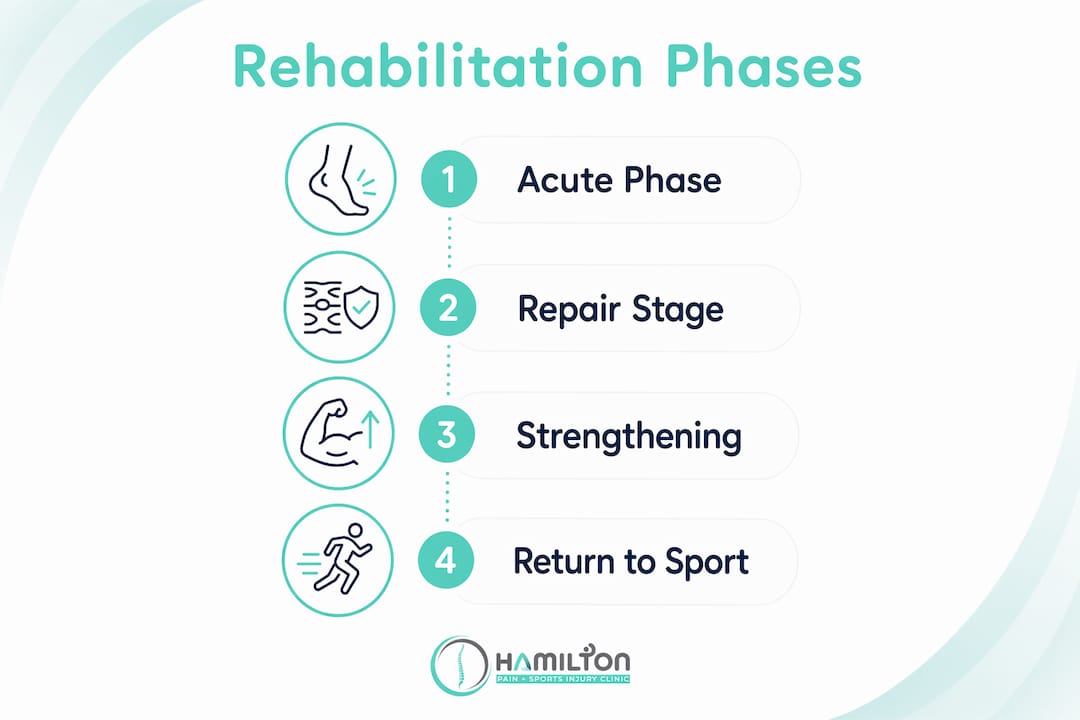
Phase 1: Acute and inflammatory stage (days 1–7)
This is the protection phase. The POLICE protocol guides management here, with optimal loading within pain tolerance replacing the old advice of full rest. Gentle movement, compression, and elevation reduce swelling without stalling tissue repair.
Phase 2: Repair and early rehabilitation (weeks 1–4)
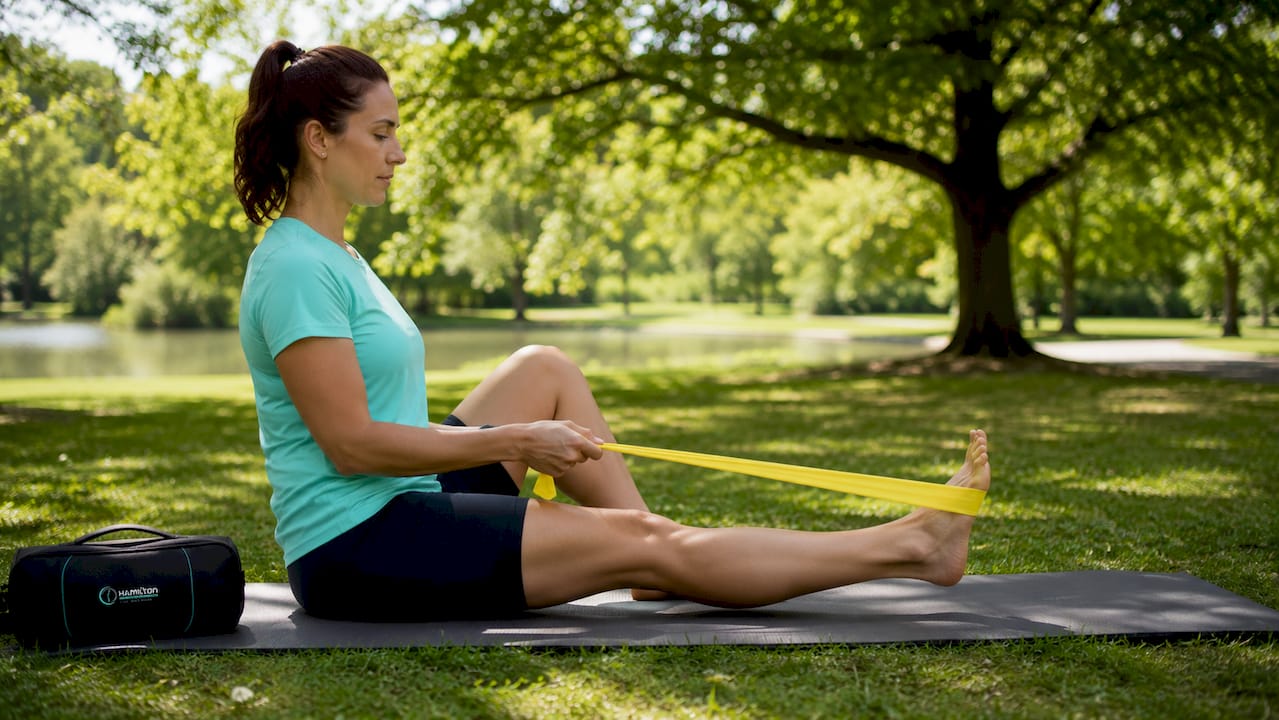
Mobility returns as the priority. Controlled loading increases gradually, and the first rehabilitation exercises for athletes begin. Think gentle range-of-motion work, low-load strengthening, and soft tissue techniques to restore movement quality.
Phase 3: Strengthening and conditioning (weeks 4–12)
This is where the real work happens. Progressive strengthening, neuromuscular training, balance work, and proprioceptive exercises rebuild the communication between the nervous system and the muscles. Neuromuscular training significantly reduces re-injury risk by restoring that muscle-nerve coordination that gets disrupted after injury.
Phase 4: Return to sport (weeks 8–24+)
Sport-specific drills, agility runs, plyometrics, and reactive exercises dominate this phase. Psychological readiness is assessed alongside physical metrics. Progression depends entirely on meeting functional milestones, not on how many weeks have passed.
Pro Tip: Never skip Phase 3 just because you feel pain-free. Feeling good is not the same as being ready. Strength symmetry and movement quality are the real gatekeepers.
How do physical and psychological factors work together in recovery?
Physical healing and psychological readiness are not separate tracks. They run in parallel, and ignoring one derails the other. Psychosocial readiness, including confidence, absence of fear, and freedom from protective guarding, is an independent predictor of successful return to sport.
Here is where athletes most often go wrong:
- Returning to sport because they feel pain-free, not because they have passed functional tests
- Allowing external pressure (coaches, teammates, competition schedules) to override clinical judgement
- Underestimating fear of re-injury, which changes movement patterns and increases actual re-injury risk
- Skipping goal-setting and mental preparation as part of the rehab programme
- Ignoring the role of sleep, stress, and general mental health in physical recovery speed
Psychological readiness is a measurable factor and as critical as physical metrics in predicting successful return to sport. Fear and protective guarding after injury alter movement mechanics, increasing load on vulnerable tissues and raising the probability of a repeat injury significantly.
Returning too early due to psychological or external pressures is the leading cause of repeat injuries. That is not an opinion. It is the clinical consensus. A good rehab programme addresses mental strategies, goal setting, and confidence building as deliberately as it addresses strength and mobility.
What rehabilitation techniques support effective sports injury recovery?
The sports injury recovery process draws on both passive and active therapies, but they are not equal. Active, progressive exercise is the primary driver of successful recovery. Passive treatments support that process but cannot replace it.
Passive adjunct therapies
- Deep tissue and sports massage to reduce muscle tension and improve circulation
- Manual therapy to restore joint mobility and reduce pain
- Taping and bracing to protect injured structures during early loading
- Acupuncture to manage pain and support tissue recovery
- Shockwave and laser therapy as emerging adjuncts for stubborn tendon and soft tissue injuries
Active rehabilitation methods
Progressive strengthening is the foundation. Exercises begin with low load and high control, then advance in complexity and demand as the athlete meets each milestone. Neuromuscular training, balance drills, and proprioceptive exercises rebuild the movement patterns that injury disrupts.
Sport-specific conditioning follows. Agility runs, plyometric jumps, deceleration drills, and reactive exercises replicate the demands of the athlete's actual sport. This is not just about fitness. It is about teaching the body to move safely under the conditions it will face on the pitch or track.
Load management is the thread running through all of it. Too little load and the tissue does not adapt. Too much load and you create a new injury. Getting that balance right is where clinical expertise earns its keep.
Pro Tip: If your rehab plan consists mostly of passive treatments like massage and heat packs, ask your clinician when the progressive loading starts. Passive care alone will not get you back to sport.
How can athletes measure progress and return to sport safely?
Safe return to sport depends on objective criteria, not gut feeling. Criteria-based return-to-sport decisions include strength symmetry of at least 90% between the injured and uninjured limb, pain-free range of motion, passing functional performance tests, and demonstrated psychological readiness.
| Criterion | What it measures | Why it matters |
|---|---|---|
| Strength symmetry (≥90%) | Limb-to-limb force output | Weak limbs absorb load poorly and re-injure |
| Pain-free range of motion | Joint mobility under load | Restricted movement alters mechanics |
| Hop tests and agility runs | Functional power and control | Replicates sport demands in a controlled setting |
| Psychological readiness score | Confidence and fear levels | Fear changes movement and raises re-injury risk |
| Symptom monitoring post-activity | Pain and swelling response | Flags tissue overload before it becomes injury |
Gradual workload progression matters enormously in this phase. Athletes move from controlled drills to simulated match scenarios before returning to full training. Monitoring symptoms during and after each session catches problems early, before they become setbacks.
Long-term injury prevention does not end at return to sport. Recovery sessions and maintenance programmes keep the athlete resilient. The best rehab outcome is not just getting back to sport. It is staying there. A multidisciplinary assessment, covering physiotherapy, strength and conditioning, and psychological readiness, gives the most reliable picture of true readiness.
Key takeaways
Sports injury rehabilitation is a structured, criteria-based process that combines progressive loading, neuromuscular training, and psychological readiness assessment to restore full function and prevent re-injury.
| Point | Details |
|---|---|
| Four evidence-based phases | Rehab progresses from acute protection through repair, strengthening, and sport-specific training. |
| Criteria over calendar | Return to sport requires ≥90% strength symmetry and functional test clearance, not just time. |
| Psychological readiness counts | Fear and low confidence after injury alter movement and raise re-injury risk measurably. |
| Active rehab drives recovery | Progressive exercise is the primary treatment; passive therapies support but cannot replace it. |
| Prevention extends beyond return | Maintenance programmes and recovery sessions reduce the risk of repeat injury long-term. |
Why most athletes misunderstand what rehab actually is
Here is something I see constantly, and it genuinely frustrates me. Athletes think rehab is about getting out of pain. They feel better after a few sessions of massage and some ice, and they assume they are done. They are not even close.
Pain reduction is a milestone, not the destination. Most patients mistake pain management for sufficient recovery, but the real work of rebuilding strength, restoring neuromuscular control, and rebuilding confidence has barely begun by the time pain fades. I have seen athletes with hamstring strains return to sprinting because their leg stopped hurting, only to re-injure within weeks because their strength symmetry was still sitting at 70%.
The other thing I feel strongly about is the pressure athletes face to return early. Coaches want you back. Teammates need you. The competition calendar does not care about your tissue healing. But premature return driven by external pressure is the single biggest cause of repeat injuries. A structured, criteria-based plan protects you from that pressure by giving you objective evidence of readiness, not just a feeling.
Personalised rehab, built around your sport, your goals, and your movement patterns, is what actually works. Generic protocols get generic results.
— Mark
Sports rehabilitation support at Sportsinjurydublin
Sportsinjurydublin offers personalised sports rehabilitation built around your specific injury, sport, and goals. The clinic's approach goes well beyond passive treatment, combining progressive exercise programming, manual therapy, and access to shockwave and laser therapy as adjunct options where appropriate. Physical and psychological recovery are both addressed, so you return to sport with strength and confidence, not just an absence of pain. Whether you are an elite athlete or someone who simply wants to move without discomfort, the team at Sportsinjurydublin builds a plan that fits your life. Book an assessment and get a clear picture of where you are and what it takes to get back.
FAQ
What is sports injury rehabilitation?
Sports injury rehabilitation is a structured, phased recovery process that restores strength, mobility, and function after a sports injury. It combines progressive exercise, manual therapy, and psychological readiness assessment to reduce re-injury risk and support a safe return to sport.
How long does sports rehab take?
Recovery timelines vary by injury severity, but evidence-based phases range from weeks 1–7 for acute management up to 24 weeks or more for return-to-sport readiness. Progression depends on meeting functional milestones, not on time alone.
What rehab exercises do athletes typically do?
Rehab exercises for athletes progress from gentle range-of-motion and low-load strengthening in early phases to neuromuscular training, balance drills, plyometrics, and sport-specific agility work in later phases. The exact programme depends on the injury and the sport.
When is it safe to return to sport after injury?
Return to sport is safe when an athlete achieves at least 90% strength symmetry, pain-free range of motion, passing scores on functional tests such as hop tests and agility runs, and demonstrated psychological readiness. Time alone is not a reliable indicator.
Is passive treatment like massage enough for sports injury recovery?
Massage and manual therapy are effective adjuncts, but active progressive exercise is the primary driver of recovery. Passive treatments alone do not rebuild the strength, neuromuscular control, or movement quality needed for safe return to sport.