
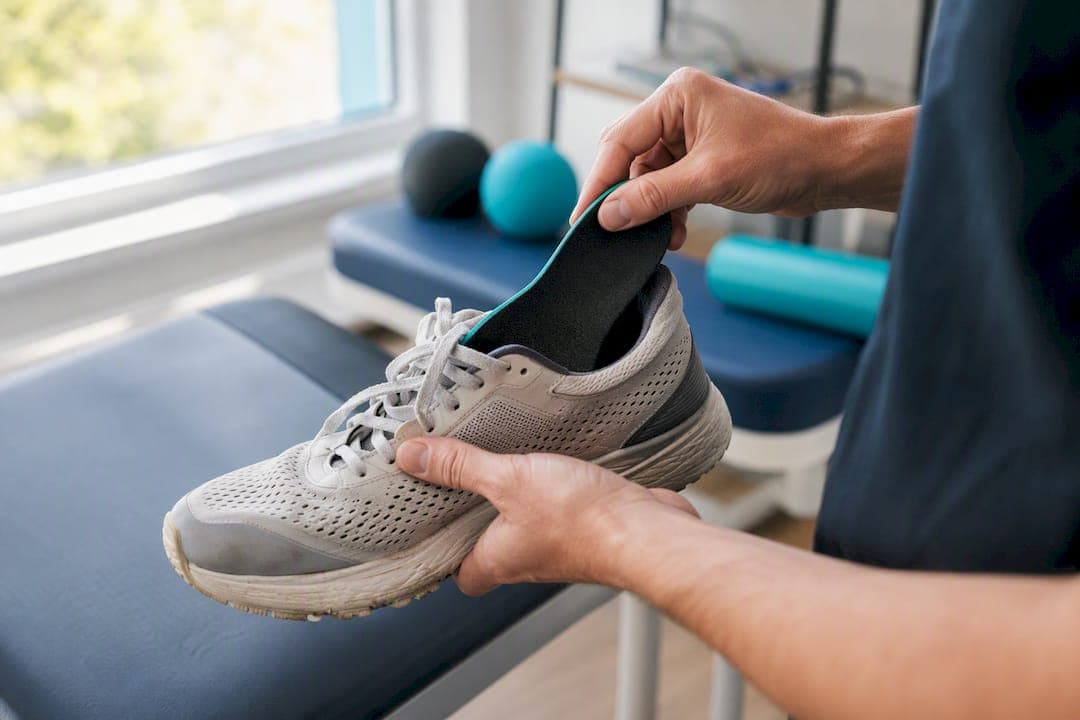
Most flat feet don't need treating at all. If your arches are low but nothing hurts and you're walking, running or standing without bother, you can stop reading the worry-inducing bits of the internet right now. Treatment becomes relevant when there's pain, a limp, a tendon that's cranky, or a deformity that's getting worse over time. When that's the case, the first-line toolkit is boringly sensible: better-fitting footwear, orthotic insoles (shop-bought or custom), targeted physiotherapy exercises, a bit of weight management if relevant, and short-term painkillers if you need them. Give conservative measures an appropriate trial period before deciding whether they're working, unless you hit one of the red flags below, in which case don't wait that long.
Get checked promptly if you notice:
- Sudden, severe or rapidly worsening foot pain
- Numbness, tingling or weakness (possible nerve involvement)
- A foot that looks hot, swollen or misshapen without obvious injury
- Loss of function, like being unable to rise onto your toes on one leg
Key Takeaways
Flat feet only need active treatment when they cause pain, functional limits or progressive deformity, and conservative care remains the correct starting point for nearly everyone in that category.
| Point | Details |
|---|---|
| Most flat feet need no treatment | Asymptomatic flexible flat feet in children and adults rarely require intervention. |
| Try conservative care first | Orthotics, supportive footwear and physiotherapy exercises for 2 to 3 months before escalating. |
| Diagnosis is mostly clinical | History, gait observation and single-leg heel raise guide most decisions; imaging is reserved for suspected structural problems. |
| Surgery is a last resort | Reserved for rigid deformity, tendon rupture, or symptoms that fail a genuine conservative trial. |
| Get a tailored assessment | Sportsinjurydublin combines physiotherapy, orthotic advice and staged rehabilitation rather than a one-size-fits-all plan. |
Table of Contents
- What are flat feet, and who actually needs flat feet treatment?
- How do clinicians diagnose flat feet?
- What are the best non-surgical treatments for flat feet?
- When is surgery necessary for flat feet?
- How long does recovery take, and what are the risks?
- How do you choose the right level of care?
- How does Sportsinjurydublin approach flat feet care?
- Frequently asked questions
- Sources
What are flat feet, and who actually needs flat feet treatment?
Pes planus, the clinical name for flat feet, means the arch collapses or never fully forms, so the sole sits closer to the ground than usual. There are two broad types: flexible (the arch reappears when you're on tiptoes or not weight-bearing) and rigid (it stays flat no matter what). Flexible, pain-free flat feet in children and adults usually need no intervention at all.
Treatment tends to matter more for:
- Anyone with pain, swelling or fatigue after standing or walking
- People with posterior tibial tendon dysfunction (a common cause of adult-acquired flat foot)
- Progressive deformity that's visibly worsening year on year
- Those with arthritis, diabetes-related neuropathy, or other conditions that complicate healing
Children's growth plates are still developing, so most paediatric flat feet are watched rather than treated aggressively. It's a wait-and-see game more often than a medical emergency.
How do clinicians diagnose flat feet?
Diagnosis is usually clinical, not technological. A GP, podiatrist or physiotherapist can typically work out what's going on from your history, a good look at your feet, and a few simple bedside tests, and that's often all that's needed to plan first-line care.
A typical appointment runs through:
- History — when the pain started, what makes it worse, how it's affecting your activity
- Standing and gait observation — how your arch behaves under load and while walking
- Single-leg heel raise — a quick test for posterior tibial tendon function
- Navicular height and arch assessment — checking the degree and flexibility of the collapse
- Palpation — feeling for tenderness along the tendons, particularly on the inside of the ankle
- Rigidity check — establishing whether the arch is flexible or fixed
Imaging (X-ray, CT or MRI) gets ordered when a clinician suspects a tarsal coalition (fused bones limiting movement), a rigid deformity, or a tendon tear that needs surgical planning. Escalate immediately if you notice severe or worsening pain, neurological symptoms, sudden loss of function, or signs suggestive of infection or Charcot foot (a serious complication mostly seen in diabetic neuropathy).
What are the best non-surgical treatments for flat feet?
For symptomatic flexible flat feet, conservative care is the accepted starting point: orthotics, sensible footwear, and a proper physiotherapy plan, in that order of fuss but not necessarily importance.
Orthotics. Over-the-counter insoles are worth trying first since they're cheap and quick to test. Custom orthotics, moulded to your foot, come into play when off-the-shelf options don't cut it, or when there's a specific tendon problem needing more targeted support. Give any orthotic a reasonable period of consistent wear before judging whether it's helping.
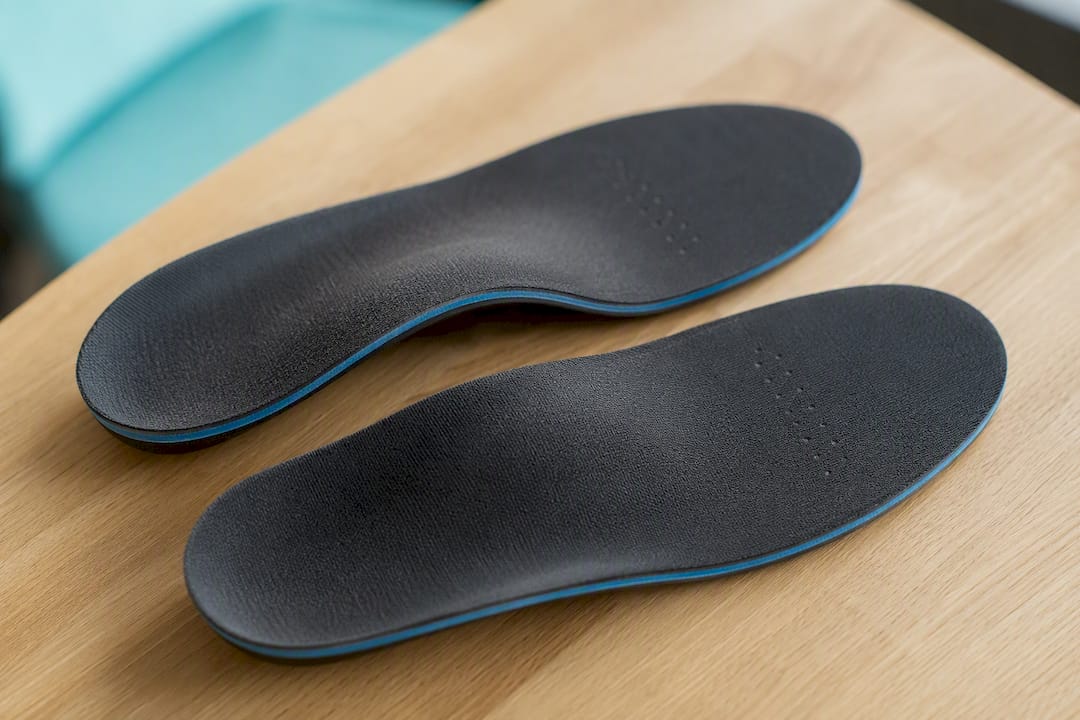
Footwear. Look for a firm heel counter, a supportive midsole and enough room for your toes to spread. Skip anything ultra-flexible or minimalist until symptoms settle. Worth noting for runners specifically: overpronation (the foot rolling inward) is a normal part of gait, not automatically a fault needing correction, and heavily rigid motion-control shoes can just shift load elsewhere up the leg rather than solving anything.
Physiotherapy and exercises. A few staples worth building into a weekly routine:
- Arch doming or "toe yoga" (lifting the arch without curling the toes)
- Calf raises, progressing to single-leg versions
- Towel scrunches for the intrinsic foot muscles
- Single-leg balance work for proprioception and tendon control
Start with a few sessions per week, progressing load and difficulty gradually as symptoms allow.
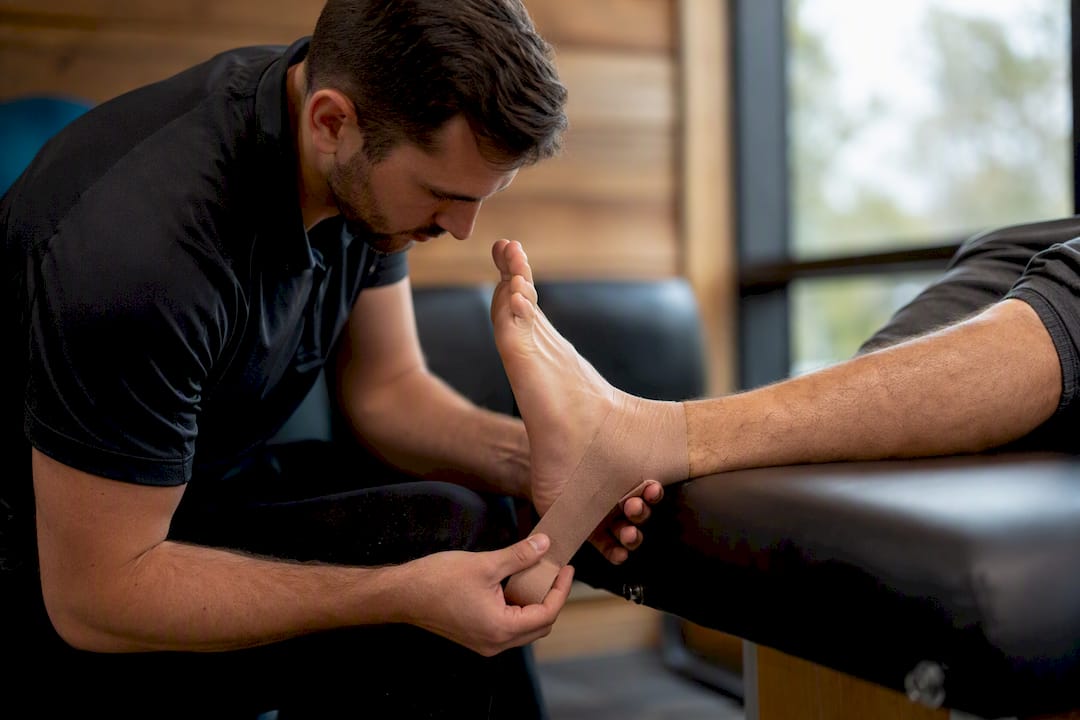
Adjuncts. Weight management reduces load through the arch. Short courses of NSAIDs help with acute pain. Taping or a temporary boot can settle an irritated posterior tibial tendon before it escalates.
Pro Tip: Track your symptoms weekly, not daily. Flat feet issues fluctuate with activity, so a single bad day doesn't mean your plan has failed. Look at the trend over the full 2 to 3 month trial.
When is surgery necessary for flat feet?
Surgery is reserved for rigid deformity, progressive symptomatic pes planus that hasn't responded to a genuine conservative trial, or specific structural causes like tarsal coalition or a ruptured posterior tibial tendon. It's not a first resort, and it's rarely an early one.
Procedures vary depending on what's actually wrong:
- Subtalar arthroereisis — a small implant limits excessive joint motion in flexible flat feet
- Lateral column lengthening (Evans procedure) — restores arch alignment by lengthening the outer edge of the foot
- Medial displacement calcaneal osteotomy — repositions the heel bone to improve alignment
- Tendon repair or transfer — addresses posterior tibial tendon damage directly
- Fusion procedures — used for rigid, arthritic, or severely collapsed feet where mobility-preserving options won't hold
The choice depends on deformity type, cause, and what the patient actually wants to get back to doing.
How long does recovery take, and what are the risks?
Most people improve with conservative care alone. When surgery is needed, recovery is staged and varies by procedure, but almost everyone needs a period of protection followed by gradual reloading, and orthotic support often continues afterwards.
A rough timeline includes an initial period of protected weight-bearing, followed by progressive weight-bearing and rehabilitation, with eventual return to higher-impact activity varying by procedure.
Possible complications include persistent pain, stiffness, nonunion after fusion surgery, and occasionally the need for further surgery. Long-term orthotic use post-surgery isn't a failure, it's often just part of the plan.
Outcomes depend heavily on the underlying cause. Flat feet from arthritis or diabetic neuropathy tend to have a tougher prognosis than straightforward flexible flat feet, since the underlying joint or nerve damage complicates healing regardless of how well the surgery goes.
How do you choose the right level of care?
Try conservative measures first if symptoms are mild to moderate. Go sooner if you've hit a red flag or already tried the basics without success.
- Self-help first — footwear changes and basic exercises for mild, new symptoms
- Podiatrist or physiotherapist — for persistent pain, orthotic fitting, or exercise prescription
- GP referral — if symptoms haven't shifted after 2 to 3 months, or there's suspicion of tendon damage
- Orthopaedic review — for rigid deformity, tendon rupture, or failed conservative care
Questions worth asking at any appointment:
- What's actually causing my symptoms, flexible or rigid, tendon-related or structural?
- What's the realistic timeline before we know if this is working?
- What are the pros and cons of custom orthotics versus off-the-shelf?
- What would need to happen for surgery to become the right option?
Conservative treatment is generally considered to have failed when there's documented functional decline, pain persisting beyond several months of proper effort, or visible progression of the deformity.
How does Sportsinjurydublin approach flat feet care?
Flat feet rarely respond to a generic printout of exercises. Sportsinjurydublin treats it with a tailored combination: thorough assessment, targeted physiotherapy, orthotic guidance where it's genuinely needed, and a graduated return to activity rather than a rushed one.
Interprofessional management, where physiotherapy, podiatry and GP input work together rather than in isolation, tends to produce better functional outcomes for complex or progressive cases. That's the model worth aiming for, not a single practitioner guessing in isolation.
Runners dealing with recurring foot pain after running often find the upstream cause sits in arch mechanics that were never properly assessed.
A pragmatic word on realistic goals
Clinicians often see meaningful improvement fast with the right exercise and orthotic combination, though some presentations, particularly rigid or tendon-related ones, genuinely need surgical input. The goal isn't a perfect arch on an X-ray. It's less pain and better function in the activities you actually care about.
Getting proper help for your flat feet
If you've read this far and you're still not sure whether your arches are the reason your knees, shins or feet keep complaining, that's exactly the kind of question worth putting to someone qualified rather than a search engine.
Sportsinjurydublin offers a focused assessment rather than a generic runthrough: gait observation, single-leg heel raise, palpation, and a look at your footwear and training load, all in one sitting. Unlike a standalone podiatry visit, you're getting physiotherapy and rehabilitation expertise in the same room, so the plan you leave with covers orthotic advice, foot and ankle pain management, and a graduated exercise programme rather than a leaflet and a "see how it goes." A first appointment usually involves a short movement assessment, a clear explanation of what's actually going on, and either immediate practical advice or a treatment session there and then. If you're a runner or regularly active, the sports rehabilitation service is built for exactly this kind of staged, load-based recovery. Book an assessment and get a plan built around your feet, not a generic one.
Frequently asked questions
Do flat feet always need insoles? No. Insoles help when there's pain or fatigue, but pain-free flexible flat feet usually don't need them at all.
Can flat feet be reversed with exercises? Exercises like toe yoga and calf raises improve strength and symptoms, but they don't reshape bone structure. The goal is function, not a visually higher arch.
How long before I know if treatment for flat feet is working? Give conservative measures several months of consistent effort before judging results, tracking weekly rather than daily.
Is overpronation the same as flat feet? Related but not identical. Overpronation describes how the foot rolls during gait, while flat feet describe arch structure. You can have one without severe versions of the other.
When should I actually worry about flat feet? When there's persistent pain, a tendon that feels tender or weak, visible worsening of the deformity, or any red flag symptoms like numbness or sudden loss of function.
This article is general information, not a substitute for advice from a qualified doctor. Consult a qualified healthcare professional about your own circumstances before acting on anything here.
Sources
These sources shaped the conservative trial length, referral criteria and surgical indications covered above.