
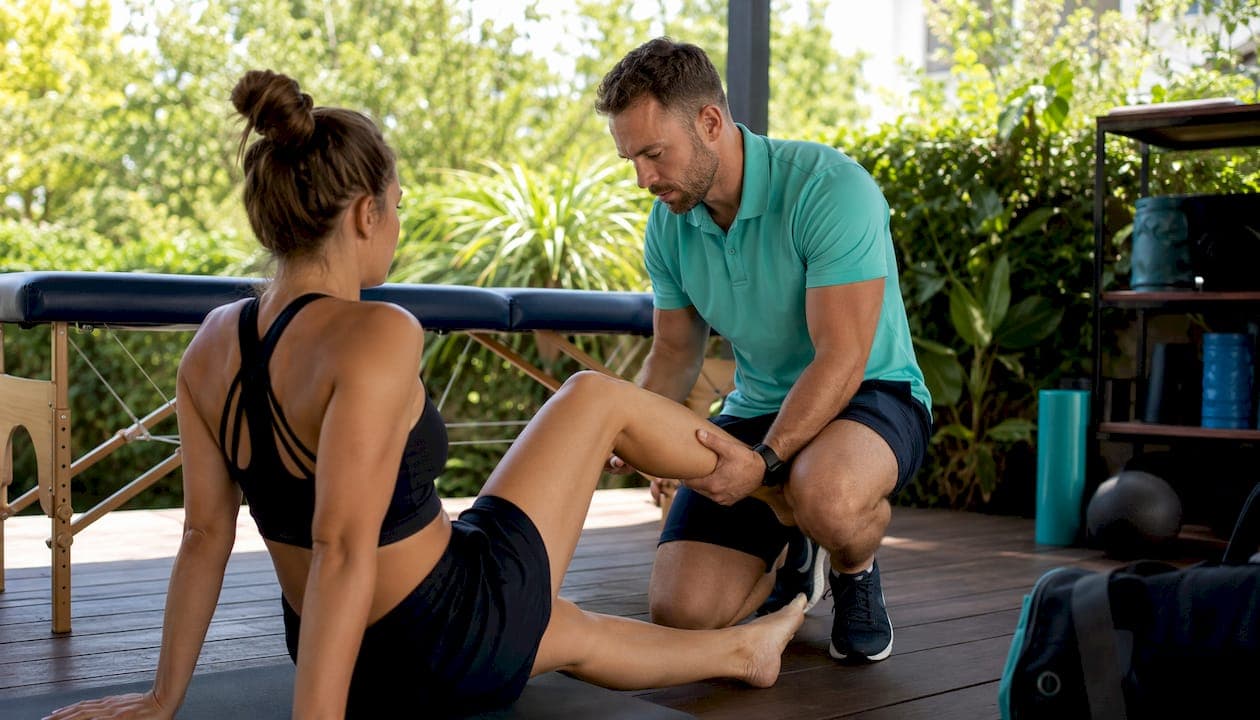
Sports therapy is a healthcare profession dedicated to preventing injury and rehabilitating people to their best possible fitness for daily life and sport. Not just for elite athletes (though good on them for using it), it covers everyone from weekend runners nursing a dodgy knee to office workers with chronic back pain. The Society of Sports Therapists (The SST) defines the profession around five core competency areas, and practitioners train to degree level to meet those standards. Think of it as the bridge between "something hurts" and "I'm back doing what I love."
Here's what sports therapy actually covers:
- Injury prevention through movement screening, load management, and corrective exercise
- Recognition and evaluation of musculoskeletal complaints using clinical assessment
- Management and treatment with manual therapy, electrotherapy, and taping
- Rehabilitation via structured, progressive exercise programmes
- Professional practice and education, including working within multidisciplinary teams
Table of Contents
- What does a sports therapist actually do?
- What conditions does sports therapy treat?
- Sports therapy vs physiotherapy: what's the difference?
- What does the research say about sports therapy?
- How sports therapy developed into a recognised profession
- Key takeaways
What does a sports therapist actually do?
Sports therapists are first-contact practitioners in the UK, meaning you can self-refer without needing a GP referral first. That alone speeds things up considerably when you're dealing with a fresh ankle sprain or a shoulder that's been grumbling for weeks.
A typical first session runs 30 to 60 minutes and starts with a detailed patient history, followed by a physical assessment of joint range, muscle function, and movement patterns. From there, the therapist builds a treatment plan with you, not just for you. That collaborative bit matters more than people realise.
Qualifications are degree-level, with graduates trained in anatomy, physiology, biomechanics, and clinical practice. Registration with The SST signals that a therapist meets the profession's standards and keeps their continuing professional development up to date. Sports therapists also work alongside coaches, physiotherapists, nutritionists, and conditioning specialists, particularly in team sport environments.
Core responsibilities include:
- Conducting pre-participation screening to identify injury risk
- Delivering pitch-side and event-day first aid and acute injury management
- Designing and supervising rehabilitation programmes tailored to the individual
- Educating patients on load management, recovery, and self-care
- Collaborating with wider healthcare and performance teams
What conditions does sports therapy treat?
Sports therapy treats a genuinely wide range of conditions, and this is where a lot of people are surprised. It's not just sprained ankles at half-time.

Common presentations include muscle strains and tears, ligament sprains, tendinopathies (Achilles and patellar being the usual suspects among runners), rotator cuff issues, lower back pain, and repetitive strain injuries. Musculoskeletal problems like back pain and RSI are just as much within a sports therapist's remit as a hamstring tear sustained on the pitch. That's worth knowing if you've been quietly assuming sports therapy isn't "for you" because you're not training for anything.
Treatment techniques include:
- Manual therapy: soft tissue massage, myofascial release, and joint mobilisation
- Exercise rehabilitation: progressive loading programmes to restore strength and function
- Electrotherapy: ultrasound and TENS for pain management and tissue healing
- Biomechanical correction: gait analysis and movement retraining to address root causes
- Taping and strapping: for joint support and proprioceptive feedback during recovery
Proactive intervention also reduces overall patient costs compared to waiting until an injury escalates to the point of needing invasive treatment. Getting on top of a tendinopathy early is a very different conversation to managing a full rupture. Manual therapy prepares the tissue; it's the exercise compliance that actually restores function and keeps re-injury at bay.
Pro Tip: If you're a runner dealing with recurring niggles, look into injury prevention strategies before your next training block. Addressing movement faults early is far less disruptive than a forced rest period mid-season.
Sports therapy vs physiotherapy: what's the difference?
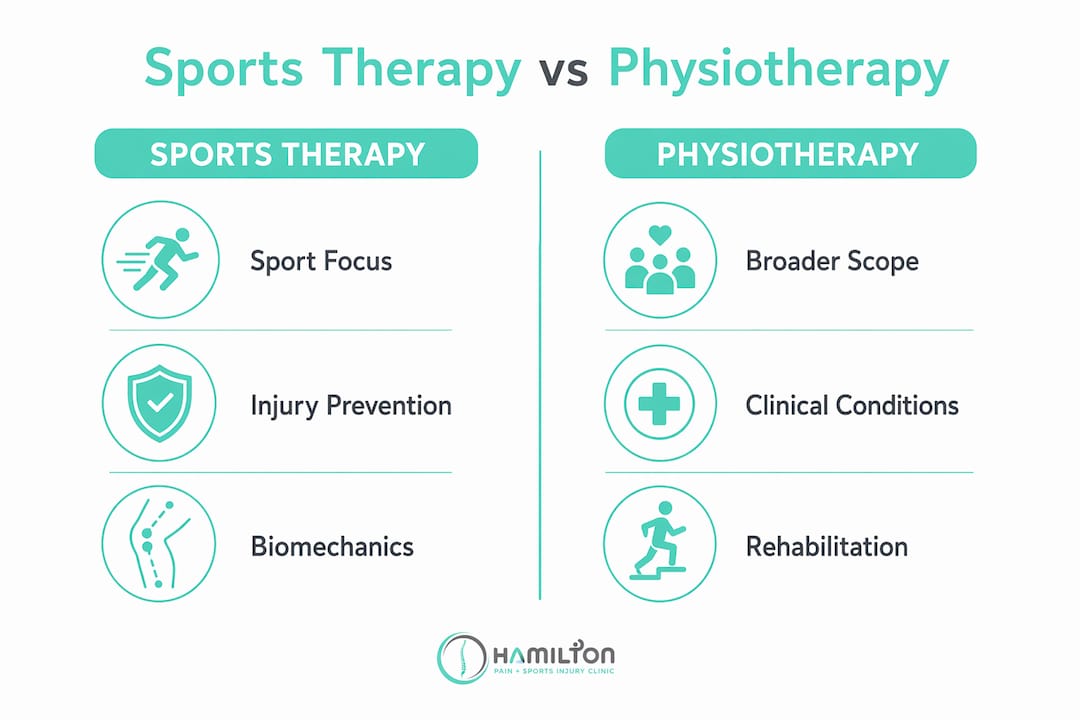
Honestly, this question comes up constantly, and the answer is more nuanced than "one is for athletes and one isn't." Both professions focus on musculoskeletal rehabilitation and use exercise science as a foundation. The differences lie in training breadth and clinical scope.

Physiotherapy training covers a broader range of healthcare settings, including respiratory, neurological, and paediatric conditions, alongside musculoskeletal work. Sports therapy training goes deep on sport and exercise-related injury, biomechanics, and performance, making it highly specialised for active populations and physical complaints.
| Dimension | Sports therapy | Physiotherapy |
|---|---|---|
| Training focus | Sport and exercise injury, biomechanics | Broad healthcare including neuro, respiratory, MSK |
| Typical settings | Sports clubs, gyms, private clinics, pitch-side | Hospitals, NHS, private clinics, community health |
| Injury types | MSK, sport-specific, overuse injuries | MSK plus neurological, respiratory, post-surgical |
| Self-referral | Yes, direct access | Yes, private; NHS usually requires GP referral |
| Regulatory body | The Society of Sports Therapists (The SST) | Health and Care Professions Council (HCPC) |
For most sport-related injuries and musculoskeletal complaints, either profession can help effectively. If your issue is purely physical and activity-related, a sports therapist is an excellent first port of call. If you're managing a complex post-surgical recovery or a condition with neurological components, physiotherapy's broader clinical training may be more appropriate.
When to choose sports therapy:
- Recurring sports injuries or overuse conditions
- Performance-related movement issues
- Pitch-side or event coverage needs
- Rehabilitation back to a specific sport or activity level
What does the research say about sports therapy?
Sports therapy has shifted significantly from a reactive, injury-focused model to a proactive discipline that prioritises performance enhancement through biomechanical correction and conditioning. That's not just a trend; it reflects a genuine change in how practitioners are trained and deployed.
Multidisciplinary collaboration is now central to the profession. Modern sports therapists work as part of integrated teams alongside coaches, nutritionists, and strength and conditioning specialists to optimise both physical and psychological competition readiness. That kind of joined-up approach is what separates a good outcome from a great one.
A few things worth knowing that often get overlooked:
- Sports therapy is not exclusively for athletes. The general population with everyday MSK complaints benefits just as much.
- Direct access means faster treatment, which matters when tissue healing is time-sensitive.
- Recovery quality plays a huge role in outcomes. Sleep and recovery are increasingly recognised as critical components of any rehabilitation plan, particularly for younger athletes.
- Exercise adherence beyond the clinic is the single biggest predictor of long-term success. Manual therapy is the warm-up act; the exercise programme is the main event.
The prevention and treatment of running injuries research highlights that single-factor approaches (just stretching, just footwear changes) consistently underperform. Sports therapy's multi-modal approach, combining load management, biomechanical correction, and progressive rehabilitation, aligns directly with what the evidence supports.
How sports therapy developed into a recognised profession
Sports therapy as a formal discipline grew out of the sports medicine movement of the mid-20th century, when it became clear that athletes needed more than basic first aid and rest. Early practitioners were often physical educators or coaches with additional training, working in an informal capacity at the pitch-side.
The founding of The Society of Sports Therapists in 1990 marked a turning point for the profession in the UK. The SST established formal educational standards, a code of conduct, and a framework for professional registration, giving sports therapy a credible, regulated identity within the broader healthcare landscape. Degree-level programmes became the standard route into the profession, replacing the short-course model that had dominated previously.
Over the following decades, the profession expanded from elite sport into community settings, private clinics, and corporate wellness. The recognition that musculoskeletal health affects everyone, not just competitive athletes, drove that expansion. Today, sports therapists work in professional football clubs, NHS-adjacent services, university sports centres, and independent practice, reflecting just how far the profession has come since those early pitch-side days.
Key takeaways
Sports therapy is a degree-level healthcare profession regulated by The SST, covering injury prevention, rehabilitation, and performance support for all ages and activity levels.
| Point | Details |
|---|---|
| Broad patient scope | Sports therapy treats everyday MSK conditions like back pain and RSI, not just sports injuries. |
| Five core competencies | The SST framework covers prevention, evaluation, treatment, rehabilitation, and professional practice. |
| First-contact access | UK patients can self-refer to a sports therapist without a GP referral, speeding up treatment. |
| Exercise compliance is key | Manual therapy prepares tissue; long-term recovery depends on adherence to rehabilitation programmes. |
| Distinct from physiotherapy | Sports therapy specialises in sport and exercise injury; physiotherapy covers a broader clinical range. |