
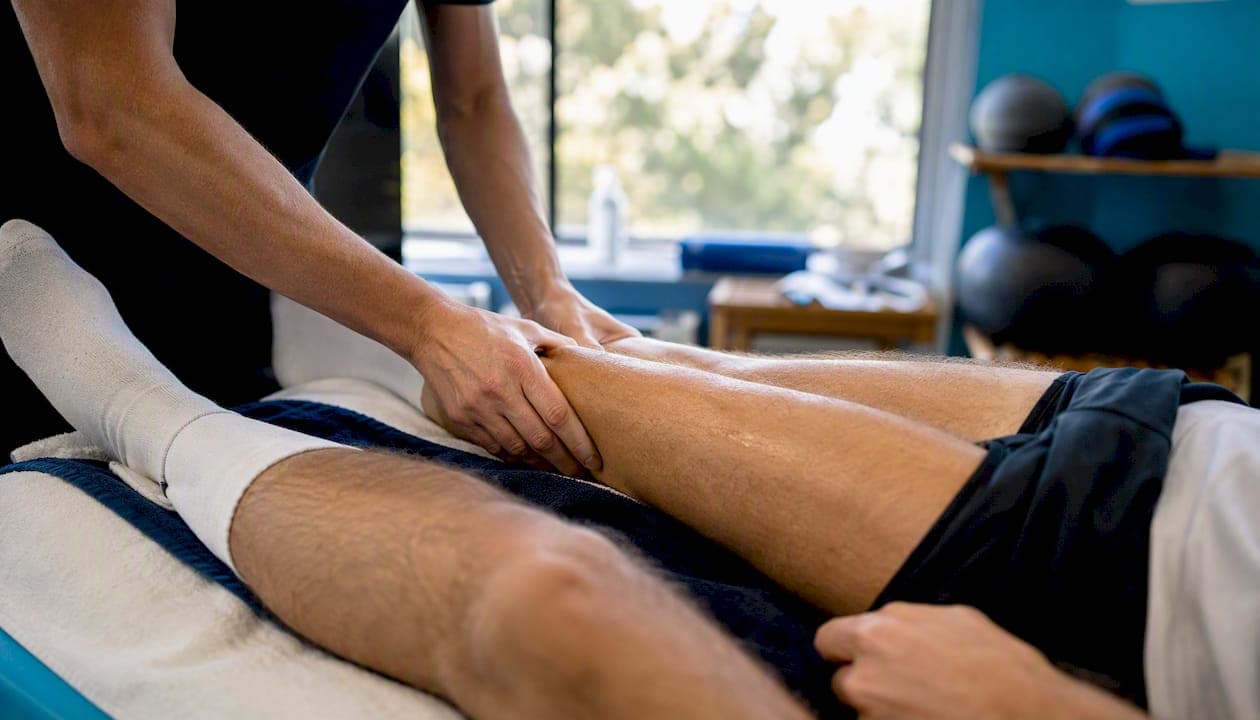
Deep tissue therapy works on runners by resetting protective muscle guarding, reducing how sore you feel after a hard effort, and giving you a short window of better range of motion. That's it. That's the whole premise.
You'll want it most when you're carrying chronic tightness (the calf that never quite lets go), after a brutal long run or race, or when something in your stride feels restricted rather than injured. Sportsinjurydublin and clinical summaries from Mayo Clinic Health System both point to the same practical reality: it helps you feel ready to move, not magically fixed.
- Chronic tightness in calves, hips or glutes that limits your usual range
- Post hard-effort recovery, ideally six to 48 hours after the session
- Movement restriction without a red-flag injury signal
One caution up front: don't book deep, aggressive work the day before a key race. More on that below.
Key Takeaways
Deep tissue therapy helps runners by reducing perceived soreness and briefly improving range of motion, but it works best as a scheduled adjunct alongside strength training, sleep and consistent nutrition.
| Point | Details |
|---|---|
| Best timing | Book deeper work six to 48 hours after hard sessions, not in the 24 to 48 hours before a key race. |
| Evidence base | Pooled analysis of 47 studies found meaningful pain reduction and improved range of motion, with regular moderate-length sessions performing best. |
| It's an adjunct | Deep tissue work resets protective muscle guarding but doesn't replace strength training, sleep or nutrition. |
| Know the red flags | Sudden severe pain, numbness or unexplained swelling need medical review, not a massage table. |
| Where to book | Sportsinjurydublin offers individualised recovery sessions and rehabilitation built around assessment rather than a fixed protocol. |
Table of Contents
- What is deep tissue therapy for runners, exactly?
- How does deep tissue therapy help runners recover?
- Does deep tissue therapy actually reduce pain? What the evidence shows
- When should runners book deep tissue therapy?
- What happens during a session, and what should you do afterwards?
- When should you avoid deep tissue therapy?
- How do you choose the right therapist as a runner?
- What complements deep tissue work if you can't get regular sessions?
- A clinic's view on where this fits
- Book a recovery session built around your training, not a generic slot
- Frequently asked questions
- Sources
What is deep tissue therapy for runners, exactly?
Deep tissue therapy is a manual technique aimed at deeper muscle layers and the surrounding fascia, using slow, sustained pressure to change how tissue moves and how the nervous system perceives that area. It's not defined by "more pressure" as much as by intent; the therapist is working specific layers with a specific goal rather than delivering a general full-body glide.
That's the key difference from other massage styles you'll encounter:
- Swedish or relaxation massage uses lighter, broader strokes aimed mainly at general relaxation, not tissue-specific change.
- General sports massage often blends relaxation techniques with some targeted work, but the session goal is usually broader "maintenance" rather than resolving a specific restriction.
- Deep tissue therapy targets a named problem area with slower strokes, sustained holds, and sometimes friction or forearm work, aiming at a defined outcome such as easier hip extension.
Here's the annoying bit: the term gets used inconsistently across the industry. One therapist's "deep tissue" is another's "firm sports massage." Always ask what techniques they're actually planning and why, which is exactly the distinction Sportsinjurydublin draws out in its comparison of sports massage and deep tissue work.
How does deep tissue therapy help runners recover?
The mechanisms are more interesting than "it loosens you up." Deep tissue work appears to reduce protective muscle guarding, the low-level tension your nervous system holds around tight or previously stressed tissue. It also encourages fascial glide between muscle layers that have become stuck together, and there's a genuine down-regulation of pain sensitivity involved, not just a placebo shrug.
The touch itself seems to trigger endogenous pain-relief responses, including endorphin release, which is why athletes often report feeling calmer and more willing to move straight after a session, according to research on massage and perceived soreness. Add in improved local circulation and you get a session that changes both how tissue behaves and how you feel about using it.
For runners specifically, this shows up in familiar places:
- Calf and Achilles stiffness that's been dragging your stride shorter than usual
- Hip flexor guarding after a block of hill sessions or a sudden mileage jump
- Plantar fascia irritability that flares after long runs on hard surfaces
None of this rebuilds tissue overnight. What it does, reliably, is reduce how sore you perceive yourself to be and buy you a short-term window of better mobility, sometimes just enough to move properly through a recovery run instead of compensating around a tight hip. Runner's World notes therapists typically tailor pressure and target areas to your training phase rather than applying a blanket approach.
Does deep tissue therapy actually reduce pain? What the evidence shows
Yes, with caveats worth knowing before you book. A meta-analysis pooling 47 studies and over 3,000 participants found massage therapy produced meaningful reductions in pain, meaningful improvements in range of motion, and reduced markers of muscle damage in the blood, with deep tissue techniques outperforming Swedish or general sports massage on pain reduction specifically.
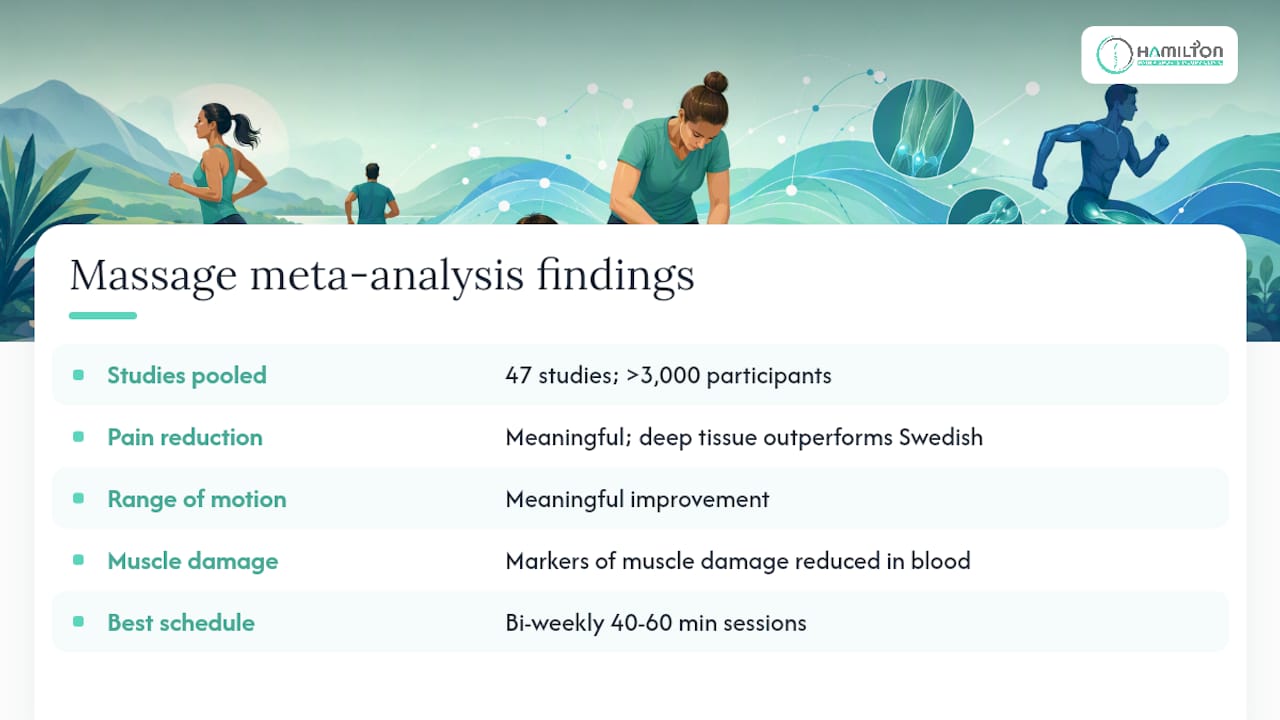
The same pooled data pointed to a practical detail: bi-weekly sessions of 40 to 60 minutes were associated with the best outcomes, not marathon two-hour deep-tissue marathons once a month.
The honest limit here is duration. Much of the benefit is short-term and subjective; you feel less sore and move a bit more freely, but that's not the same as structurally rebuilding a weak calf or fixing biomechanics long-term. Deep tissue therapy is an adjunct that works alongside strength training, sleep and nutrition, according to practitioner guidance from Healthline. It doesn't replace any of them.
When should runners book deep tissue therapy?
Timing matters more than most runners assume. The general window for deeper work is six to 48 hours after a hard session, giving your body time to respond without piling fresh stress onto already-stressed tissue. Deep, aggressive work in the 24 to 48 hours before a key race or a speed session is generally a bad idea, since intense manual therapy can leave you feeling sore or under-recovered right when you need to feel sharp, a point Runners Connect makes clearly when discussing race-week planning.
Practical guidance for scheduling:
- Base training phase: consistent, moderate sessions (roughly bi-weekly) beat occasional, very intense ones that provoke flare-ups
- Race week: lighter touch, shorter duration, or skip deep work entirely in favour of gentle flushing sessions of five to 15 minutes
- Acute injury: don't self-treat with deep tissue alone; get it assessed first
- Chronic overload: this is where regular sessions genuinely earn their keep
Never use deep tissue work as your only response to red-flag symptoms. That's a medical assessment conversation, not a massage table one.
What happens during a session, and what should you do afterwards?
A typical session starts with a quick assessment, questions about your training phase, and a movement check so the therapist knows what they're targeting. From there, expect slow, sustained strokes into the target area, held pressure on specific points, and possibly friction or forearm techniques depending on the tissue involved. Many therapists integrate stretching or mobility checks at the end to help lock in the change, a structure described in detail by Massage Fitness Magazine.
Afterwards, mild soreness for 24 to 72 hours is normal, similar to a moderate workout. Keep the following in mind:
- Give yourself a light day or reduced load window rather than jumping into a key session
- Hydrate properly and eat enough protein to support tissue recovery
- Light movement and gentle mobility work help more than total rest
- Most runners can resume normal training within two to three days
Pro Tip: Tell your therapist exactly what you want from the session, something like "easier hip extension" or "less calf drag on my stride," rather than just "go deep." That specific outcome guides how much pressure and where, according to Reset Registered Massage Therapy, and it stops you leaving more braced than you arrived.
When should you avoid deep tissue therapy?
Some situations call for a doctor before a therapist, not instead of one. Common contraindications include acute infection, fever, open wounds, uncontrolled bleeding disorders, and any suspicion of deep vein thrombosis, where manual pressure could genuinely make things worse rather than better.
Watch for red-flag symptoms too: sudden severe localised pain, numbness or tingling that wasn't there before, unexplained swelling, or skin changes around a joint. None of these belong on a massage table first.
If something feels acutely wrong rather than chronically tight, that's a signal for medical review or physiotherapy-led assessment before any manual therapy, not after it.
Always tell your therapist about medications, recent injuries and any relevant health history before the session starts. A good practitioner will ask anyway, but don't wait to be asked.
How do you choose the right therapist as a runner?
Look for someone with proper sports therapy training, chartered physiotherapy credentials, or accredited massage qualifications, ideally with genuine experience treating runners rather than general clients. Running injuries have their own patterns, and a therapist who's seen a hundred cases of calf-mediated stride drag spots things a generalist might miss.
Before you book, ask a few direct questions:
- Have you worked with runners' injuries before, and what does that experience look like?
- Will you assess movement and gait, or just go straight to the sore spot?
- What techniques do you plan to use, and why those specifically?
- What aftercare or follow-up do you recommend?
Red flags are just as telling. Walk away from anyone who skips assessment entirely, treats "it should hurt" as a badge of honour, refuses to adjust pressure when you ask, or doesn't screen for basic medical contraindications first. Sportsinjurydublin's approach, outlined on its sports therapy page, leans on individualised assessment rather than a fixed protocol applied to every runner who walks through the door, which is precisely the standard worth holding any clinic to.
What complements deep tissue work if you can't get regular sessions?
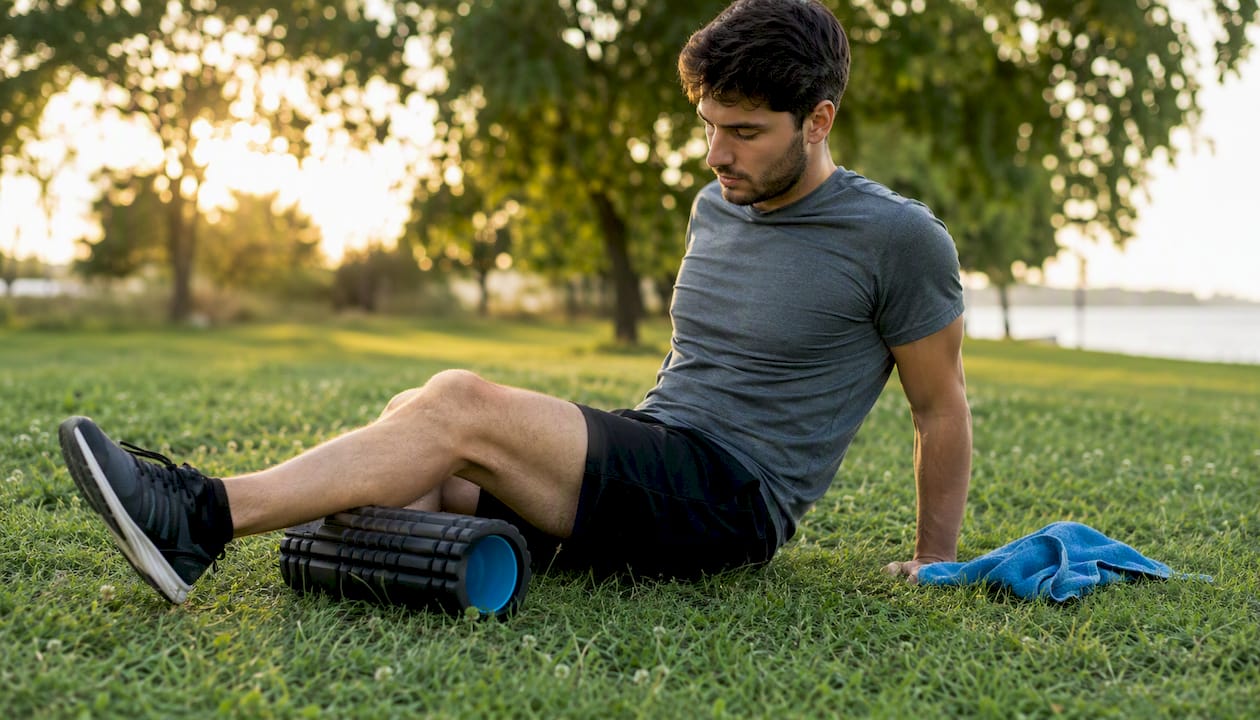
Deep tissue therapy isn't the only lever, and it shouldn't be the only one you pull. Foam rolling, targeted mobility drills, and genuine active recovery sessions cover a lot of the same ground between clinic visits, alongside the basics that actually do the heavy lifting: sleep, hydration and consistent nutrition.
Complementary options worth building into your week include general sports massage, progressive strength loading, and percussive devices as a self-administered adjunct, similar in principle to tools like the Wellthious Deep Tissue Massager. Mobility-focused programming, such as the approach covered by HTK Training's guide to athletic longevity, pairs well alongside periodic clinical sessions rather than replacing them. The best results come from combining regular self-care with occasional targeted clinic work, not choosing one over the other.
A clinic's view on where this fits
We assess every runner's training phase and movement pattern before deciding whether deep tissue work is the right tool, rather than defaulting to it because that's what was booked. Sometimes the answer is strength work first, deep tissue second.
Book a recovery session built around your training, not a generic slot
Most runners booking deep tissue work end up choosing between a generic high-street massage that treats every client the same way, or a proper clinical assessment that actually looks at why your calf keeps flaring up before anyone touches it. Sportsinjurydublin runs individualised recovery sessions that start with an assessment of your training load and movement pattern, not a fixed 60-minute script applied to whoever's next on the table.
If you're dealing with chronic tightness, recent injury, or you simply want a clinic that treats runners as runners rather than generic clients, Sportsinjurydublin's recovery sessions are built around exactly that. For anything with an injury history behind it, the sports rehabilitation service combines manual therapy with progressive loading so the gains actually stick. Book an assessment and find out whether deep tissue work, strength rehab, or both, is the right call for where you're at.
Frequently asked questions
What is deep tissue therapy for runners, in simple terms? It's targeted manual therapy aimed at deeper muscle and fascia layers to reduce protective guarding, ease perceived soreness, and briefly improve range of motion around a specific problem area.
How does deep tissue therapy help runners with muscle recovery? It reduces how sore you feel, encourages better fascial glide, and can improve circulation, though the strength, sleep and nutrition side of recovery still does most of the structural work.
Does deep tissue therapy reduce pain for runners specifically? Pooled research shows meaningful pain reduction and improved range of motion after massage therapy, with deep tissue techniques showing a stronger effect on pain than lighter styles.
How often should runners book deep tissue sessions? Bi-weekly sessions during base training tend to outperform occasional, very intense ones, with lighter or reduced sessions as race day approaches.
Can deep tissue therapy replace strength training for injury prevention? No. It works as a training adjunct that helps you move and load better, but strength work, sleep and nutrition remain the foundation of injury prevention.
This article is general information, not a substitute for advice from a qualified doctor. Consult a qualified healthcare professional about your own circumstances before acting on anything here.
Sources
- The Effectiveness of Massage Therapy in Treating Sports-Related Muscle Injuries: An Evidence-Based Systematic Review and Meta-Analysis | IGI Active Living and Health Insight
- PMC article on massage effects (perception of soreness and relaxation)
- Benefits of massage therapy | Mayo Clinic Health System
- Deep tissue massage overview | Healthline