
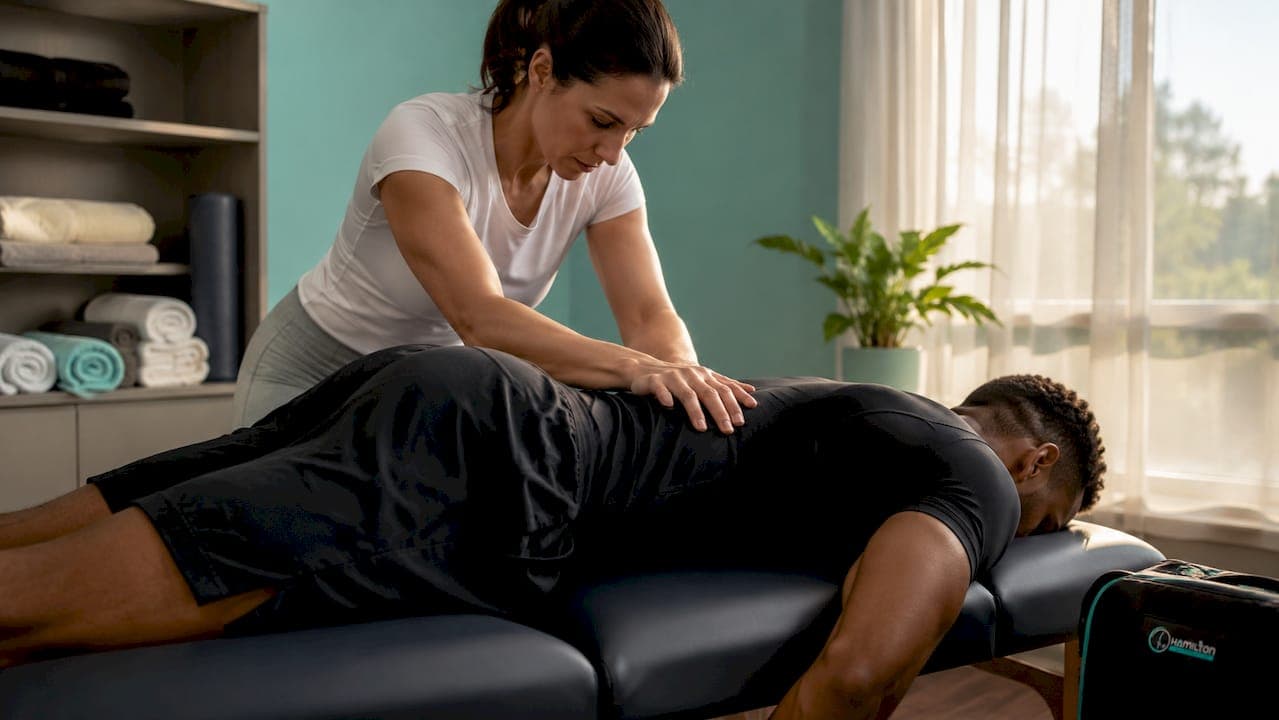
Soft tissue therapy is defined as the manual or mechanical manipulation of muscles, fascia, tendons, and ligaments to reduce pain, restore movement, and accelerate recovery. A systematic review of 47 studies confirmed that massage therapy significantly reduces pain, improves range of motion, and lowers muscle damage markers such as serum creatine kinase in athletes. The performance gains are largely indirect. Soft tissue therapy works by getting you back on the track, pitch, or gym floor faster, moving better, and hurting less. Sportsinjurydublin sees this play out daily with athletes who train hard and need their bodies to keep up.
How does soft tissue therapy enhance performance?
The honest answer is that soft tissue therapy does not make you faster or stronger in a single session. What it does is remove the barriers that stop you performing at your best. Reduced soreness, better range of motion, and faster recovery all add up to more consistent, higher-quality training over time. That consistency is where real performance gains live.
Soft tissue therapy aids performance primarily by reducing delayed onset muscle soreness (DOMS) and maintaining the range of motion needed for proper biomechanics. Think of it this way: if your hip flexors are locked up after a heavy week of training, your running gait suffers, your glutes switch off, and your lower back picks up the slack. One good session can break that cycle before it becomes an injury.
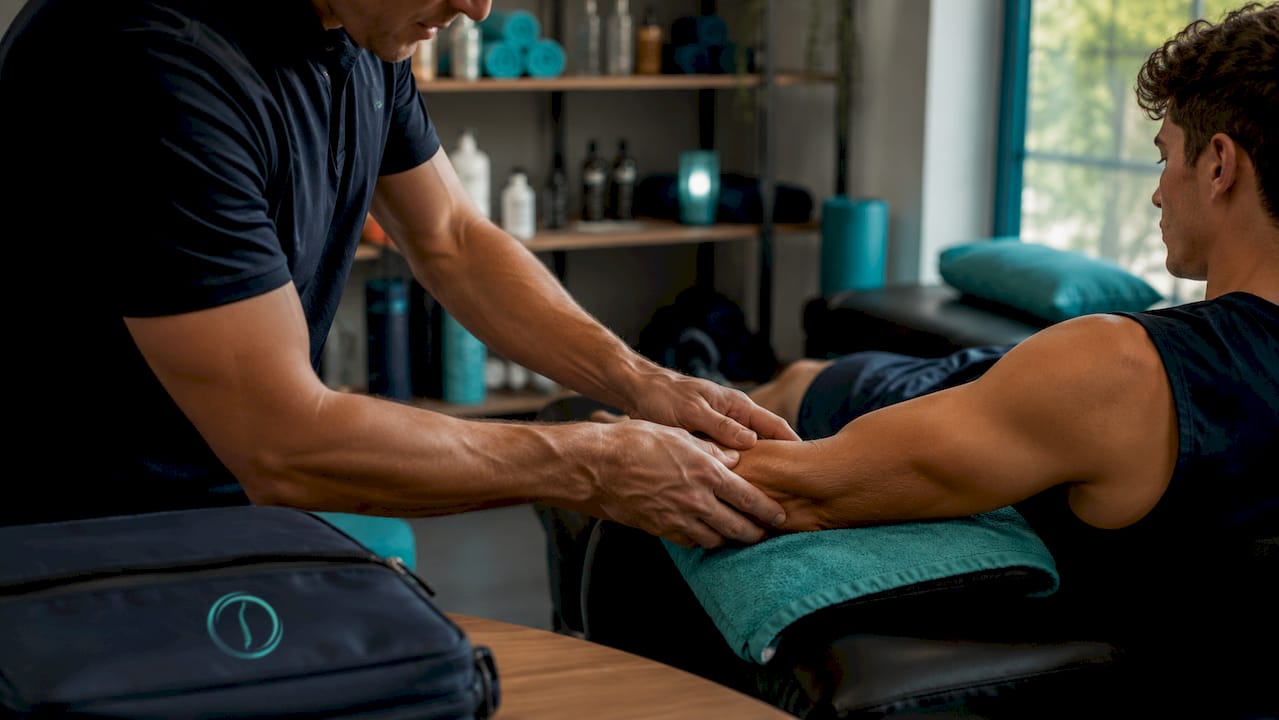
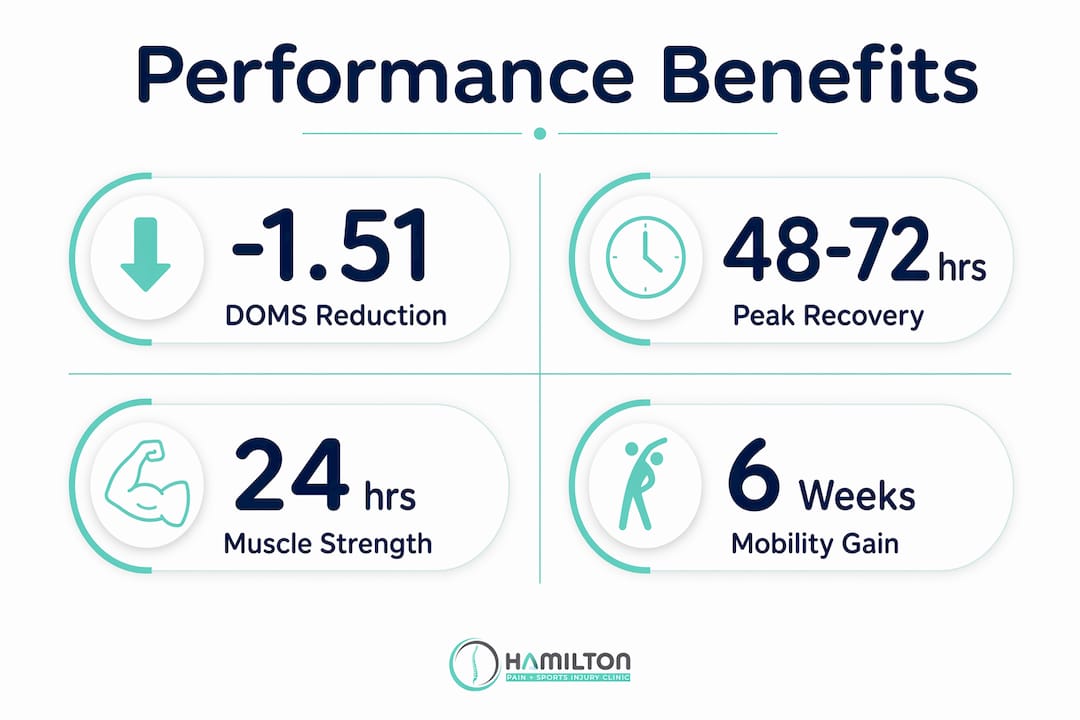
The research backs this up. DOMS peaks at 48–72 hours post-exercise, and massage therapy produces an SMD of up to -1.51 in reducing that soreness. That is a large effect size by any clinical standard. Less soreness means you can train again sooner, and training again sooner is the single most reliable path to improved performance.
What physiological mechanisms underlie soft tissue therapy's performance benefits?
This is where it gets genuinely interesting (and slightly nerdy, but bear with me). The old idea that massage "flushes out lactic acid" is, frankly, not supported by current science. Lactic acid clears from the bloodstream within an hour of exercise regardless of what you do. The real mechanisms are far more impressive.
Mechanotransduction is the key process. Mechanical pressure converts into biochemical repair signals at the cellular level, triggering mitochondrial biogenesis and accelerating tissue repair. In plain English: the physical pressure of a therapist's hands tells your cells to get on with healing. That is a genuinely remarkable thing.
The neurological effects are equally significant:
- Gate Control Theory explains how tactile stimulation from massage inhibits nociceptive signals travelling to the brain. Less pain signal gets through, so perceived pain drops.
- Parasympathetic activation shifts your nervous system out of "fight or flight" and into recovery mode, promoting muscle relaxation and reducing cortisol.
- Serotonin and dopamine increase while cortisol decreases during and after therapy, creating a hormonal environment that supports healing.
- Muscle hypertonicity (that stubborn tightness that won't shift with stretching alone) reduces as the nervous system calms down.
Pro Tip: If you feel sleepy after a soft tissue session, that's your parasympathetic nervous system doing exactly what it should. Don't fight it. A short rest post-session accelerates the recovery response.
Which soft tissue techniques are most effective for athletes?
Not all soft tissue therapy is the same, and picking the right tool for the job matters. Here is a practical breakdown of the main techniques and when to use them.
Sports massage
Sports massage reduces DOMS, improves flexibility, and helps manage training load across a season. It suits athletes who train regularly and need consistent maintenance rather than treatment of a specific injury. The benefits of personalised sports therapy are well documented for this group.
Deep tissue therapy
Deep tissue massage produces greater pain reduction than Swedish or lighter massage styles. It targets chronic tension and trigger points in deeper muscle layers. Team sport athletes and those doing heavy strength training see the largest recovery benefits. Bi-weekly sessions of 40–60 minutes represent the optimal protocol for performance recovery. Adverse events are rare when delivered by a qualified therapist.
Percussive therapy (fascia gun)
Percussive therapy returns athletes to baseline muscle strength and perceived recovery within 24 hours. Static stretching takes 48 hours to achieve the same result. That is a significant time advantage in a heavy training week. Percussive therapy also increases blood flow and reduces soft tissue viscosity, making it a strong pre-event option that does not reduce muscle power the way static stretching can.
Tissue flossing
A 6-week tissue flossing programme improves ankle dorsiflexion with an effect size of d = 4.52 and significantly improves dynamic balance (p < 0.001). That is a remarkable result for a relatively simple intervention. Gains partially persist even after the programme ends, which makes it a smart long-term investment for athletes with ankle mobility restrictions.
| Technique | Best used for | Session timing |
|---|---|---|
| Sports massage | Maintenance, DOMS, flexibility | Post-training, bi-weekly |
| Deep tissue therapy | Chronic tension, trigger points | Bi-weekly, 40–60 minutes |
| Percussive therapy | Rapid recovery, pre-event warmup | Pre or post-training |
| Tissue flossing | Ankle mobility, dynamic balance | Within training sessions |
Pro Tip: Use percussive therapy before a session to increase range of motion without the power loss associated with static stretching. Save the deep tissue work for the day after a hard training block.
How does soft tissue therapy support injury prevention and pain management?
Injury prevention is where soft tissue therapy quietly earns its keep. Most athletes think about therapy only when something hurts. The smarter approach is using it to stop things from hurting in the first place.
Maintaining range of motion is critical for biomechanical efficiency. When a joint loses mobility, the body compensates. Compensations create overload elsewhere, and overload creates injury. Regular soft tissue work keeps the system moving as it should. The injury prevention benefits for athletes are well supported by clinical evidence.
Therapy choice should be symptom-driven: physiotherapy for injury rehabilitation, sports massage for muscle maintenance, and deep tissue therapy for persistent tension and trigger points. Mixing these up leads to suboptimal outcomes. Seeing a therapist who can assess your presentation and recommend the right modality is far more effective than booking whatever is cheapest or most convenient.
For athletes managing chronic pain, the neurological effects of soft tissue therapy are particularly valuable. Reduced nociceptive signalling means less perceived pain during training. Better posture-related comfort means you can hold good positions longer. Clinicians also integrate modalities such as dry needling and instrument-assisted soft tissue mobilisation alongside broader massage work to manage tension and trigger points more comprehensively.
What practical steps can athletes take to integrate soft tissue therapy?
Getting the most from soft tissue therapy comes down to consistency and timing. Here is a practical framework.
-
Schedule regular sessions. Bi-weekly 40–60 minute sessions are the evidence-based sweet spot for most athletes in moderate to heavy training. Ad hoc sessions when you're already injured are less effective than regular maintenance.
-
Match the therapy to your current need. Maintenance phase? Sports massage. Coming back from a niggle? Physiotherapy first, then soft tissue work to support it. Chronic tightness that won't shift? Deep tissue therapy or instrument-assisted mobilisation. The right therapy for your symptoms makes a measurable difference.
-
Use percussive therapy as a pre-event tool. A short percussive session before training increases range of motion without the power reduction that static stretching causes. Keep it to 60–90 seconds per muscle group.
-
Combine therapy with strength training. Soft tissue work addresses tension and mobility. Strength training builds the structural resilience to prevent tension returning. One without the other is a short-term fix.
-
Get a professional assessment. A qualified therapist can identify which structures are restricted, which are overloaded, and which technique will produce the fastest result for your specific presentation. Generic protocols rarely match individual needs.
Pro Tip: Tell your therapist what you're training for and when your next event is. That context changes the entire session plan, from depth of pressure to which areas to prioritise.
Key takeaways
Soft tissue therapy enhances performance primarily by accelerating recovery, reducing DOMS, and maintaining the range of motion that underpins sound biomechanics and consistent training.
| Point | Details |
|---|---|
| Performance gains are indirect | Therapy works by removing recovery barriers, not by directly increasing strength or speed. |
| Mechanotransduction drives repair | Mechanical pressure triggers cellular repair signals, accelerating tissue healing at a microscopic level. |
| Match technique to need | Use sports massage for maintenance, deep tissue for chronic tension, and percussive therapy for rapid recovery. |
| Bi-weekly sessions are optimal | 40–60 minute sessions twice a week produce the best recovery outcomes for athletes in regular training. |
| Injury prevention is the real win | Consistent soft tissue work maintains biomechanics and reduces the compensatory patterns that lead to injury. |
Why recovery is the real performance enhancer
Here is my honest take after years of working with athletes: the ones who treat recovery as seriously as training are the ones who keep improving. The ones who skip it are the ones I see nursing the same recurring hamstring strain every six months.
Soft tissue therapy does not give you a bigger engine. What it does is keep the engine running cleanly. I've seen athletes shave weeks off their recovery timelines simply by committing to regular sessions rather than waiting until something breaks down. That's not magic. That's physiology.
The thing I'd push back on is the idea that more therapy is always better. I've worked with athletes who were getting daily massage and still underperforming because they weren't addressing the training load or sleep that was actually driving their fatigue. Therapy is one piece of the puzzle. It works best when it's part of a broader plan that includes deep tissue and sports massage alongside strength work, good nutrition, and sensible programming.
If I had to give one piece of advice, it would be this: get assessed by someone who will look at your whole picture, not just the bit that hurts. The shoulder that's sore is often not the problem. It's the consequence of something else entirely. Fix the cause, and the shoulder sorts itself out.
— Mark
Soft tissue therapy at Sportsinjurydublin
Athletes who want faster recovery, fewer injuries, and more consistent training need a plan that goes beyond a single technique.
Sportsinjurydublin combines soft tissue therapy with physiotherapy and individualised rehabilitation to address the root cause of your performance limitations, not just the symptoms. Whether you're managing a chronic niggle, returning from injury, or simply want to train harder without breaking down, the team at Sportsinjurydublin builds a plan around your specific goals and training demands. Explore sports rehabilitation at Sportsinjurydublin and find out what a genuinely personalised approach looks like in practice.
FAQ
What is soft tissue therapy and how does it help athletes?
Soft tissue therapy is the manual or mechanical treatment of muscles, fascia, tendons, and ligaments to reduce pain and restore movement. It helps athletes by reducing DOMS, improving range of motion, and accelerating recovery between training sessions.
How often should athletes have soft tissue therapy?
Bi-weekly sessions of 40–60 minutes represent the evidence-based optimal frequency for athletes in regular training. Frequency can increase during heavy training blocks or when managing an acute issue.
Does soft tissue therapy directly improve strength or speed?
Soft tissue therapy does not directly increase strength or speed. It improves performance indirectly by reducing soreness, restoring mobility, and maintaining the biomechanics needed for effective training.
What is the fastest soft tissue recovery technique?
Percussive therapy returns athletes to baseline muscle strength and perceived recovery within 24 hours, compared to 48 hours for static stretching, making it the fastest option for acute post-training recovery.
Can soft tissue therapy prevent sports injuries?
Regular soft tissue therapy maintains range of motion and reduces compensatory movement patterns that lead to overload injuries. Consistent maintenance sessions lower injury risk for athletes across all training levels.