
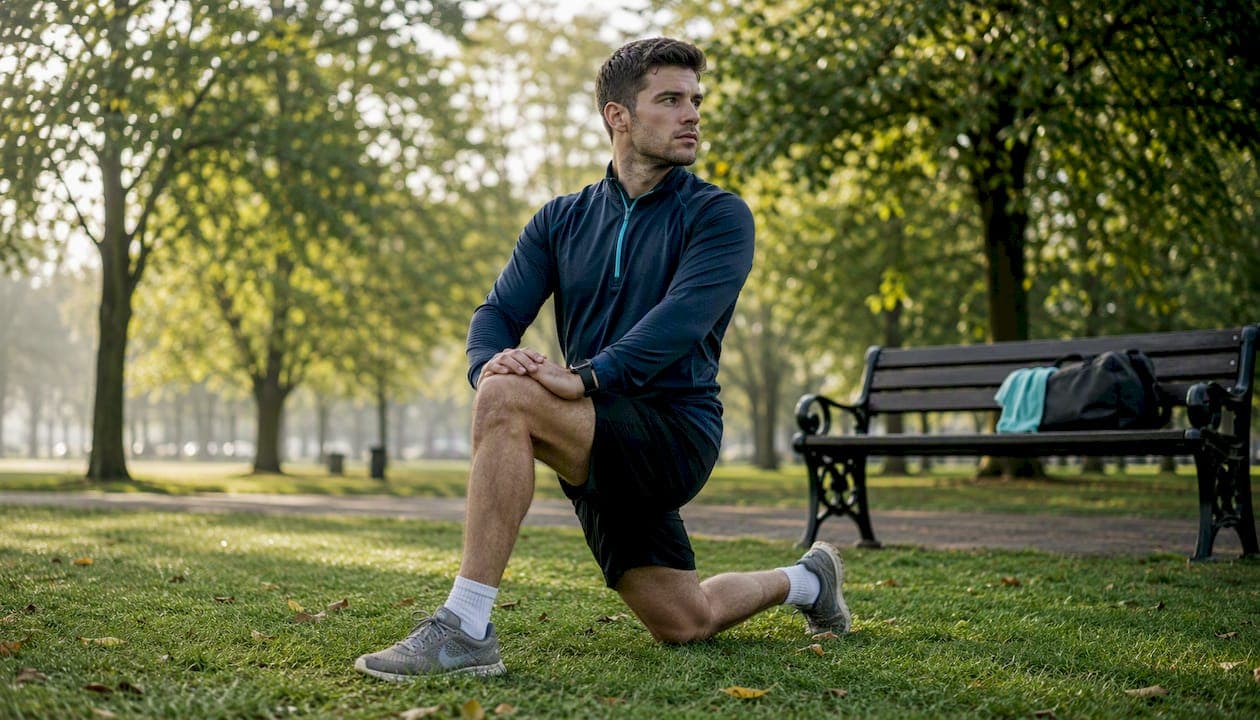
A short morning self-check plus one objective marker (a countermovement jump or sport-specific warm-up test) is enough to make a confident go/no-go call for most athletes. Green across the board? Compete as planned. Amber signals (mild fatigue, minor stiffness, a small drop in jump height)? Reduce load or modify your session. Any red flag — chest pain, dizziness, recent surgery, sharp joint pain — stop and get clinician review before you set foot on the start line.
Pro Tip: Pre-specify your decision rules before the competition week, not on the morning of the event. Deciding in advance what "amber" means for you removes the temptation to talk yourself into competing when your body is telling you otherwise.
The pre-participation evaluation (PPE) is the clinical gold standard for this process, combining medical history, systems review and a focused physical exam. For athletes in Dublin who want that full picture, Hamilton Pain and Sports Injury Clinic (Sportsinjurydublin) is the local clinic to call.
Quick reference: Green = proceed. Amber = modify. Red = seek clinical review.
Table of Contents
- What does a 5-minute pre-competition self-check actually look like?
- Which objective markers tell you the most about readiness?
- What does a clinician's pre-participation evaluation actually cover?
- How do clinicians turn test results into a participation decision?
- What should you expect at a clinic visit, and what does it cost in the UK?
- How do you keep tabs on readiness across a whole season?
- Ready for a personalised pre-competition assessment in Dublin?
- Key takeaways
- A clinician's note on readiness and risk
- Further reading and sources
What does a 5-minute pre-competition self-check actually look like?
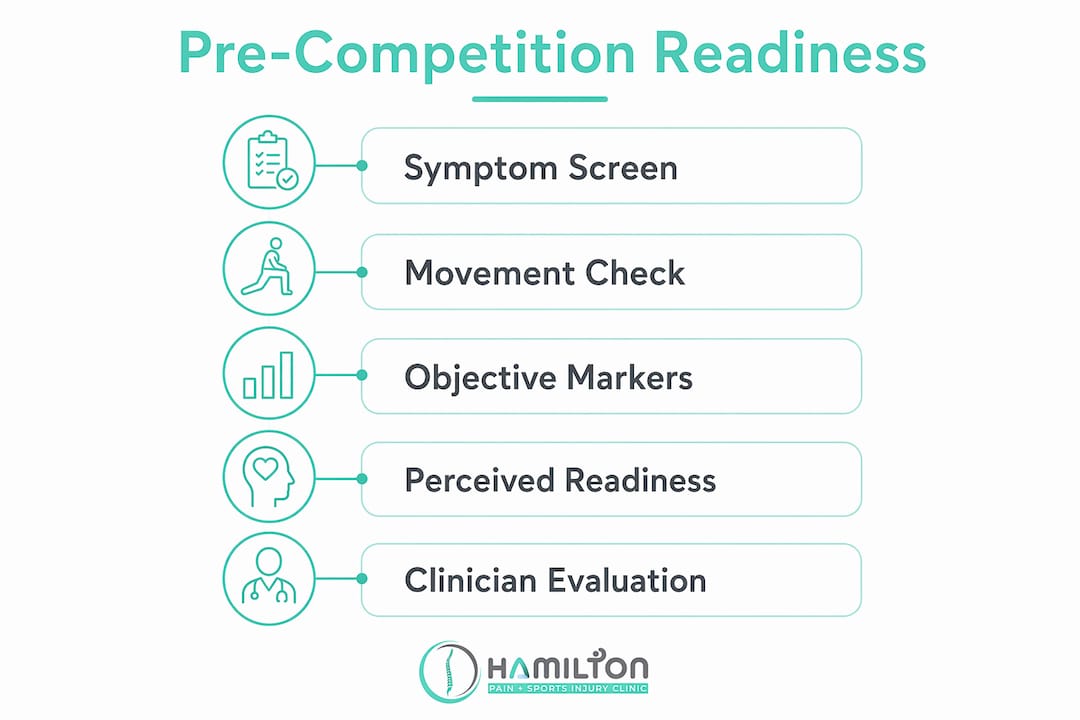
The morning of an event, run through three quick layers: a symptom screen, a simple movement check, and a perceived readiness rating out of ten. The whole thing takes about five minutes and gives you a surprisingly clear picture.
The symptom screen is a set of YES/NO questions drawn from standard event screening forms: any chest pain or palpitations in the last 48 hours? Unexplained dizziness or near-collapse? New severe joint or muscle pain? Recent surgery or a procedure in the past year? If you answer YES to any of these, seek medical advice before competing. A YES does not automatically mean you are out, but it does mean you need a clinician's sign-off first.
Movement checks are quick. Try a single-leg hop on each side and note any pain. Drop into a full squat and check for restriction or discomfort. Do a short controlled acceleration of 10–15 metres and pay attention to how your legs feel. Sharp pain on any of these is a stop sign. Stiffness that loosens within two minutes is usually fine to monitor.
Finally, rate your overall readiness from one to ten. Anything below six warrants a conversation with your coach or therapist before the gun goes off. Combine that with the movement checks and you have a genuinely useful picture, not just a gut feeling.
Which objective markers tell you the most about readiness?
Clinicians and sports scientists use several validated tools to check physical fitness before an event. Here is what each one measures and why it matters.
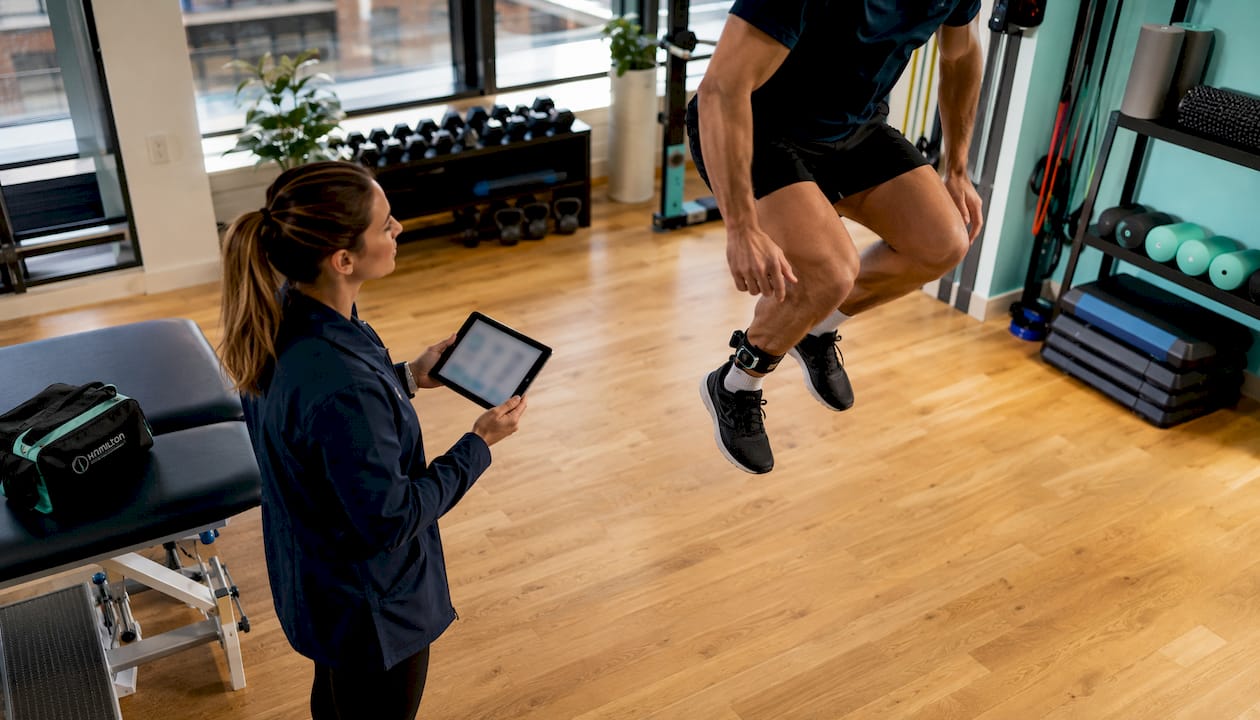
The countermovement jump (CMJ) is the most practical daily marker for power athletes. It takes 2–3 minutes with an IMU or jump mat, uses the highest of three trials, and detects drops in neural drive and contractile velocity before you even feel tired. A 5% drop from your 7-day rolling average CMJ height is a commonly used population-level trigger for load reduction, though the right threshold for you depends on your individual coefficient of variance (CV).
Velocity-based warm-up testing suits strength and field-sport athletes. A drop in mean concentric velocity on a familiar lift (say, 10% below your recent average) flags neuromuscular fatigue in a sport-specific way that CMJ alone might miss.
Heart rate variability (RMSSD) and resting heart rate trends reflect autonomic load. A single low HRV reading means little; a downward trend over three to five days is worth acting on.
Short wellness questionnaires (three to five items covering sleep, mood, fatigue, muscle soreness and stress) round out the picture. Multi-factorial monitoring combining CMJ, HRV and wellness scores consistently outperforms any single metric.
Pro Tip: Standardise everything: same time of day (morning, fasted), same footwear, same arm-swing protocol for CMJ. Inconsistent conditions produce noise, not data.
| Marker | Equipment needed | Time to administer | Best used for |
|---|---|---|---|
| CMJ | IMU, jump mat, or app | 2–3 minutes | Daily neuromuscular screen |
| Velocity warm-up | Barbell + velocity tracker | 5 minutes | Strength/field-sport athletes |
| HRV (RMSSD) | Chest strap or validated wrist device | 2–3 minutes | Autonomic load trends |
| Wellness questionnaire | Paper or app | 1–2 minutes | Subjective perception filter |
For a deeper look at the neuromuscular efficiency principles behind CMJ testing, the htktrainingblog has a solid primer worth bookmarking.
What does a clinician's pre-participation evaluation actually cover?
A full PPE combines medical and family history, a systems review (cardiovascular, respiratory, musculoskeletal, neurological) and a focused physical exam for high-risk joints. The NCBI PPE guidance is clear: the exam is designed to be inclusive, not exclusionary.
History flags that justify immediate clinical clearance include recent cardiac symptoms, unexplained syncope, a family history of sudden cardiac death under 50, or any surgery in the past twelve months. These are not automatic disqualifications, but they require a clinician's sign-off before you compete.
"The physical screening examination has moderate sensitivity and high specificity for significant musculoskeletal injuries — meaning a trained clinician can rule out serious problems with very high confidence, even when sensitivity is moderate." (EFSMA preparticipation evaluation recommendations, PMC)
The focused physical exam covers joint stability tests, strength asymmetry checks, range of motion, and functional movement screening for the shoulder, knee and ankle. Findings feed directly into the participation decision: full clearance, modified participation, or further investigation.
Look for a chartered physiotherapist or accredited sports therapist to conduct the PPE. Sportsinjurydublin's Return to Sport Rehabilitation programme includes this full evaluation as part of a personalised plan, with written recommendations you can take to your event organiser if needed.
How do clinicians turn test results into a participation decision?
No single marker makes the call. Clinicians triangulate CMJ or velocity data, HRV trends, wellness scores and the PPE history and exam together. The fitness-fatigue paradigm is the underlying logic: fatigue suppresses the expression of fitness, so the goal is to compete when fatigue is low enough that your fitness can actually show up.
Here is how the traffic-light framework typically plays out:
| Status | Typical test pattern | Recommended action |
|---|---|---|
| Green | CMJ within CV, HRV stable, wellness ≥7/10, no pain | Compete as planned |
| Amber | CMJ drop within 1–2× CV, mild wellness dip, no acute pain | Reduce volume or intensity; monitor closely |
| Red | CMJ drop >2× CV, HRV trend down 3+ days, pain on movement, or any history red flag | Substitute session; seek clinical review before competing |
A sudden CMJ drop without pain usually means load reduction and a 24-hour retest. Persistent joint pain with positive instability tests on exam is a different story: that typically means imaging, a targeted rehabilitation plan, and a phased return to sport timeline. Cardiac red flags (unexplained syncope, arrhythmia history) go straight to cardiology review.
- Escalation routes: further imaging (MRI, ultrasound), cardiology referral, or a structured rehabilitation programme with clear milestones.
- Timelines vary: a load-management amber might resolve in 48–72 hours; a structural finding could mean a four to six week phased return.
What should you expect at a clinic visit, and what does it cost in the UK?
A typical pre-competition assessment runs like this: pre-visit paperwork and screening takes 10–15 minutes (bring your event entry form, any previous imaging, and a medication list). The PPE and movement testing takes 20–40 minutes. A short written report with recommendations takes a further 5–15 minutes. Total: roughly 45–70 minutes from arrival to leaving with a clear plan.
Wear comfortable training kit you can move freely in. If you have had previous scans or blood tests, bring them. Remote screening (video consultation plus a self-administered wellness questionnaire) is available for athletes who cannot attend in person, though the physical exam component requires an in-person visit.
Cost guidance for the UK market: a standalone sports physiotherapy or sports therapy consultation typically runs £50–£90. A full PPE with movement testing and a written report sits higher, often £80–£150 depending on the clinic and the depth of assessment. Return-to-sport rehabilitation programmes are priced separately and vary by duration and complexity.
For teams, a triage protocol (short wellness survey first, objective testing only for flagged athletes) keeps the daily testing burden manageable while maintaining sensitivity for the athletes who genuinely need attention.
- Bring: training kit, event entry form, previous imaging, medication list.
- Ask about: remote screening options, written clearance letters, and whether the clinic offers team triage packages.
How do you keep tabs on readiness across a whole season?
Daily monitoring does not have to be complicated. A three-item wellness survey (sleep quality, fatigue, mood, each rated 1–5) takes under two minutes and acts as a filter. Only athletes who flag amber or red on the survey proceed to CMJ or velocity testing that day. This is the triage approach, and it works well for both individual athletes and club-level teams.
A simple monitoring template:
- Daily (morning, pre-training): Complete the three-item wellness survey. If all scores are 4–5, proceed normally. If any score is 3 or below, flag for objective testing.
- On flagged days: Perform three CMJ trials and compare to your 7-day rolling average. If the drop exceeds your individual CV, reduce session load.
- Weekly: Update your rolling baseline. Note any trends (three or more consecutive amber days warrant a clinical check-in).
- Monthly (or when red flags appear): Full clinical reassessment or a remote check-in with your therapist.
Warning signs that need immediate clinical reassessment, not just a load reduction:
- Progressive pain that worsens across consecutive sessions.
- Unexplained performance drop lasting more than five days.
- Any cardiac symptom (chest pain, palpitations, syncope).
- Persistent sleep disturbance combined with mood changes (a classic early overtraining signal).
- A new sports injury red flag such as joint swelling, neurological symptoms, or significant asymmetry.
During fixture congestion, reserve objective testing for flagged athletes and lean harder on the wellness triage. The goal is sustainability, not perfection.
Ready for a personalised pre-competition assessment in Dublin?
Knowing the framework is one thing. Having a chartered physiotherapist or sports therapist run the full evaluation for you is another, and it is the difference between guessing and knowing.
Sportsinjurydublin (Hamilton Pain and Sports Injury Clinic) offers personalised pre-competition assessments that cover the full PPE, objective neuromuscular testing, and a written plan you can actually use. The clinic's Return to Sport Rehabilitation programme takes athletes from assessment through to full competition clearance, with individual plans built around your sport, your history, and your timeline. If your assessment flags a need for recovery sessions or a structured conditioning block, those are available in-clinic too. Book online or by phone, and expect a first appointment that covers your history, a movement screen, and clear next steps. No generic protocols, no guesswork.
Key takeaways
A morning self-check plus objective markers (CMJ, HRV, wellness score) gives you a reliable, evidence-based method to evaluate competition readiness, and a clinician-led PPE is the right escalation when red flags appear.
| Point | Details |
|---|---|
| Morning self-check first | Run a 5-minute symptom screen, movement check, and perceived readiness rating before every event. |
| Use objective markers | CMJ, HRV trends, and wellness scores together outperform any single metric for detecting fatigue. |
| Know your thresholds | A CMJ drop of 5% or more from your 7-day rolling average is a commonly used population-level signal to reduce load, but the right cut-off for you depends on your individual coefficient of variance and should be personalised. |
| Escalate red flags promptly | Cardiac symptoms, unexplained syncope, or sharp joint pain require clinical review before competing. |
| Sportsinjurydublin for full assessment | Hamilton Pain and Sports Injury Clinic provides personalised PPE and return-to-sport programmes in Dublin. |
A clinician's note on readiness and risk
There is a version of this conversation that goes: "I feel fine, I'll be grand." And sometimes that is true. But the athletes I see who get into trouble are rarely the ones who ignored obvious pain. They are the ones who missed a quiet trend, a week of broken sleep, a subtle asymmetry that had been building for a month. The fitness-fatigue paradigm is real: your fitness does not disappear when you are tired, it just cannot express itself. Competing in that state does not just hurt performance, it raises injury risk in ways that are genuinely preventable.
The individualised approach matters here. Population thresholds are a starting point, not a verdict. Your CV, your sport, your training history, and your competition schedule all shape what "ready" actually means for you. If you are unsure where you sit, that is exactly what a pre-competition assessment is for.
Further reading and sources
The sources below informed the thresholds, methodology, and clinical framework in this guide. If you want a clinician to interpret these tests for your specific situation, Sportsinjurydublin can do that.
- Preparticipation Physical Evaluation (PPE) — NCBI Bookshelf: the standard reference for PPE scope, history forms, and examination components.
- EFSMA Preparticipation Evaluation Recommendations — PMC: European standardised PPE framework; source of the musculoskeletal screening sensitivity and specificity figures cited above.
- Assessing athlete readiness — systematic review and meta-analysis: evidence base for multi-factorial monitoring combining CMJ, HRV and wellness scores.
- How to monitor athlete readiness daily — PoinT GO Research: practical CMJ protocol, 5% rolling-average threshold, and triage workflow.
- Pre-Exercise Health Screening — Suva Marathon: real-world event screening template illustrating standard YES/NO question formats.
- Injury prevention checklist for athletes: practical companion checklist from Sportsinjurydublin for athletes building a monitoring habit.