
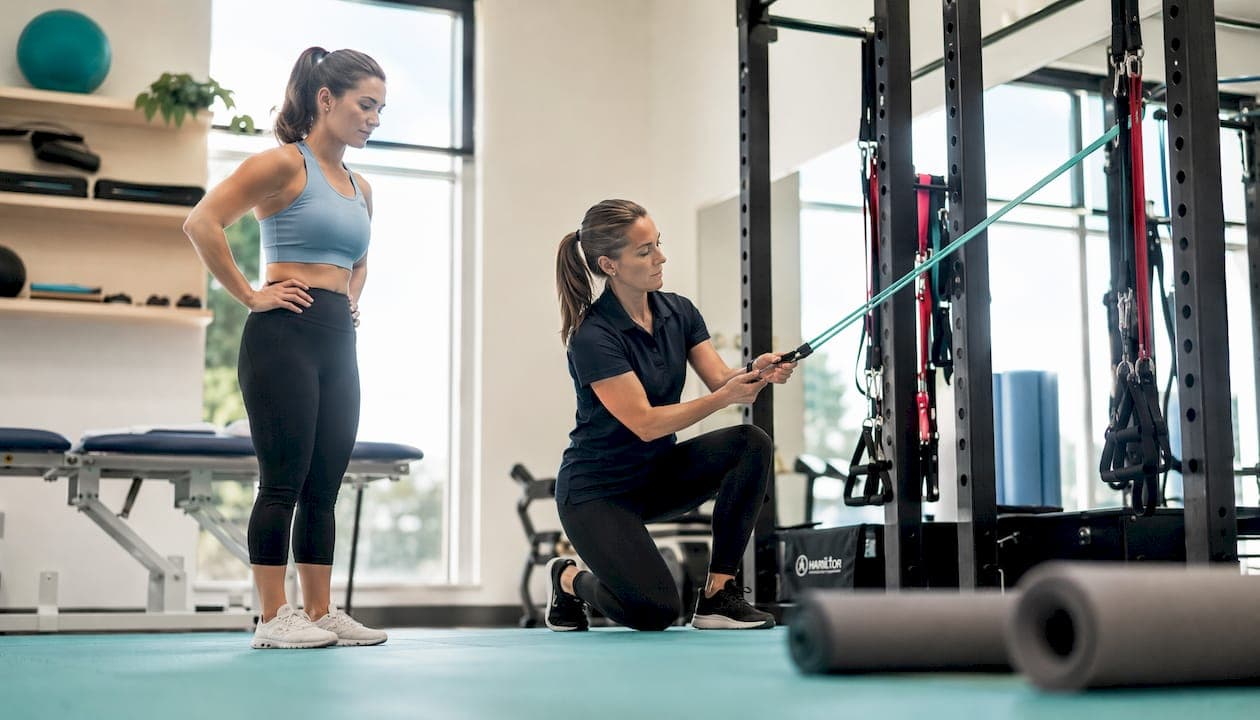
Return to sport after injury is defined as the safe, criteria-based resumption of full athletic participation after a period of rehabilitation. Feeling pain-free is not enough. Multi-modal protocols reduce re-injury rates by 47% compared to time-based clearance, and they require strength symmetry of 85% or above alongside ACL-RSI scores above 75. Tools like the Limb Symmetry Index (LSI) and the ACL Return to Sport after Injury (ACL-RSI) scale give clinicians and athletes objective benchmarks rather than gut feelings. Mild sprains typically need 3–6 weeks of recovery, while severe reconstructions demand 4–6 months or more. Sportsinjurydublin works with athletes across this full spectrum, applying evidence-based protocols tailored to each person's injury, sport, and lifestyle.
What does return to sport after injury actually involve?
Most athletes think "return to sport" means the moment they stop limping. Clinicians define it differently. Current clinical standards require a Limb Symmetry Index of 95% or above for strength and hop tests, ACL-RSI scores of 77 or above, and zero pain during full-speed sport-specific movements before full clearance is granted. That is a much higher bar than most people expect.
The reason the bar is high is simple. Pain relief is not readiness. Returning without meeting objective functional and psychological criteria is the single biggest driver of re-injury. Understanding why pain persists after tissue heals helps explain why athletes who feel fine can still be at serious risk.
What are the phases of rehabilitation for returning to sport?
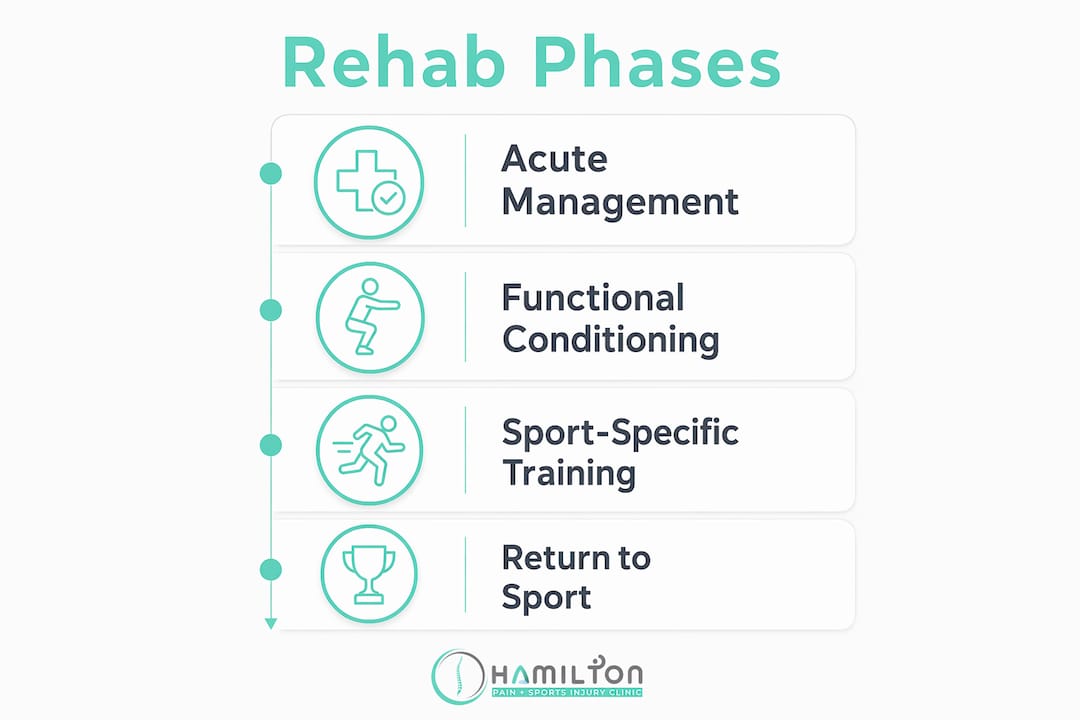
Rehabilitation follows four universal phases. Each phase has specific objectives, and athletes must meet criteria before advancing. Skipping a phase is the most common mistake, and it almost always leads to setbacks.
| Phase | Typical duration | Key objectives |
|---|---|---|
| Acute management | Days 1–7 (mild) to weeks (severe) | Control swelling, protect tissue, restore basic range of motion |
| Motion and control | 2–8 weeks | Restore full range of motion, begin neuromuscular activation |
| Functional conditioning | 4–16 weeks | Rebuild strength, power, and sport-specific movement patterns |
| Return to sport | 2–8 weeks | Graduated reintegration, load monitoring, psychological readiness |
Criteria-based progression matters far more than calendar days. A mild ankle sprain may move through all four phases in three weeks. An ACL reconstruction typically takes 9–12 months to complete the full continuum. The timeline is secondary to whether you have actually met the benchmarks for each phase.
Functional conditioning is the phase most athletes rush. They feel strong, they feel confident, and they want to get back on the pitch. But this is precisely where strength training for runners and sport-specific conditioning do their most important work. Skipping it leaves the neuromuscular system underprepared for the demands of competition.
Pro Tip: Never advance to the next phase based on how you feel on a good day. Use the worst day of the past week as your benchmark. If that day would not meet the criteria, you are not ready.
How do you know when you are ready? Key tests and criteria
Objective testing replaces guesswork. Functional testing includes hop tests, isometric quadriceps strength symmetry, movement quality checks, and psychological readiness scales. Passing these tests reduces re-injury risk significantly compared to time-based clearance alone.
Here is a practical overview of the key tests and what they measure:
| Test | Benchmark | What it tells you |
|---|---|---|
| Limb Symmetry Index (LSI) | ≥90–95% | Whether the injured limb matches the healthy side in strength and power |
| Single-leg hop test | ≥90% symmetry | Functional power and confidence under load |
| ACL-RSI scale | ≥75–77 | Psychological readiness and fear of re-injury |
| VAS pain scale | ≤2/10 during activity | Whether load is within safe tolerance |
| 24-hour symptom rule | No increase in pain or swelling | Whether the previous session was appropriate |
The 24-hour rule is one of the most practical self-monitoring tools available. If symptoms worsen or swelling increases within 24 hours of training, the load was too high. Scale back before advancing.
Movement quality assessments cover landing mechanics, cutting, and deceleration control. These are not just about strength. They reveal whether the nervous system has relearned safe movement patterns or is still compensating. Psychological readiness and nervous system retraining must be incorporated into rehabilitation to break compensatory movement patterns that persist even after tissue has healed.
Pro Tip: Feeling good is not a test result. Run the numbers. If your LSI is 88% and your ACL-RSI is 68, you are not cleared, regardless of how confident you feel on the training ground.
How to progress back to running and sport-specific activity
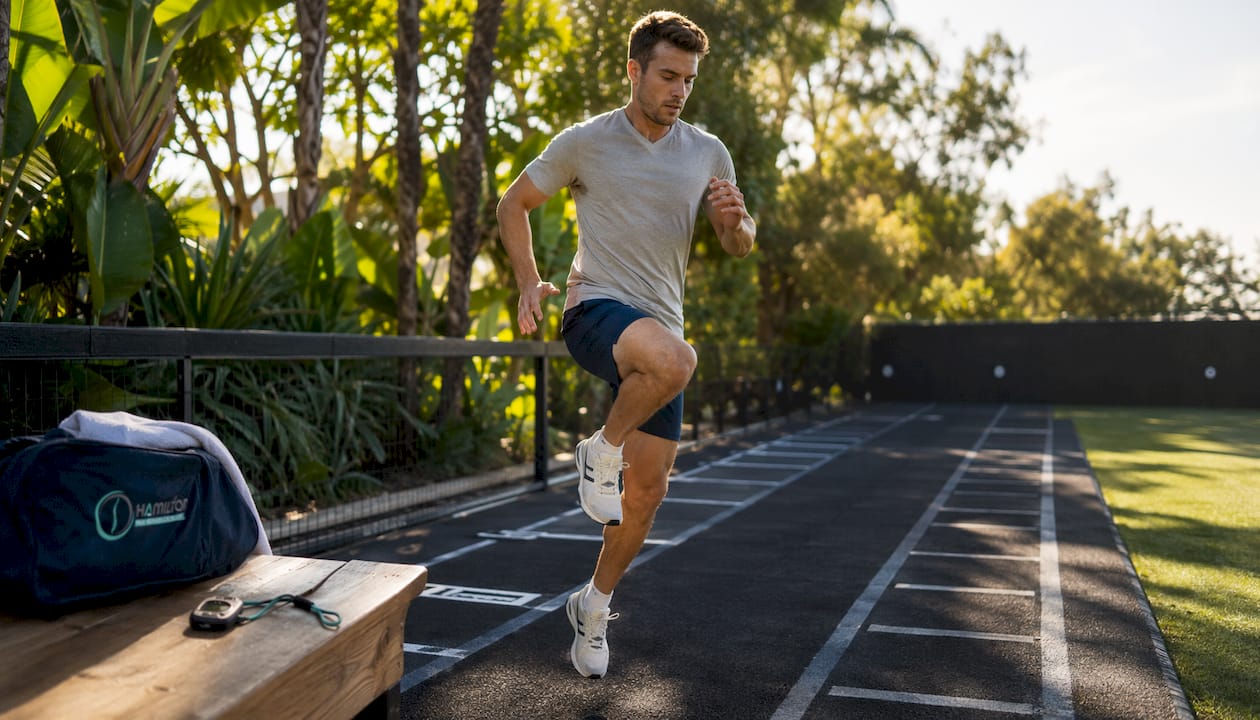
Returning to running after injury follows a structured run-walk progression. Start with 2-minute running intervals, confirm no symptom increase before advancing, train three sessions per week, and increase weekly volume by no more than 10–15%. That last point is non-negotiable.
A practical progression looks like this:
- Week 1: Walk 5 minutes, run 2 minutes, repeat 3 times. Three sessions.
- Week 2: Walk 3 minutes, run 4 minutes, repeat 3 times. Three sessions.
- Week 3: Walk 2 minutes, run 6 minutes, repeat 3 times. Three sessions.
- Week 4: Continuous easy run, 20 minutes. Three sessions.
- Week 5 onward: Increase duration by 10–15% per week. Introduce sport-specific drills.
The acute:chronic workload ratio is the key concept here. It compares your current week's training load to your average load over the previous four weeks. Keeping this ratio below 1.5 prevents the spikes that cause soft-tissue reinjury. The first 8 weeks after returning to competition carry the highest re-injury risk precisely because athletes increase load too fast.
Graduated return to full training typically follows percentages: 25% of normal training load, then 50%, then 75%, then 100%. Each step requires at least one full week without symptom flare before advancing. Sport-specific drills, change of direction, and contact situations come last, not first.
Common mistakes to avoid:
- Returning to full training after one good session
- Skipping rest days because "it feels fine"
- Ignoring swelling that appears the morning after training
- Comparing your timeline to a teammate's recovery
- Reintroducing high-intensity drills before completing the graduated load phases
Pro Tip: Log every session during your return phase. Note pain levels before, during, and 24 hours after. Patterns in that data will tell you more than any single training day.
What are the biggest challenges when returning to sport?
Fear of re-injury is real, and it changes how you move. Athletes who score below 75 on the ACL-RSI scale show measurable differences in movement confidence, landing mechanics, and willingness to push into high-speed efforts. This is not a mental weakness. It is a physiological response that requires deliberate retraining.
Compensatory movement patterns are the hidden danger. After injury, the body learns to protect the damaged area by shifting load to other structures. Even after tissue heals, those patterns persist unless they are actively retrained. This is why movement quality assessments matter as much as strength numbers.
Returning to sport is a graduated process involving physical, neuromuscular, and psychological milestones. It is not a single event, and treating it as one is the most reliable way to end up back on the treatment table.
The risks of returning too soon are well-documented. APKASS international guidelines recommend multi-factor assessments for tailored return strategies, specifically because rigid timelines without objective criteria consistently produce higher re-injury rates. Collaboration between the athlete, physiotherapist, and surgeon is not optional. It is the standard of care.
Practical strategies for overcoming these challenges:
- Use the ACL-RSI scale monthly to track psychological readiness objectively
- Work with a physiotherapist on graded exposure to feared movements
- Celebrate small milestones, not just full return to competition
- Communicate openly with your coaching team about confidence levels
- Build a personalised sports therapy plan that addresses both physical and psychological readiness
Strength criteria and pain criteria are the most cited return-to-play tests following hamstring and adductor injuries. High-quality research supports including range of motion and subjective readiness assessments alongside these physical measures. No single test tells the full story.
Key takeaways
Safe return to sport after injury requires meeting objective physical and psychological criteria, not simply waiting until pain subsides.
| Point | Details |
|---|---|
| Criteria over calendar | Use LSI, hop tests, and ACL-RSI scores rather than time elapsed to determine readiness. |
| Four-phase rehabilitation | Progress through acute management, motion control, functional conditioning, and return to sport in sequence. |
| Load management is critical | Keep weekly volume increases to 10–15% and the acute:chronic workload ratio below 1.5. |
| Psychological readiness counts | ACL-RSI scores below 75 indicate elevated re-injury risk regardless of physical test results. |
| Collaboration prevents setbacks | Athlete, physiotherapist, and surgeon must align on a personalised, multi-factor return plan. |
What I have learned after years of watching athletes come back
Here is something I see constantly: athletes who have done everything right physically, who have hit their LSI targets and passed their hop tests, who still get reinjured within two months of returning. And almost every time, the culprit is the same. They treated return to sport as a finish line rather than a phase.
The psychological side of this process is genuinely underestimated. I have worked with athletes who were physically cleared but whose movement patterns told a completely different story. They were guarding. They were hesitating. Their nervous system had not caught up with their tissue. Objective testing catches this, but only if you actually run the tests and take the results seriously.
The other thing I would say, from honest experience, is that the 10–15% weekly load rule feels painfully slow when you are fit and eager. It is not slow. It is the difference between a smooth return and a second injury that sets you back another six months. I have seen both outcomes. The athletes who respected the progression came back stronger. The ones who pushed through "just this once" almost always regretted it.
Sportsinjurydublin's approach to personalised rehabilitation is built on exactly this philosophy. Objective testing, graduated load, and honest conversations about psychological readiness. No generic timelines, no guesswork.
— Mark
Sportsinjurydublin's approach to safe return to sport
Getting back to the sport you love takes more than rest and good intentions. At Sportsinjurydublin, every return-to-sport programme is built around objective functional testing, graduated load management, and honest assessment of psychological readiness.
The team at Sportsinjurydublin uses evidence-based sports rehabilitation protocols tailored to your specific injury, sport, and training history. Whether you are returning from an ACL reconstruction or a stubborn hamstring strain, the programme adapts to where you actually are, not where a generic timeline says you should be. You can also book recovery sessions to support your gradual return and keep load management on track. If you are serious about coming back safely and staying back, a professional evaluation is the right starting point.
FAQ
How long does return to sport after injury take?
Recovery timelines vary by injury severity. Mild sprains typically require 3–6 weeks, while severe reconstructions such as ACL repairs demand 4–6 months or more before full return is appropriate.
What is the Limb Symmetry Index and why does it matter?
The Limb Symmetry Index (LSI) compares strength and power between the injured and healthy limb. Clinical standards require an LSI of 90–95% or above before an athlete is cleared for full return to sport.
Can I return to sport if I feel no pain?
Pain relief alone does not indicate readiness. Objective tests including the LSI, hop tests, and ACL-RSI psychological readiness scale must all meet clinical benchmarks before full return is safe.
What is the 24-hour rule in injury recovery?
The 24-hour rule states that if pain or swelling increases within 24 hours of a training session, the load was excessive. Athletes should scale back before progressing further in their return programme.
How do I manage training load when returning to running?
Follow a structured run-walk progression, limit weekly volume increases to 10–15%, and keep the acute:chronic workload ratio below 1.5. The first 8 weeks after returning to competition carry the highest re-injury risk.