

If you're a parent dealing with persistent back pain, skip the off-the-shelf brace and book a personalised rehabilitation assessment instead. The most effective posture correction isn't a product you strap on — it's a structured, clinic-delivered programme that retrains how you move, lifts, and carry. NICE guidance recommends manual therapy as part of a multimodal package that includes exercise, not as a standalone fix.
The fastest next step: book an in-person or online assessment at Hamilton Pain and Sports Injury Clinic (Sportsinjurydublin). Here's what to have ready:
- A brief summary of your symptoms (where it hurts, when it started, what makes it worse)
- Your preferred appointment times, including whether early morning or evening works better around childcare
- A note on any specific movements that trigger pain (lifting your child, pushing a pram, sitting at a desk)
- Whether you'd prefer in-person in Dublin or a remote consultation
Table of Contents
- What parents need to know about posture correction programmes
- Why a personalised programme beats a brace every time
- Sportsinjurydublin: book your back pain assessment today
What parents need to know about posture correction programmes
The table below covers the core comparison dimensions so you can decide quickly.
The single most important thing: a clinic-based rehabilitation programme that combines manual therapy with tailored exercise produces better long-term outcomes than any passive, single-modality treatment.
| Point | Details |
|---|---|
| Best for | Parents, active adults, desk-workers with persistent or recurring back pain |
| Delivery format | In-person (Dublin), fully remote, or hybrid |
| Core treatments | Manual therapy, tailored exercise prescription, dry needling, orthotics |
| Evidence alignment | NICE-aligned multimodal care (exercise + manual therapy combined) |
| Session length | Typically 45–60 minutes per appointment |
| Expected timeline | Measurable improvement often within a few weeks of structured exercise |
Trust signals to check before booking any clinic:
- Clinician registered with HCPC or equivalent (Chartered Physiotherapist or accredited sports therapist)
- Personalised treatment plan with measurable goals set at the first appointment
- NICE-aligned multimodal care — exercise and manual therapy together, not one or the other
- Transparent pricing and session duration stated upfront
- Documented outcomes and real patient testimonials
Why a personalised programme beats a brace every time
Here's the honest truth: "sit up straight" is almost useless advice for a parent. You're not sitting still — you're picking up a toddler from the floor, loading a car seat, hunching over a buggy. Static posture cues don't transfer to those movements. What actually works is retraining the specific movement patterns that are loading your spine badly.
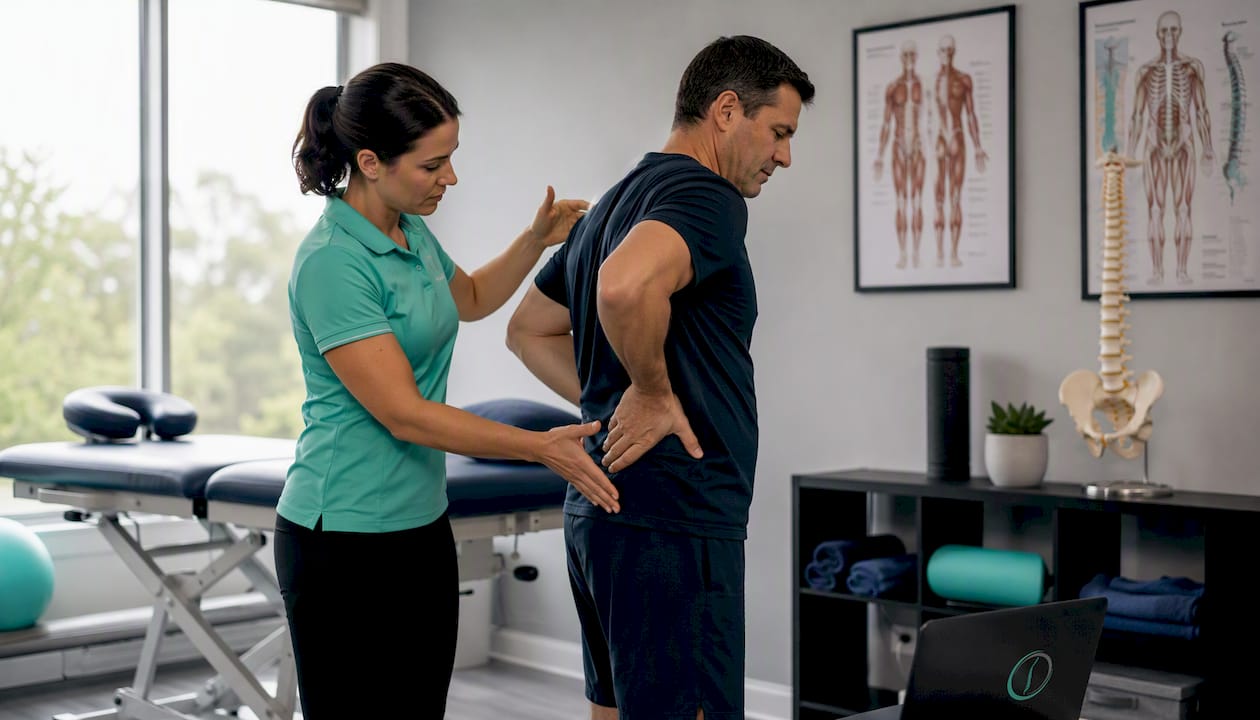
Research published in PMC found that a structured posture-correction exercise programme (20 minutes per session, three times a week, over 8 weeks) produced statistically significant reductions in shoulder, mid-back, and low-back pain. That's not a brace doing the work — that's progressive, targeted exercise changing how the body functions.
The clinical picture for most parents is more complex than "bad posture." Back pain often stems from musculoskeletal imbalances — pelvic tilt, ribcage position, even how you breathe under load — rather than the back alone. A good assessment looks beyond where it hurts.
NICE guidance is clear: manual therapy should be combined with exercise and, where relevant, psychological support. Traction is not recommended. A brace that forces a fixed position doesn't address the underlying dysfunction — and for parents, the goal isn't a perfect static posture anyway. It's being able to lift, carry, and play without pain.
At Sportsinjurydublin, the approach starts with understanding your lifestyle — how you move at home, what your day actually looks like, what you're trying to get back to. That context shapes everything from the manual therapy techniques used to the home exercise programme you leave with.
Pro Tip: Before your assessment, practise a hip-hinge when picking things up off the floor: push your hips back rather than rounding your lower back. It takes about two days to feel natural and immediately reduces spinal load during the movements parents do most.
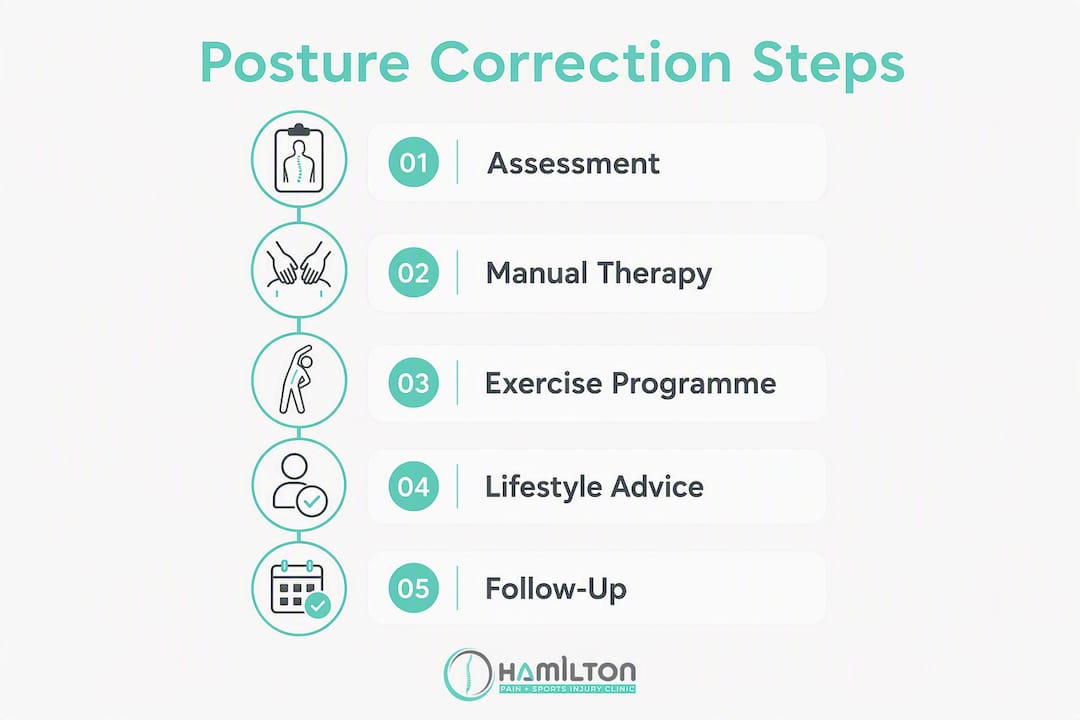
Nutrition and lifestyle also play a role in recovery — Nourished is a useful resource if you're looking at hormone-healthy nutrition alongside your rehabilitation.
Sportsinjurydublin: book your back pain assessment today
Parents with back pain don't need more generic advice — they need a clinician who understands that your body is doing demanding physical work every single day, often on broken sleep. Sportsinjurydublin's Hamilton Pain and Sports Injury Clinic offers exactly that: a personalised assessment that maps your specific movement patterns, identifies the root cause of your pain, and builds a programme around your actual life.
Services relevant to posture-related back pain include individual assessment, manual therapy, dry needling, deep tissue massage, tailored exercise prescription, orthotics, and personal training for long-term maintenance. Sessions are typically 45–60 minutes, billed per appointment with no long-term contract required. Flexible scheduling, including early and evening slots, is available for parents who need to work around childcare.
Book your rehabilitation assessment online, or check availability for a remote consultation if getting to the clinic is tricky right now.
Useful sources and further reading
- NICE guidance: Low back pain and sciatica in over 16s — the primary clinical reference for multimodal care recommendations
- Effect of an exercise programme for posture correction (PMC) — controlled study showing measurable pain reduction from structured exercise
- Effectiveness of manual therapies: the UK evidence report — evidence base for spinal manipulation and mobilisation in low back pain
- NICE guidance via NCBI Bookshelf — group exercise and stepped-care pathway detail
- Role of posture in chronic pain — Sportsinjurydublin's clinical overview
- Benefits of back pain rehabilitation — what to expect from a clinic-based programme
- How to personalise your chronic pain treatment plan — tailoring rehabilitation to your daily demands