

Personalising a treatment plan for chronic pain means building a unique, evidence-based strategy around your specific symptoms, lifestyle, and goals rather than following a generic protocol. Chronic pain is not a single condition. It shifts, changes, and behaves differently from person to person, which is why one-size-fits-all treatments fail so consistently. The clinical term for this approach is individualised multimodal pain management, and it sits at the heart of modern chronic pain care. Get it right, and you move from managing symptoms to actually improving your quality of life.
What key factors should you assess to personalise your chronic pain treatment?
A personalised plan starts with a thorough assessment, not a quick questionnaire. You need to understand where your pain comes from, what makes it worse, what makes it better, and how it affects your daily function. That is a lot more than a number on a 1–10 scale.
The core areas worth assessing include:
- Pain origin and behaviour. Is it nerve-related, musculoskeletal, or widespread? Does it flare at certain times of day or after specific activities?
- Triggers and aggravating factors. Stress, poor sleep, and prolonged sitting are common culprits that generic protocols often miss entirely.
- Functional impact. How does pain affect your work, relationships, and movement? This shapes your goals more than any pain score.
- Anatomy and comorbidities. Conditions like diabetes, anxiety, or poor cardiovascular fitness change which treatments are safe and effective for you.
- Social determinants. Housing stability, access to care, and social support all influence outcomes in ways that purely clinical assessments overlook.
- Patient goals and preferences. What does success look like to you? Getting back to running? Sleeping through the night? Your answer shapes the entire plan.
One of the most useful tools here is Ecological Momentary Assessment (EMA), which is essentially a structured pain diary you complete in real time throughout your day. Patient-led self-monitoring using detailed logs rather than simple pain scales gives clinicians far richer data to work with. That richer data is what separates a targeted intervention from a generic guess.
Pro Tip: Keep a pain diary for at least two weeks before your first clinical appointment. Note pain intensity, mood, sleep quality, and activity level at the same times each day. You will arrive with data rather than vague impressions, and your clinician will thank you for it.

Social determinants are worth pausing on. Effective personalised pain care addresses the full picture, including anatomy, social context, and lifestyle, not just the site of pain. If you are sleeping on a broken mattress, working a physically demanding job with no flexibility, or dealing with financial stress, those factors belong in your assessment too.
Which treatment options form the basis of a customised pain management plan?
The evidence points clearly toward a biopsychosocial and multimodal approach. That is a fancy way of saying your plan should address the physical, psychological, and social dimensions of your pain simultaneously, using more than one type of treatment.
Chronic pain affects over 100 million adults in the United States alone, and the research consistently supports non-pharmacological therapies as the primary treatment. That means exercise, psychological therapies, and manual therapy come first. Medication is not the starting point.
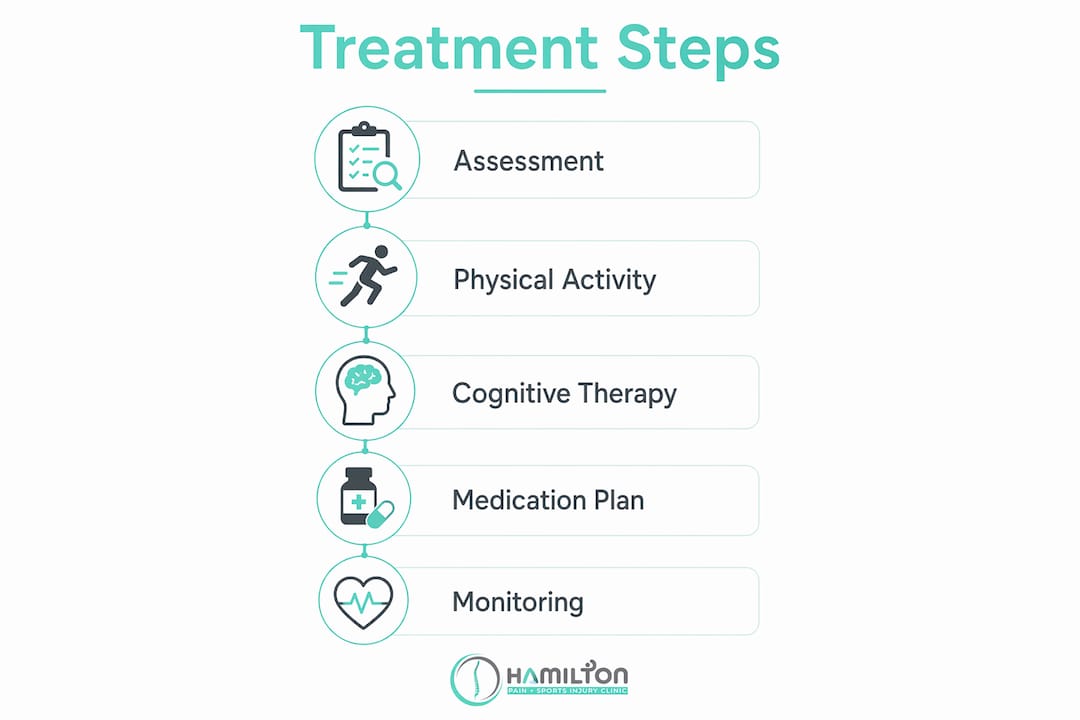
| Treatment modality | Personalised application |
|---|---|
| Graded physical activity | Matched to current fitness, pain tolerance, and enjoyment to improve adherence |
| Cognitive behavioural therapy (CBT) | Targeted to specific psychological factors such as catastrophising, fear-avoidance, or low mood |
| Manual therapy | Applied to specific anatomical findings, not as a blanket treatment |
| Sleep hygiene interventions | Tailored to individual sleep patterns and pain-related sleep disruption |
| Pharmacologic trials | Time-limited with clear functional benchmarks and a taper plan if unmet |
UK NICE guidelines and Canadian guidelines both rank physical activity as a first-line treatment for chronic primary pain. Enjoyment matters too. When you actually like the exercise you are doing, you stick with it. That sounds obvious, but it is something clinicians frequently ignore when prescribing generic exercise programmes.
CBT is not just for mental health. Structured CBT modules matched to specific psychological targets improve outcomes in chronic pain treatment. A tool called the Matching Matrix links CBT modules with 23 validated treatment targets, helping clinicians select the right psychological intervention for your specific pain-related thinking patterns. This is a long way from "have you tried mindfulness?"
Pro Tip: When discussing medication with your clinician, ask specifically about the taper plan before you start. Pharmacologic treatments should be time-limited trials with clear functional goals. If there is no improvement in function within 4–8 weeks, the plan should change.
For movement-based options, the movement therapies guide from Sportsinjurydublin covers evidence-based non-drug interventions in practical detail, including exercise, sleep hygiene, and manual therapy approaches worth exploring.
How can you implement and track your personalised pain plan effectively?
Having a plan on paper is one thing. Actually running it day to day is another. Here is a practical sequence that works.
- Set functional goals, not pain goals. "I want to walk to the shops without stopping" is more useful than "I want my pain to be a three." Functional goals are measurable and motivating.
- Start self-monitoring immediately. Track pain, mood, sleep, and activity daily. A simple notebook works fine. The point is consistency, not technology.
- Schedule a review at four weeks. Do not wait until something goes wrong. A four-week check-in lets you and your clinician catch problems early and adjust before bad habits set in.
- Use shared decision-making. Bring your monitoring data to appointments. Personalised psychotherapy with patient-centred self-monitoring showed over 80% compliance and a significant decrease in disability scores. That result came from patients being active participants, not passive recipients.
- Reassess every 8–12 weeks. Pain changes. Your plan should change with it. A plan that worked in month one may need significant adjustment by month three.
- Address side effects immediately. Do not push through medication side effects hoping they will resolve. Flag them early so your clinician can adjust the dose or switch the approach.
"The goal of a personalised pain plan is not to eliminate pain entirely. It is to improve your function and quality of life to the point where pain no longer controls your decisions."
Pro Tip: Bring a written summary of your monitoring data to every appointment. Clinicians see many patients. Your data helps them see you as an individual, not a diagnosis.
The pain management therapy guide from Sportsinjurydublin is a useful companion here, covering the practical side of working with clinicians to build and adjust your plan over time.
What challenges might arise in personalised pain treatment?
Personalised care sounds great in theory. In practice, several things get in the way.
Common obstacles and how to handle them:
- Clinical bias toward generic protocols. Some clinicians default to standard prescriptions because they are faster. Ask directly whether your treatment is based on your specific assessment or a standard protocol.
- Incomplete data collection. If your clinician is not asking about sleep, mood, social context, and lifestyle, your plan is missing critical inputs. Raise these yourself if needed.
- Patient misunderstanding of pain variability. Pain fluctuates. A bad day does not mean the plan is failing. Understanding this prevents premature abandonment of effective treatments.
- Over-reliance on medication. Standard protocols designed around averages often result in temporary relief or worsening. Medication alone rarely addresses the full picture.
- Poor adherence to exercise. Graded activity works, but only if you do it. Choose activities you genuinely enjoy and start at a level that feels almost too easy.
Intuitive personalisation is also prone to bias. Structured decision tools like the Matching Matrix exist precisely because clinical intuition alone is not reliable enough for complex pain presentations. Ask your clinician what framework they use to match treatments to your specific profile.
Pro Tip: Write down two or three specific questions before every appointment. Clinicians respond better to specific questions than to general complaints. "Why is this medication the right choice for my type of pain?" gets a more useful answer than "Is this working?"
Examples of personalised plans for common chronic pain conditions
Seeing how personalisation works in practice makes the concept much more concrete.
- Low back pain. A personalised plan here focuses on posture assessment, movement pattern analysis, and targeted strengthening exercises matched to the specific muscles involved. The role of posture in chronic pain is often underestimated. Two people with identical MRI findings can have completely different functional needs and therefore completely different plans.
- Neck pain. Manual therapy combined with CBT techniques targeting fear-avoidance beliefs works well here. The psychological component matters because neck pain is heavily influenced by stress and protective muscle guarding. A plan that ignores this will plateau quickly.
- Fibromyalgia and widespread pain. Lifestyle modification is central. Graded aerobic activity, sleep hygiene, and pacing strategies form the backbone. The key is starting gently and building very slowly, because overexertion causes flares that undermine confidence and adherence.
- Post-injury persistent pain. When pain continues after tissue healing, the plan must address central sensitisation, not just the original injury site. Understanding why pain persists after tissue heals is genuinely useful for anyone stuck in this frustrating pattern.
In every case, patient goals and preferences shape which elements get prioritised. Two people with fibromyalgia may share a diagnosis but have entirely different plans based on their fitness levels, work demands, and what they actually want to achieve.
Key takeaways
A personalised chronic pain plan works because it treats you as an individual with a unique pain profile, not as an average patient with a standard diagnosis.
| Point | Details |
|---|---|
| Assess the full picture | Include anatomy, lifestyle, mood, sleep, and social factors before building any plan. |
| Use self-monitoring data | Daily pain diaries and EMA give clinicians the nuanced data needed for targeted treatment. |
| Prioritise non-drug therapies | Physical activity and CBT are first-line treatments, not optional add-ons. |
| Set functional goals | Measure success by what you can do, not just by pain intensity scores. |
| Reassess regularly | Review your plan every 8–12 weeks and adjust based on real progress data. |
My honest view on personalised chronic pain care
I have worked with a lot of people in persistent pain, and the single biggest mistake I see is treating pain as a purely physical problem to be fixed. Pain is real, yes. But it is also shaped by sleep, stress, beliefs, relationships, and a dozen other things that a prescription or a single therapy session will not touch.
What actually shifts outcomes is when someone becomes an active participant in their own care. The self-monitoring piece is not just a data collection exercise. It changes how people relate to their pain. They start to notice patterns. They realise that a terrible Tuesday was preceded by three nights of poor sleep, not by anything structural. That kind of insight is genuinely empowering, and it is something no generic protocol can deliver.
The Matching Matrix approach to CBT excites me because it finally gives clinicians a structured way to match psychological interventions to specific pain-related thinking patterns. Intuition has its place, but structured tools reduce bias and improve consistency. That matters enormously when you are dealing with something as complex and variable as chronic pain.
My advice? Do not accept a plan that was not built around your specific assessment. Ask questions. Bring your data. Push for a review date. The benefits of personalised sports therapy are real, but only when the personalisation is genuine rather than cosmetic.
— Mark
How Sportsinjurydublin supports your personalised pain plan
Sportsinjurydublin builds every treatment plan around a thorough individual assessment, not a standard protocol. Whether you are dealing with persistent back pain, post-injury stiffness, or widespread discomfort, the clinic's approach starts with understanding your specific pain profile, lifestyle, and goals.
The sports rehabilitation programme and personal training services are both structured around your individual needs, incorporating graded physical activity, manual therapy, and movement-based interventions matched to where you are right now. For back pain specifically, the tailored back pain treatments at Sportsinjurydublin combine clinical assessment with targeted exercise and hands-on therapy. Clients regularly report significant improvements, often after just a handful of sessions.
FAQ
What does it mean to personalise a chronic pain treatment plan?
Personalising a chronic pain treatment plan means designing a care strategy around your specific pain type, lifestyle, goals, and psychological profile rather than applying a standard protocol. It draws on assessment data including anatomy, sleep, mood, and social context to select the most effective combination of therapies for you.
Is exercise really a first-line treatment for chronic pain?
Yes. UK NICE guidelines and Canadian clinical guidelines both rank physical activity as a primary treatment for chronic primary pain. The key is matching the type and intensity of exercise to your current capacity and choosing activities you enjoy, since enjoyment directly improves adherence.
How often should I review my personalised pain plan?
A review at four weeks allows early course corrections, with a fuller reassessment every 8–12 weeks recommended. Pain changes over time, and a plan that was effective in the early stages may need adjustment as your function and goals evolve.
Can cognitive behavioural therapy help with chronic pain?
CBT is an evidence-based treatment for chronic pain, particularly when matched to specific psychological factors like fear-avoidance or catastrophising. The Matching Matrix framework links 23 validated treatment targets to specific CBT modules, making the approach far more targeted than general stress management.
When should medication be part of a personalised pain plan?
Medication works best as a time-limited trial with clear functional benchmarks. If there is no meaningful improvement in function within 4–8 weeks, the plan should be adjusted. Medication alone rarely addresses the full biopsychosocial picture and carries polypharmacy risks when used without a structured taper plan.