
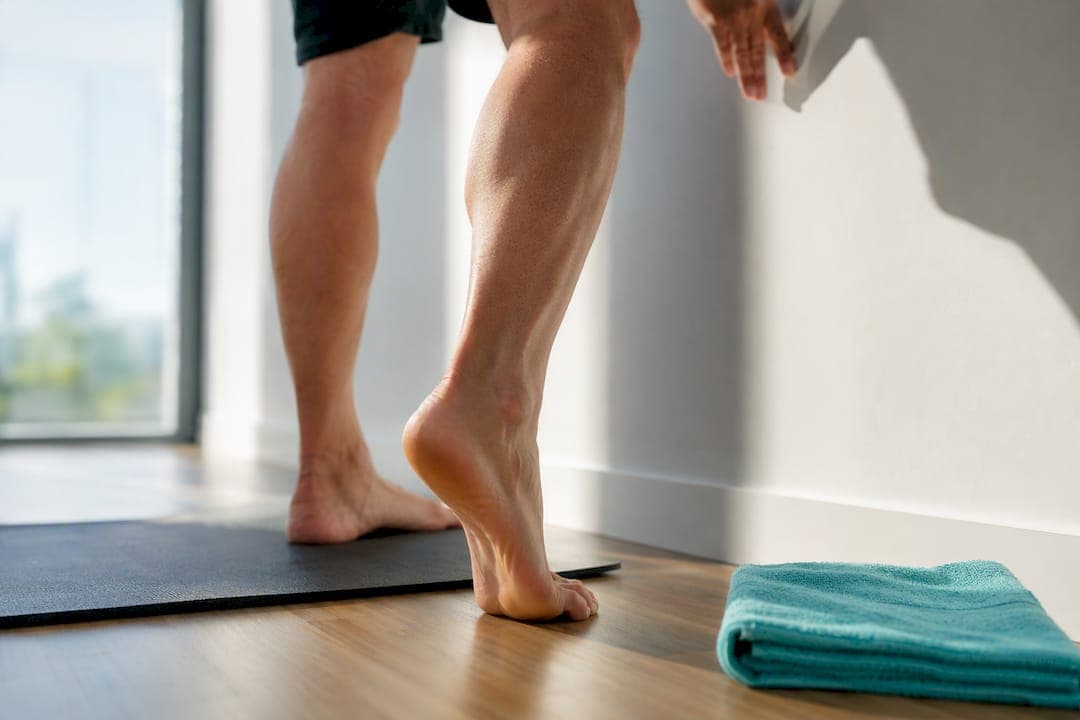
The most effective treatment is consistent plantar fascia–specific stretching combined with progressive calf and foot loading, worn in with supportive footwear. Most people improve within weeks to months without needing surgery. If home care hasn't shifted your morning pain after six weeks, it's worth booking in with a clinician, and yes, a proper assessment from somewhere like Hamilton Pain and Sports Injury Clinic (that's us, hello) can save you months of guessing.
TL;DR:
- Consistent plantar fascia stretching combined with calf and foot loading offers most patients significant improvement within weeks to months.
- Supportive footwear and off-the-shelf orthotics are effective for mild cases, but custom orthotics and night splints may be necessary if initial measures fail.
- Rolling ice under the arch and using NSAIDs can provide temporary relief, but tissue remodeling depends on gradual, controlled loading rather than rest.
- If pain persists beyond six to twelve weeks despite home exercises and footwear adjustments, a professional assessment can identify other causes and advanced treatments.
- Most cases do not require surgery, with non-invasive therapies like manual treatment, dry needling, shockwave, or injections being effective before considering intervention.
Table of Contents
- What causes that horrible first-step heel pain?
- Easing plantar fasciitis pain right now
- Plantar fascia stretching and progressive loading, step by step
- Do you need orthotics, better shoes, or a night splint?
- When to see a clinician about your heel pain
- How long does plantar fasciitis actually take to heal?
- How Hamilton Pain and Sports Injury Clinic approaches plantar fasciitis
- Why most people get plantar fasciitis treatment wrong
- Book a proper assessment for your heel pain
- Sources
What causes that horrible first-step heel pain?
If you've ever hobbled to the bathroom feeling like you're walking on broken glass, only to loosen up ten minutes later, you know exactly what we're talking about. That's the signature move of plantar fasciitis.
Here's what's actually happening: your plantar fascia (the thick band of tissue running along the bottom of your foot) tightens up while you sleep. Your first steps stretch it back out too fast, causing tiny amounts of micro-tearing that fire off a sharp jolt of pain. It's genuinely the leading cause of that classic morning heel pain, and it eases as the tissue warms through.
Common contributors include:
- A sudden jump in running mileage or standing hours at work
- Worn-out or unsupportive footwear
- Tight, weak calf muscles
- Flat feet or very high arches
- Carrying extra weight through the heel and midfoot
Easing plantar fasciitis pain right now
You don't need to sit on the sofa for six weeks. Complete rest actually works against you here, because the fascia needs some gentle loading to stay adaptable. What you do need is to dial back whatever's aggravating it, whether that's your 10k training block or standing all day on concrete.
Ice helps more than most people expect. Roll a frozen water bottle under your arch, or apply an ice pack for 15 to 20 minutes every few hours during a bad flare. Over-the-counter NSAIDs like ibuprofen can take the edge off short term, though it's worth knowing that many cases show little classic inflammation, so anti-inflammatory measures are really just papering over the crack while the real rehab work happens underneath.
Pro Tip: Never go barefoot on tiles or hardwood while you're flaring up. Keep a supportive pair of slippers by the bed, because that first barefoot step onto a hard floor is often the most painful moment of the whole day.
- Reduce, don't eliminate, weight-bearing activity
- Ice for 15 to 20 minutes, several times a day
- Consider short-term NSAIDs if appropriate for you
- Swap barefoot walking for cushioned, supportive footwear
Plantar fascia stretching and progressive loading, step by step
This is the bit that actually fixes things, so stick with it (I know, exercises are nobody's favourite part of an injury).
- Plantar fascia-specific stretch. Cross the sore foot over the opposite knee, grab your toes, and pull them back towards your shin until you feel a stretch along the arch. Hold 10 seconds, repeat 10 times, three times a day, most importantly first thing before you get out of bed.
- Calf raises. Stand on a step, rise onto your toes, lower slowly. Start with both feet, progress to single-leg once it's comfortable. Aim for 3 sets of 10 to 15.
- Eccentric loading off a step. Lower your heel below the step edge slowly, over 3 to 4 seconds. This slow, controlled lengthening is where a lot of the tissue remodelling happens.
- Intrinsic foot strengthening. Try towel scrunches with your toes, or picking up small objects off the floor with your foot, a few minutes daily.
A dedicated stretching trial found that 92% of patients following this exact towel-pull stretch reported total satisfaction, or satisfaction with only minor reservations, at two-year follow-up. That's a genuinely strong result for something that costs nothing and takes ten minutes a day.
Track progress by noting how many steps it takes before the pain eases each morning. Fewer steps, and less intensity, means it's working.
Do you need orthotics, better shoes, or a night splint?
Footwear matters more than most people assume. Look for a supportive shoe with decent arch support, a slightly raised heel to toe drop, and proper cushioning, whether that's your daily trainers or your running shoes. If your current pair are past 500 miles or a couple of years old, that's often part of the problem.
Over-the-counter inserts work for a good chunk of mild to moderate cases, and there's no shame in starting there before spending on anything custom. Custom orthotics for plantar fasciitis are worth considering if off-the-shelf inserts haven't helped after a few weeks, or if you have a notably flat or high arch that needs more targeted correction.
Night splints hold your foot in a gently stretched position while you sleep, stopping that overnight tightening that causes the morning pain in the first place. They're not glamorous (you will look ridiculous, prepare yourself) but people who tolerate them tend to notice less first-step pain within two to four weeks.
- Replace trainers showing visible wear on the outsole or collapsed heel cushioning
- Try shop-bought inserts before committing to custom orthotics
- Give night splints at least a fortnight before judging whether they're helping
When to see a clinician about your heel pain
Home care handles a lot of cases, but plantar fasciitis isn't the only thing that causes heel pain, and it's worth ruling out mimics like a stress fracture, nerve entrapment, or fat pad atrophy before you assume it's straightforward.
A clinician will confirm the diagnosis through history and a focused physical exam, checking for tenderness at the specific point where the fascia attaches to the heel bone. From there, conservative rehab remains the first line, with manual therapy, dry needling, and cupping often used alongside your exercise programme to loosen the calf and plantar tissue faster than stretching alone.
For cases that stall, extracorporeal shockwave therapy (ESWT) has decent trial support, and injections have a role too, though patient selection matters a lot here. Surgery sits right at the back of the queue and is genuinely rare, reserved for the small number of people who haven't responded to a good 6 to 12 months of proper conservative treatment.
- Manual therapy and dry needling to address calf and plantar tightness
- Instrument-assisted soft tissue techniques for stubborn restrictions
- ESWT for cases that haven't responded after several months
- Corticosteroid or other injections, used selectively
- Surgery, only after exhausting the above
Pro Tip: If you're not sure whether you need a sports therapist or your GP first, start with whichever gets you seen fastest. Either route should point you towards the same conservative pathway.
How long does plantar fasciitis actually take to heal?
Most people see real improvement within weeks to a few months of consistent conservative care, and the majority never need anything beyond stretching, footwear changes, and time. Watch for reduced pain on those first steps out of bed and better walking tolerance across the day as your markers of progress.
If nothing's shifted after 6 to 12 weeks of properly doing the exercises, or the pain is getting worse rather than better, or you notice numbness or tingling, that's your cue to get it properly assessed rather than pushing on alone.
How Hamilton Pain and Sports Injury Clinic approaches plantar fasciitis
We start with an individualised assessment rather than a generic handout, because a marathon runner's fascia problem and a nurse's twelve-hour-shift fascia problem need different plans. Treatment typically blends manual therapy, a tailored exercise programme, and shockwave or laser therapy where it's genuinely indicated. Most patients need a handful of sessions alongside their home programme, and realistic recovery still sits in the weeks-to-months range, not overnight.
Why most people get plantar fasciitis treatment wrong
Here's my honest gripe with how a lot of people approach this: they lean entirely on ice and painkillers because it feels like progress, then wonder why the pain keeps coming back. Passive stuff calms things down temporarily; it doesn't rebuild tissue tolerance. Stack your stretches onto something you already do daily, like brushing your teeth, and consistency stops being a battle of willpower.
— Mark
Book a proper assessment for your heel pain
Sportsinjurydublin gives you what a generic stretching handout can't: an individualised look at why your fascia is struggling, not a one-size-fits-all sheet. Our sports rehabilitation programme builds a progressive loading plan around your actual activity level, whether that's returning to running or just wanting pain-free mornings again, and we use shockwave and laser therapy where the evidence supports it rather than by default.
If home stretching hasn't moved the needle after a few weeks, book an assessment online and get a plan built around your foot, not a generic one.
This article is general information, not a substitute for advice from a qualified doctor. Consult a qualified healthcare professional about your own circumstances before acting on anything here.
Sources
- Plantar fascia-specific stretching exercise improves outcomes in patients with chronic plantar fasciitis (PubMed)
- Plantar fasciitis (NCBI Bookshelf)
- Review article discussing plantar heel pain pathology (PMC)