
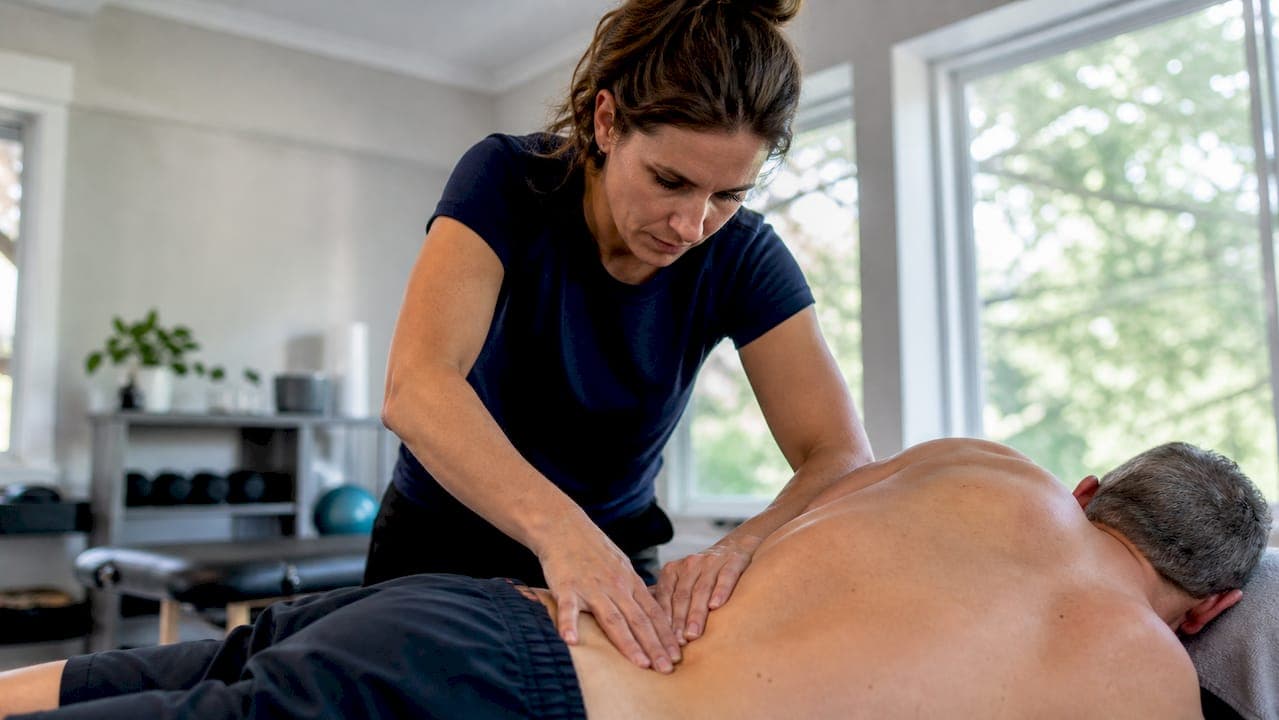
Manual therapy for the back is hands-on treatment delivered by a trained clinician using their hands (or a tool, for certain techniques) to reduce pain, improve joint movement, and calm irritated tissues. Think mobilisations, manipulation, and soft-tissue work. On its own, it's not usually a cure. It's a bridge. Something that buys you a window of reduced pain and better movement so you can actually get on with the exercise and rehab that make the change stick.
That's not me being dismissive of hands-on treatment, by the way. Quite the opposite. Used well, it's genuinely one of the more useful short-term tools we have for back pain. But the honest picture, backed by NICE and clinical evidence summaries, is that manual therapy works best as one part of a package, not as the whole plan.
Here's the short version of what you need to know before we get into detail:
- Manual therapy covers mobilisation, manipulation, and soft-tissue techniques, each aimed at reducing pain and restoring movement.
- Guidelines recommend it alongside exercise, not instead of it.
- Effects are often real but modest, and tend to fade without active follow-up.
- It's generally safe, though not right for everyone, particularly where red flags are present.
Key Takeaways
Manual therapy relieves back pain and improves movement in the short term, but lasting recovery depends on pairing it with active exercise and an individualised rehabilitation plan.
| Point | Details |
|---|---|
| Definition | Manual therapy covers mobilisation, manipulation, and soft-tissue techniques applied by hand or tool. |
| Mechanism | Relief likely comes from pain modulation and improved movement confidence, not permanent joint repositioning. |
| Evidence strength | Guidelines support mobilisation and manipulation within a package of care; traction is not recommended. |
| Who it suits | Best for non-specific low back pain and mechanical stiffness, with screening needed for red flags. |
| Clinic approach | Sportsinjurydublin pairs manual therapy with individualised assessment and progressive exercise for lasting results. |
Table of Contents
- What is manual therapy for the back, and what techniques does it include?
- How does manual therapy work to relieve back pain?
- Who benefits from manual therapy, and who should avoid it?
- What happens in a manual therapy session for back pain?
- What does the evidence say about manual therapy for back pain?
- How Hamilton Pain and Sports Injury Clinic applies manual therapy in practice
- Why I think people misjudge what manual therapy can do
- Ready to book a manual therapy assessment?
- Frequently asked questions
- Sources
What is manual therapy for the back, and what techniques does it include?
Manual therapy isn't one thing. It's a basket of related hands-on techniques, and which one your therapist reaches for depends on what's going on with your spine, your pain pattern, and honestly, a bit of clinical judgement on the day.
Mobilisation is gentle, graded movement applied to a joint. It doesn't go beyond the joint's normal range. Therapists often talk about "grades" of mobilisation, from slow oscillations at the start of range (used when things are angry and reactive) up to firmer, sustained pressure at the end of range (used once tissues can tolerate more). The aim is simple: loosen things up, reduce guarding, and give you a bit more room to move without pain shutting the whole thing down.
Manipulation, sometimes called a thrust technique, is a quicker, more targeted movement, usually at the end of a joint's range. It's the one that occasionally makes that popping sound (gas bubbles in the joint fluid shifting about, nothing dramatic). It's typically reserved for specific presentations where a clinician judges a joint will respond well to a rapid, small-amplitude nudge rather than sustained pressure.
Then there's the soft-tissue side of things:
- Myofascial release works on the fascia, the connective tissue wrapping your muscles, using sustained pressure to ease restriction.
- Trigger-point therapy targets those specific tight, tender knots that refer pain elsewhere (the classic one in the lower back can send an ache down into the glute).
- Deep tissue massage works through muscle layers to reduce tension and improve blood flow.
- Instrument-assisted soft tissue mobilisation uses a handheld tool instead of fingers or thumbs, which lets a therapist apply more precise or sustained pressure without wrecking their own hands after a full day of clinic.
Beyond those, you'll sometimes come across neural mobilisation (gentle gliding techniques aimed at nerves that seem to be part of the pain picture), mobilisation with movement, where the therapist applies pressure to a joint while you actively move, and muscle energy techniques, which use your own muscle contraction against light resistance to influence joint position and tension. These practical technique categories line up closely with how physiotherapists describe manual therapy in everyday clinical practice.
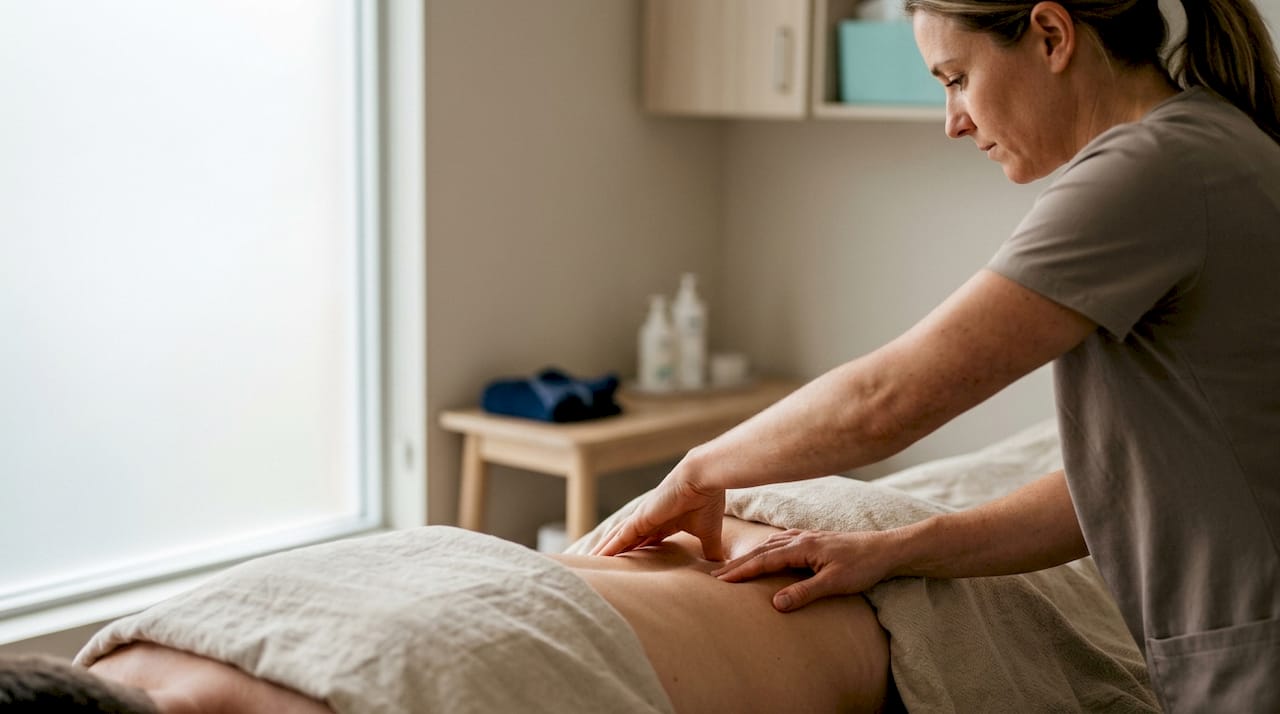
A common example: someone comes in with a stiff, achy lower back after a weekend of gardening. A therapist might start with graded mobilisation to the lumbar spine to ease stiffness, layer in some soft-tissue work on tight paraspinal muscles, then finish the session teaching a couple of movements to keep things moving at home.
Pro Tip: If a technique feels aggressive or you're not sure why it's being used, ask. A good therapist will happily explain what they're doing and why, and adjust if something doesn't sit right with you.
How does manual therapy work to relieve back pain?
For years, the explanation was mechanical. Joints get "stuck," muscles get "tight," and manual therapy physically frees them up. It's a tidy story. It's also not the full picture.
Modern mechanistic reviews suggest something more layered is going on. A living review of systematic and scoping reviews points to manual therapy's effects coming from an interaction of neurophysiological, contextual, and biomechanical factors, rather than one single mechanism doing all the work.
In plain terms: when a clinician applies pressure or movement to your back, your nervous system responds. Pain signals get modulated at the level of the spinal cord and, further up, in the brain itself. Muscle tone shifts. Your confidence to move without bracing improves, and that alone changes how you move, which changes how much you hurt. Contextual factors matter too. Feeling heard, trusting your therapist, expecting the treatment to help. None of that is "just placebo" in a dismissive sense. It's a real part of how the nervous system processes pain.
Manual therapy's benefit likely comes from a mix of pain modulation, altered muscle tone, and the confidence to move again, not from permanently repositioning a joint that had "gone out."
This matters practically because it explains why the relief from a single session, while genuinely a common outcome, often doesn't hold on its own. You've changed the pain signal temporarily. You haven't changed the underlying load tolerance, strength, or movement pattern that got you into trouble in the first place. That's the exercise's job.
On safety: manual therapy is generally well tolerated, with the most common downside being mild, short-lived soreness or stiffness for a day or so afterwards, similar to how you'd feel after a decent gym session. Serious complications are rare, and mostly linked to cases where a red flag was missed. Which brings us neatly to who this treatment actually suits.
Who benefits from manual therapy, and who should avoid it?
Not every back deserves the same treatment, and a decent clinician spends more time working this out than actually applying hands to spine.
People who tend to respond well include those with:
- Non-specific low back pain — the everyday stiff, achy back with no clear structural cause, which covers most cases seen in clinic.
- Mechanical stiffness — a joint or region that's genuinely restricted in movement, where mobilisation can restore range fairly reliably.
- Selected radicular pain — leg pain linked to nerve root irritation, but only once a proper assessment has ruled out anything more serious and the presentation fits.
On the flip side, certain findings should stop hands-on treatment in its tracks, or at least trigger a change of plan. These are the red flags: signs of neurological deficit (progressive weakness, loss of bladder or bowel control), suspected fracture, infection, a recent cancer history, or being on strong anticoagulant medication where even gentle manipulation carries more risk than benefit.
Good clinicians screen for these before laying a hand on you, through a thorough history and a few targeted tests, and they'll adapt technique choice and intensity accordingly rather than running the same routine on everyone. If something about your presentation doesn't fit the usual pattern, that's worth flagging early rather than waiting it out.
What happens in a manual therapy session for back pain?
A first appointment starts with talking, not touching. Expect questions about how the pain started, what makes it better or worse, your activity levels, and any red flag symptoms. That's followed by observation of how you move, sit, and stand, some hands-on movement testing of the spine and hips, and a quick neurological screen if leg symptoms are involved.
Only then does hands-on treatment begin, and it's rarely used in isolation. A typical session blends:
- Mobilisation or manipulation to the affected segment, chosen based on what the assessment found.
- Soft-tissue work on muscles that are guarding or overactive around the painful area.
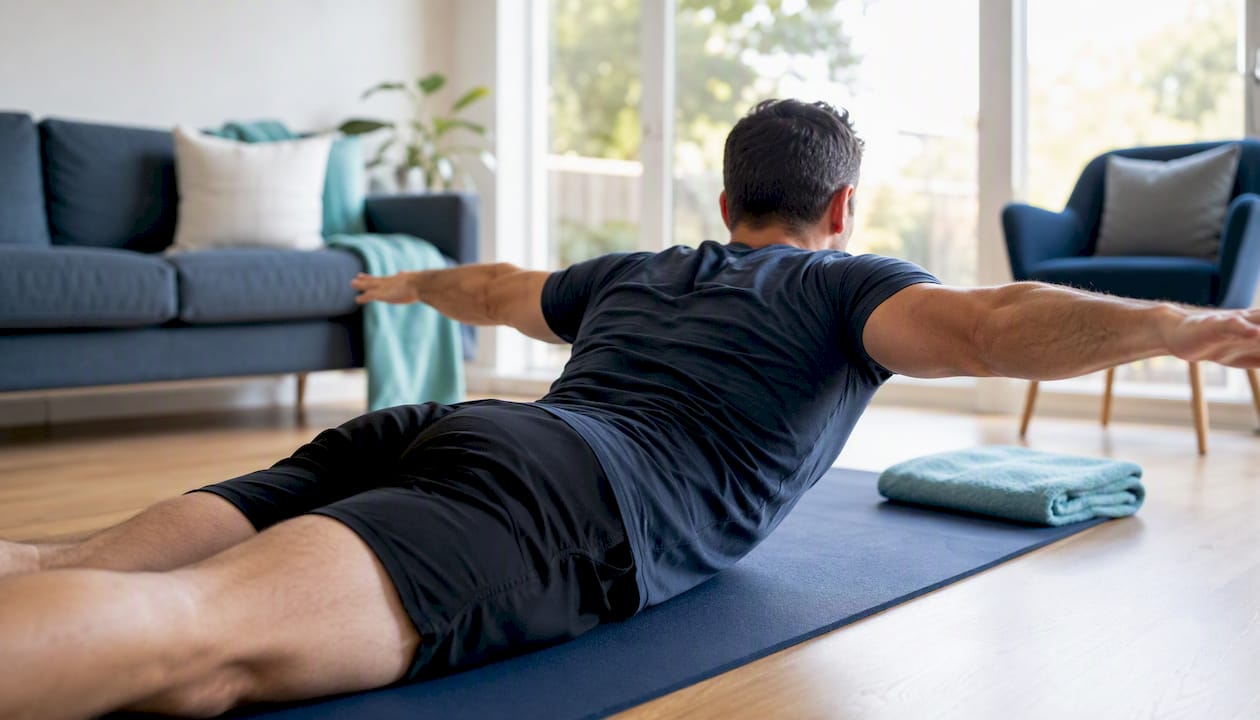
- Instruction on a movement or two to do at home, to build on whatever relief the session just created.
Most people see a therapist for a handful of sessions over two to four weeks initially, though this varies with severity and how you respond. Expect a review point early on, often after two or three sessions, where the plan gets adjusted based on progress. If nothing has shifted by then, that's a cue to change tack, not repeat the same approach hoping for a different result. From there, the balance typically tips further towards exercise and away from hands-on work as your movement and confidence improve, which is exactly how good rehabilitation is meant to progress.
What does the evidence say about manual therapy for back pain?
Guideline bodies are fairly consistent on this, and it's worth knowing where the evidence is strong and where it's thin, because not every hands-on technique carries equal support.
NICE and clinical evidence summaries recommend manual therapies, including massage, mobilisation, and manipulation, as one part of a treatment package for non-specific low back pain, alongside exercise, rather than as a standalone long-term fix. Systematic reviews back this up with a consistent finding: effect sizes for manual therapy tend to be small to modest, and individual response varies a fair amount from person to person.
Not every technique carries the same weight of evidence, which is a distinction worth making clearly:
| Technique | Guideline / evidence position |
|---|---|
| Mobilisation | Recommended as part of a broader care package for non-specific low back pain |
| Manipulation | Recommended in select cases, within a package alongside exercise |
| Soft-tissue massage | Supported as an adjunct, generally short-term benefit |
| Traction | Not recommended by NICE for low back pain with or without sciatica |
That last row matters more than people realise. Traction has a long history of use, but current guidance is clear that it isn't recommended, while other manual approaches retain a place in care. The clinical implication is straightforward: manual therapy works best when it's targeted, matched to what the assessment finds, and paired deliberately with active rehabilitation, rather than applied as a generic weekly ritual.
How Hamilton Pain and Sports Injury Clinic applies manual therapy in practice
At Hamilton Pain and Sports Injury Clinic, manual therapy is never handed out as a standalone fix. It's built into an individualised plan, shaped around your activity level, your goals, and what your assessment actually shows, rather than a generic protocol applied to every back that walks through the door.
A typical flow looks like this: thorough assessment first, hands-on treatment to reduce pain and restore movement second, then a structured progression into exercise designed to build the strength and control that keep problems from returning. Outcomes and tolerability get tracked session by session, so the plan adjusts based on how you're actually responding, not on a fixed schedule.
The goal isn't a good five minutes on the table. It's a back that copes better with the life you actually want to live.
Why I think people misjudge what manual therapy can do
The mistake I see most often is treating a single manual therapy session like a fix, then feeling let down when the pain creeps back a few days later. That's not the treatment failing. It's a temporary window being wasted. The techniques discussed here modulate pain and restore movement, which is valuable, but only if you use that window to load and strengthen the back properly. Choose manual therapy for what it's genuinely good at: short-term relief that opens the door to rehabilitation. Ask your clinician what comes after the table, before you ever get on it.
Ready to book a manual therapy assessment?
Reading about mobilisation grades and mechanistic models is one thing. Getting an assessment that's actually built around your back, rather than a generic protocol, is another. Sportsinjurydublin's approach is the alternative to a one-size-fits-all clinic visit: your first appointment includes a full movement and history assessment, hands-on treatment matched to what's found, and a rehabilitation plan that carries on well after the manual therapy itself has done its job.
Booking is straightforward. Come as you are, in comfortable clothing you can move in, and bring a rough idea of when your pain started and what makes it worse. From there, the sports rehabilitation programme combines manual therapy with progressive exercise, so the relief from your first session becomes the start of an actual recovery plan rather than a one-off. If you're not sure whether your back needs an assessment yet, this guide on when to see a sports therapist will help you decide. Either way, the next step is simple: book your assessment and get a plan built around your back, not a generic template.
Frequently asked questions
Is manual therapy the same as physical therapy? No. Manual therapy is a hands-on technique used within physical therapy (or physiotherapy). Physical therapy is the broader treatment programme, which typically combines manual therapy with exercise, education, and progressive loading.
Is manual therapy effective for chronic back pain? It can provide short-term pain relief and improved movement, but evidence summaries consistently frame it as one part of a broader package rather than a standalone long-term solution for chronic pain.
How many sessions of manual therapy will I need for back pain? This varies by presentation, but many people start with a handful of sessions over two to four weeks, with a review point early on to check progress and adjust the plan.
Can manual therapy make back pain worse? It's uncommon, and manual therapy is generally well tolerated, though mild, short-lived soreness afterwards isn't unusual. Serious complications are rare and usually linked to missed contraindications, which is why proper screening matters.
Do I still need to exercise if I'm having manual therapy? Yes. Manual therapy tends to open a short window of reduced pain and better movement. Building that into lasting change relies on active exercise and rehabilitation to strengthen the back and change the patterns that contributed to the pain.
This article is general information, not a substitute for advice from a qualified doctor. Consult a qualified healthcare professional about your own circumstances before acting on anything here.
Sources
- Summary of Evidence - Manual Therapy for Recent-Onset or Persistent Non-Specific Lower Back Pain: A Review of Clinical Effectiveness and Guidelines - NCBI Bookshelf
- The mechanisms of manual therapy: A living review of systematic, narrative, and scoping reviews | PLOS One
- Unraveling the Mechanisms of Manual Therapy: Modeling an Approach | Journal of Orthopaedic & Sports Physical Therapy
- What Is Manual Therapy? (How it works!) | Petersen Physical Therapy