
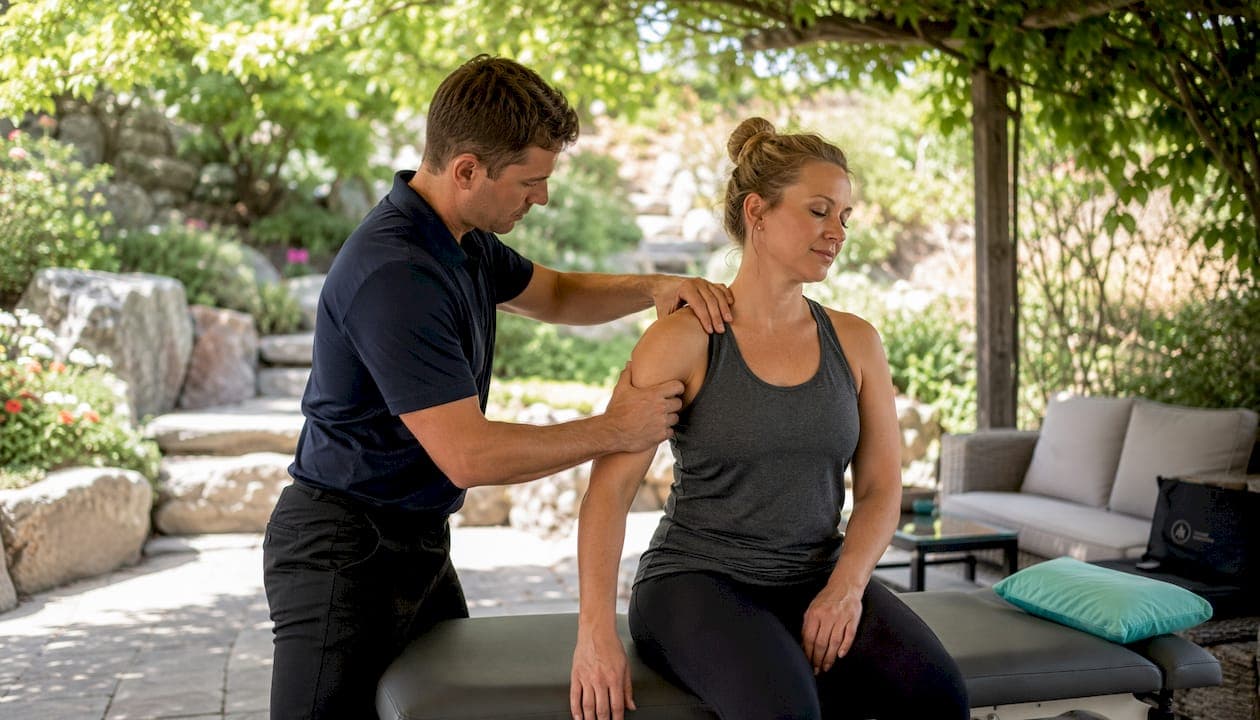
Manual therapy reduces pain primarily by triggering short-term neurophysiological changes — not by mechanically "fixing" misaligned joints or breaking down scar tissue (sorry, that narrative is a bit outdated). The hands-on stimulus sets off a cascade across three levels: spinal circuits dampen incoming pain signals, supraspinal centres activate descending inhibitory pathways, and the autonomic nervous system shifts toward a calmer, parasympathetic state. The result is a temporary but clinically useful window of reduced pain and improved movement.
Here is the honest summary of the main mechanism categories:
- Mechanical/biomechanical: small, transient changes in joint mobility, tissue deformation and fluid dynamics
- Spinal/segmental: gate-control modulation, raised pressure pain thresholds (PPTs) and reduced nociceptive reflex excitability
- Supraspinal/descending: activation of the periaqueductal grey (PAG), rostral ventromedial medulla (RVM) and cortical pain-processing regions
- Autonomic/neuroendocrine: parasympathetic activation, reduced salivary cortisol, and release of endogenous opioids and endocannabinoids
- Contextual/expectation: patient belief, therapeutic alliance and treatment environment all modulate the response
Two important caveats before we go deeper. Effects are typically short-term, often lasting minutes to around 24 hours. And the research, while genuinely encouraging, ranges from critically low to moderate quality depending on the condition and outcome measure. Manual therapy works best as part of a multimodal plan that includes exercise and education, not as a standalone cure.
Table of Contents
- How does manual therapy work? A simple step-by-step model
- What do mobilisation and soft-tissue work actually change in your body?
- How does manual therapy affect spinal pain signals?
- How does manual therapy change pain processing in the brain?
- What happens to your hormones and nervous system during manual therapy?
- Does manual therapy give lasting pain relief, or just a short-term boost?
- What does the clinical evidence actually say, condition by condition?
- What are the main manual therapy techniques and what does each target?
- Who benefits from manual therapy, and when is it not safe?
- How to get the most from a manual therapy session
- A clinician's view: using manual therapy as a catalyst, not a cure
- Ready to experience evidence-based manual therapy in Dublin?
- Key takeaways
- A final thought on what this all means
- Useful sources and further reading
How does manual therapy work? A simple step-by-step model
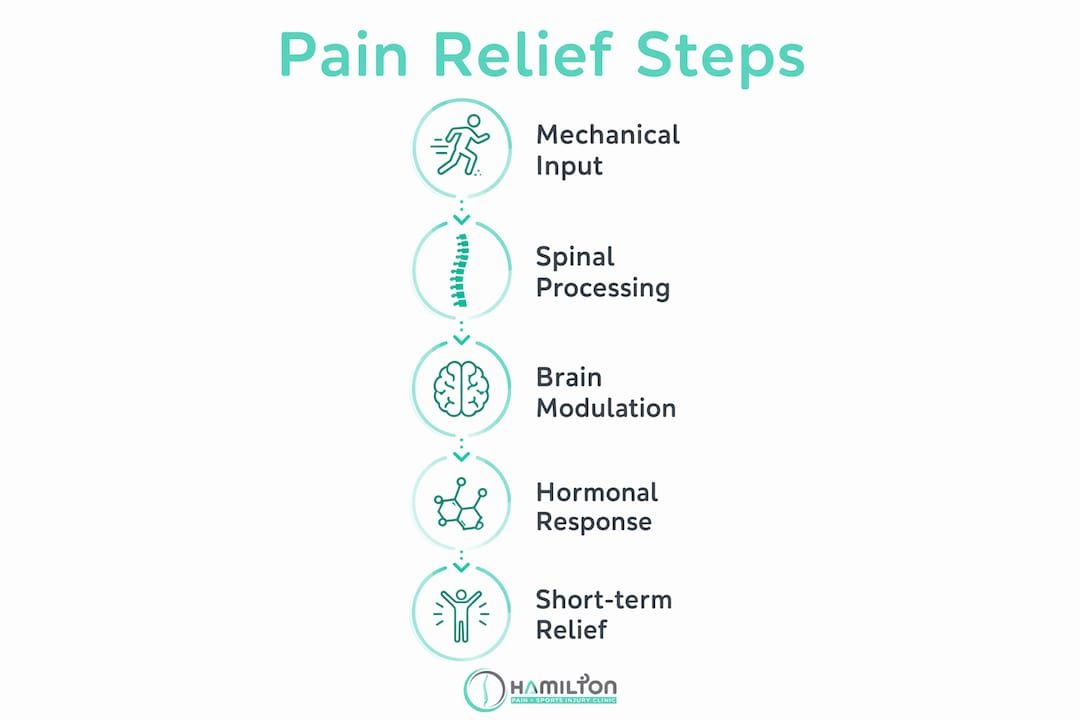
Think of it as a chain reaction. The hands-on input at the skin and joint triggers responses at progressively higher levels of the nervous system, and those responses collectively reduce the experience of pain. Here is a simplified four-step model that the rest of this guide unpacks:
- Mechanical stimulus: the clinician applies force to a joint, muscle or fascial layer. This deforms tissue, moves fluid and activates mechanoreceptors (Aβ fibres, Ruffini endings, Golgi tendon organs).
- Spinal processing: mechanoreceptor input reaches the dorsal horn of the spinal cord, where it competes with and partially inhibits nociceptive (pain) signals — the classic gate-control mechanism, updated with modern evidence.
- Supraspinal modulation: signals travel to the brainstem and cortex, activating the PAG-RVM descending inhibitory system and altering activity in pain-processing regions like the insula and anterior cingulate cortex.
- Systemic/autonomic response: the brain's response triggers a shift in autonomic tone, releases neurochemicals (serotonin, noradrenaline, endocannabinoids, β-endorphins) and modulates inflammatory markers — all of which feed back to reduce pain perception.
The interaction between levels is what makes manual therapy interesting. A mechanical input at the wrist, for example, can produce hypoalgesia at a remote site because the supraspinal response is systemic, not purely local. That said, individual variability is real and not fully explained. Some patients respond dramatically; others barely notice a change. Baseline sensitisation, psychosocial factors and therapist skill all play a role — more on that later.
Pro Tip: When a patient asks "why did that help my shoulder when you worked on my neck?", the honest answer is: the descending inhibitory system doesn't respect anatomical boundaries. The brain-level response is the likely explanation.
What do mobilisation and soft-tissue work actually change in your body?
Let's be clear about what the biomechanical effects of manual therapy are — and what they are not. Joints are not being "put back in place." Fascia is not being "broken down." Those explanations make for a satisfying story, but the evidence does not support them as primary mechanisms.
What does happen, plausibly:
- Small increases in joint range of motion: mobilisation and manipulation produce transient improvements in joint glide and accessory movement, likely via neuroreflexive muscle relaxation rather than gross structural change.
- Tissue deformation and viscoelastic change: sustained pressure temporarily alters the mechanical properties of soft tissue — think of pressing slowly into a gel. The tissue yields, fluid redistributes, and mechanoreceptors fire.
- Fluid dynamics: manual pressure may shift interstitial fluid and temporarily reduce local oedema or tissue congestion, particularly relevant in acute presentations.
- Cytokine modulation: one study reported approximately a 20% reduction in inflammatory cytokines such as TNF-α and IL-1β persisting for around two hours after a joint-biased intervention — a measurable biochemical effect, even if short-lived.
The key insight from modern evidence-based models is that these mechanical effects matter primarily because they trigger neurophysiological responses, not because they produce lasting structural change. A joint mobilisation that increases range of motion by five degrees is clinically useful not because the joint is now "better aligned" but because the mechanoreceptor input has temporarily quietened the nervous system's alarm response.
Practically, biomechanical targets make most sense in acute presentations — a stiff, guarded joint after a minor sprain, for instance, where restoring glide reduces protective muscle spasm. In chronic central sensitisation, the mechanical input is still relevant, but the primary target is the nervous system, not the tissue.
Pro Tip: If a patient with chronic low back pain asks whether you are "putting their disc back," it is worth explaining that the goal is to change how the nervous system is processing signals, not to physically reposition a structure. That conversation itself can reduce fear and improve outcomes.
You can read more about soft tissue therapy's role in performance and recovery on the Sportsinjurydublin blog.
How does manual therapy affect spinal pain signals?
The spinal cord is not just a passive cable carrying pain signals to the brain. It actively processes, amplifies and suppresses those signals — and manual therapy can shift that processing in a helpful direction.
The gate-control theory, first proposed by Melzack and Wall in 1965 and substantially updated since, remains a useful framework. Large-diameter Aβ mechanoreceptor fibres (activated by touch and pressure) can inhibit transmission of nociceptive signals carried by smaller Aδ and C fibres at the dorsal horn. Manual therapy, by activating mechanoreceptors in skin, muscle and joint capsule, generates exactly this kind of large-fibre input.
Contemporary evidence adds more detail. Multiple RCTs show increased local pressure pain thresholds immediately following spinal manual therapy — a measurable sign that the spinal cord's sensitivity to pain input has been temporarily reduced. Results for remote PPTs (measuring systemic rather than local effects) are less consistent, and thermal pain thresholds show even more variable results across studies.
| Outcome measure | Typical finding after spinal MT | Consistency across studies |
|---|---|---|
| Local pressure pain threshold (PPT) | Increased immediately post-intervention | High |
| Remote PPT | Variable increase | Moderate |
| Thermal pain threshold | Inconsistent change | Low |
| Nociceptive flexion reflex (NFR) | Reduced excitability | Moderate |
| Patient-reported pain (NRS/VAS) | Small-to-moderate reduction | Moderate |
One important caveat: surrogate measures like PPT and NFR do not always map neatly onto what patients actually feel. A raised PPT in a lab setting is encouraging, but it does not guarantee a clinically meaningful reduction in someone's day-to-day pain. The hypoalgesia induced by manual therapy can last up to 24 hours following the intervention — which is genuinely useful clinically, but it is not a permanent fix.
Key finding: Spinal manual therapy consistently raises local pressure pain thresholds immediately after treatment, indicating reduced dorsal horn excitability. This effect typically peaks within minutes and can persist for up to 24 hours, creating a practical window for movement-based rehabilitation.
How does manual therapy change pain processing in the brain?
This is where things get genuinely fascinating (and where the old "it's just a mechanical fix" story really falls apart). Manual therapy does not just act locally — it changes how the brain processes pain.

Neuroimaging studies have shown that thoracic thrust manipulation produces decreased insula activation that correlates with reduced numeric pain ratings. The insula is a key hub for pain perception and interoception, so quietening it down is not a trivial finding. Other cortical regions implicated include the anterior cingulate cortex and prefrontal areas involved in pain modulation and emotional regulation.
The descending inhibitory system is the brain's own pain-suppression network. Key structures include:
- Periaqueductal grey (PAG): the primary relay for descending inhibition; activated by manual therapy input and by expectation/context
- Rostral ventromedial medulla (RVM): modulates spinal nociceptive processing via serotonergic and noradrenergic projections
- Locus coeruleus: the main source of noradrenaline in the CNS; contributes to descending inhibition and stress-response modulation
Preclinical studies indicate that joint-based manual therapy analgesia involves noradrenergic and serotonergic mechanisms [studies report this mechanism] rather than opioid-only pathways — which is clinically relevant because it means the analgesic effect is not simply a placebo mediated by endorphin release. There are multiple neurochemical routes to the same outcome.
This supraspinal evidence also explains why manual therapy can produce hypoalgesia at sites distant from where the clinician's hands are working. The descending system broadcasts broadly.
What happens to your hormones and nervous system during manual therapy?
Beyond the brain and spinal cord, manual therapy produces measurable changes in the body's autonomic and hormonal systems — and those systemic shifts contribute to the overall analgesic effect.
Post-treatment markers commonly reported include decreased heart rate variability, reduced salivary cortisol and salivary amylase (a marker of sympathetic nervous system activity), and changes in skin conductance consistent with a shift toward parasympathetic dominance. Studies also report increases in serotonin, β-endorphins and endocannabinoids within minutes of manipulation — with particularly large increases in endogenous cannabinoids immediately post-manipulation.
Statistic to note: Post-manipulation studies report small increases in serotonin and β-endorphins within minutes, alongside large increases in endogenous cannabinoids immediately after the intervention — a neurochemical profile consistent with reduced pain sensitivity and improved mood.
Why does this matter clinically? Chronic pain is frequently associated with dysregulated autonomic tone — elevated sympathetic activity, disrupted cortisol rhythms and reduced parasympathetic recovery. Manual therapy appears to nudge the system back toward balance, at least temporarily. That shift in autonomic state can itself reduce pain perception, improve tissue perfusion and lower the emotional amplification of pain signals.
The honest caveat: these are multisystem effects, not a single clean pathway. Effect sizes vary between individuals and studies, and the time course is short. Think of it as a systemic reset rather than a targeted pharmacological intervention.
Pro Tip: Scheduling a manual therapy session before a gentle exercise bout is not just intuitive — it makes physiological sense. The parasympathetic shift and neurochemical release create a brief window of reduced pain and improved tissue responsiveness that is ideal for introducing movement.
Does manual therapy give lasting pain relief, or just a short-term boost?
Honest answer: mostly short-term, but strategically used, that short-term effect is genuinely valuable.
Here is the typical timeline:
- Immediate (0–30 minutes): neurochemical release, raised PPTs, reduced spinal excitability, parasympathetic shift
- Short-term (30 minutes–24 hours): sustained hypoalgesia, improved range of motion, reduced muscle guarding — the window of opportunity for movement retraining
- Medium-term (days–weeks): depends almost entirely on what the patient does during and after that window
The research is clear that manual therapy provides short-term clinical benefit but is most effective when integrated with exercise and education. Used alone, effects diminish. Paired with progressive loading and self-management strategies, the short-term analgesic window becomes a launchpad for longer-term functional recovery.
Practical implications for scheduling:
- Time exercise into the analgesic window. If a session reduces pain for four to six hours, that is the ideal time for the patient to do their home exercises — not the next morning when the effect has worn off.
- Do not repeat manual therapy indefinitely without progression. If pain returns fully between sessions with no functional gain, the treatment plan needs to evolve toward active strategies.
- Use manual therapy to enable movement, not to replace it. The goal is to reduce the nervous system's alarm response enough that the patient can load and move — and that loading is what drives lasting change.
For patients managing chronic pain with gentle strength training, pairing sessions strategically with manual therapy can make the difference between a programme that stalls and one that progresses.
What does the clinical evidence actually say, condition by condition?
Reviews report small-to-moderate pooled effects for manual therapy across musculoskeletal conditions, with variable guideline recommendations depending on the condition and comparison treatment. Here is where the evidence is strongest and where it is thinner:
| Condition | Evidence strength | Typical effect | Notes |
|---|---|---|---|
| Non-specific low back pain | Strong | Small-to-moderate short-term pain reduction | Best outcomes with multimodal care; see also back pain rehabilitation |
| Neck pain | Moderate-strong | Short-term pain and disability reduction | Thrust and non-thrust both show benefit |
| Shoulder pain (rotator cuff, impingement) | Moderate | Modest pain and range-of-motion gains | Evidence less robust than for spinal conditions |
| Headache (cervicogenic, tension-type) | Moderate | Reduced frequency and intensity | Cervicogenic responds well to upper cervical MT |
| Hip osteoarthritis | Moderate | Short-term pain and function improvement | Often combined with exercise in trials |
| Knee osteoarthritis | Limited-moderate | Modest short-term benefit | Exercise remains primary intervention |
| Ankle/foot conditions | Limited | Some benefit for plantar fasciitis | Fewer high-quality RCTs |
A few things stand out from the systematic review literature:
- Consistently affected outcomes: pain intensity (NRS/VAS), pressure pain thresholds, and range of motion show the most reliable short-term improvements.
- Less consistent outcomes: thermal pain thresholds, long-term disability in isolation, and quality-of-life measures show more variable results.
- Heterogeneity is a real problem. Differences in technique, dosage, patient selection and comparison conditions make pooling results tricky. A "manual therapy" label covers a huge range of interventions.
The overall evidence quality, as the PLOS One living review notes, ranges from critically low to moderate — which is not a reason to dismiss manual therapy, but it is a reason to be honest with patients about what it can and cannot reliably deliver.
What are the main manual therapy techniques and what does each target?
Different techniques are not interchangeable. Each has a primary mechanistic target, and choosing the right one for the right presentation is where clinical skill comes in.
-
High-velocity low-amplitude (HVLA) thrust manipulation: the "crack" technique. Targets spinal and peripheral joints. The rapid mechanical input produces a strong burst of mechanoreceptor activity, triggering robust supraspinal and descending inhibitory responses. Best evidence for acute spinal pain and cervicogenic headache.
-
Joint mobilisation (non-thrust, Maitland grades I–IV): oscillatory or sustained gliding movements within or at the limit of range. Primarily targets spinal segmental stiffness and pain via mechanoreceptor input and neuroreflexive muscle relaxation. Lower-force option for acute or irritable presentations.
-
Soft-tissue mobilisation (STM): sustained or rhythmic pressure applied to muscle and connective tissue. Targets local myofascial sensitivity, fluid dynamics and mechanoreceptor activation. Useful for trigger-point-associated pain and post-exercise recovery.
-
Myofascial release (MFR): sustained, low-load pressure into fascial layers, held until a perceived "release." Clinically, the effect is likely mediated by reduced neural sensitivity rather than physical fascial restructuring — patients often describe a "melting" sensation that reflects nervous system change, not tissue tearing.
-
Muscle energy technique (MET): the patient contracts a muscle against the clinician's resistance, then relaxes into a new range. Targets neuromuscular inhibition via post-isometric relaxation and reciprocal inhibition. Particularly useful for joint range restrictions with a strong muscular component.
-
Instrument-assisted soft-tissue mobilisation (IASTM): tools like Graston or similar devices apply controlled pressure to soft tissue. Mechanoreceptor activation is the primary driver; claims of "breaking down adhesions" are not well supported.
Pro Tip: For a patient with acute neck pain and features of central sensitisation, a thoracic thrust manipulation is often a better first choice than direct cervical work — it accesses the descending inhibitory system powerfully while avoiding the more irritable cervical segment.
Who benefits from manual therapy, and when is it not safe?
Manual therapy does not work equally well for everyone, and there are situations where it should not be used at all. Let's be straightforward about both.
Factors that modify your response
- Baseline tissue pathology: acute inflammatory presentations and recent trauma tend to respond well to gentle mobilisation; degenerative changes respond more variably.
- Central sensitisation: patients with widespread pain, high pain catastrophising scores or features of nociplastic pain may respond less predictably to mechanical input alone.
- Patient expectation: expectation of benefit is a genuine moderator of outcome — not just placebo, but a neurophysiological reality. Patients who understand what manual therapy does and why tend to do better.
- Therapist skill and communication: technique quality matters, but so does how the clinician explains the treatment and manages expectations.
- Psychosocial context: fear-avoidance beliefs, low self-efficacy and poor sleep all reduce treatment response. Posture-related beliefs and lifestyle factors can also shape outcomes in ways that are worth addressing directly.
Absolute contraindications (do not proceed — seek immediate medical review)
- Suspected fracture or dislocation at the target site
- Spinal cord compression with progressive neurological deficit
- Active infection, osteomyelitis or septic arthritis
- Malignancy at or near the treatment site
- Vertebrobasilar insufficiency (for cervical manipulation specifically)
- Severe osteoporosis with high fracture risk
- Acute inflammatory arthritis flare (e.g., rheumatoid, ankylosing spondylitis in active phase)
Relative contraindications (proceed with caution and modified technique)
- Anticoagulant therapy or clotting disorders
- Hypermobility syndromes (e.g., Ehlers-Danlos)
- Pregnancy (especially lumbar/pelvic manipulation)
- Recent surgery at or near the target site
- Uncontrolled hypertension
When red flags are present (unexplained weight loss, night pain, bilateral neurological symptoms, bowel or bladder changes), manual therapy should be paused and the patient referred for medical assessment without delay. This is not overcaution — it is basic clinical responsibility.
How to get the most from a manual therapy session
Whether you are a patient preparing for your first appointment or a clinician thinking about how to structure care, the practical details matter as much as the mechanisms.
What a good session looks like (patient checklist)
- The clinician takes a thorough history, including pain behaviour, aggravating and easing factors, and psychosocial context.
- A physical assessment identifies the primary mechanical and neurophysiological targets.
- The chosen technique is explained before it is applied — including what you might feel during and after.
- Immediate outcomes are assessed: has range of motion changed? Has pain intensity shifted on the numerical rating scale?
- A home exercise or movement task is prescribed to be done within the analgesic window.
Dosage and sequencing
- Frequency: most evidence supports two to four sessions over two to four weeks as an initial course, with reassessment at each visit.
- When to exercise: aim to complete home exercises within two to four hours of the session, while the neurophysiological window is open.
- When to progress: if pain is reducing and function improving, begin progressive loading. If there is no change after three sessions, the treatment plan needs to be reconsidered.
- When to stop: manual therapy should not be an indefinite subscription. The goal is to reach a point where the patient can self-manage with exercise and education.
What to expect at home
- Mild post-treatment soreness for 24–48 hours is common and not a sign of harm.
- Increased range of motion and reduced pain are the target outcomes; if neither appears after two to three sessions, discuss alternatives with your clinician.
- Pacing matters — do not use the analgesic window as an excuse to overdo it. Gradual, progressive loading is the goal.
Pro Tip: Ask your clinician to write down the home exercise and the timing. "Do it when the pain is lower" is too vague — "do it within two hours of your session" is a concrete instruction that patients actually follow.
For a broader look at how movement therapies support pain relief and functional recovery, the Sportsinjurydublin blog has a detailed 2026 guide worth reading alongside this one.
A clinician's view: using manual therapy as a catalyst, not a cure
At Sportsinjurydublin, the working model is straightforward: manual therapy is an enabling tool. It reduces the nervous system's alarm response enough that the patient can move, load and rebuild — and that active phase is where lasting recovery happens.
Here is how that plays out in practice. A patient presents with six months of persistent neck pain, moderate fear-avoidance beliefs and a history of failed passive treatments elsewhere. Assessment reveals segmental stiffness at C5/6, elevated PPTs on palpation, and a pattern consistent with mild central sensitisation. The plan:
- Two sessions of upper thoracic HVLA manipulation and cervical non-thrust mobilisation to access descending inhibition and reduce local segmental sensitivity.
- Immediate post-session cervical range-of-motion exercises, prescribed to be done within two hours of each appointment.
- Progressive loading programme introduced from session three, with manual therapy frequency reducing as active capacity increases.
- Education throughout: explaining that pain does not equal damage, that the nervous system can be recalibrated, and that movement is medicine.
The outcome target is not "no pain after the hands-on work." It is "enough reduction in pain and fear that the patient can engage with progressive exercise." That distinction shapes every clinical decision.
Pro Tip: Pair every manual therapy session with a brief education moment. Even two minutes explaining the neurophysiological mechanism shifts the patient's relationship with their pain and improves long-term self-efficacy.
For patients who want to understand how individualised care shapes pain outcomes, that variability in response is not a mystery — it is a signal about which mechanisms are most active for that person.
Ready to experience evidence-based manual therapy in Dublin?
If you have been reading this and thinking "right, I want someone to actually apply this to my situation" — that is exactly what Sportsinjurydublin is here for. The clinic's approach is built on the mechanisms described in this guide: manual therapy as a catalyst for movement, not a passive treatment you receive indefinitely.
Whether you are dealing with persistent back pain, a sports injury that keeps flaring up, or a niggling joint problem that has not responded to generic advice, a personalised assessment will identify which mechanisms are most relevant for you and build a plan around them.
Book your assessment and find out what evidence-based, hands-on care actually feels like. Or if you are working toward a return to sport, the clinic's return-to-sport rehabilitation programme integrates manual therapy with progressive loading from day one.
Key takeaways
Manual therapy reduces pain primarily through short-term neurophysiological modulation across spinal, supraspinal and autonomic pathways, and its clinical value depends on using that window to enable active rehabilitation.
| Point | Details |
|---|---|
| Neurophysiology, not mechanics | Pain relief comes from spinal gating, descending inhibition and autonomic shifts, not structural realignment. |
| Effects last up to 24 hours | Hypoalgesia can persist for up to 24 hours, creating a window for exercise and movement retraining. |
| Small-to-moderate effect sizes | Reviews report small-to-moderate pooled effects; manual therapy works best within a multimodal plan. |
| Combine with exercise | Benefits diminish when manual therapy is used alone; pairing with progressive loading extends outcomes. |
| Safety requires screening | Absolute contraindications include fracture, malignancy, cord compression and active infection at the target site. |
A final thought on what this all means
Here is something that does not get said enough: the most important thing manual therapy does is give the nervous system permission to calm down. Not fix a joint. Not break up scar tissue. Not realign a spine. Just create enough of a neurophysiological shift that the patient stops bracing, starts moving, and begins to trust their body again.
The mechanisms are real and increasingly well-documented. But the clinical art is knowing when to use them, for whom, and how to translate that brief window of reduced pain into something the patient can build on independently. That is the difference between a treatment that helps for a day and one that changes someone's trajectory.
At Sportsinjurydublin, that is the standard we hold ourselves to — not "did the session feel good?" but "did it move the patient closer to self-sufficiency?" If you are curious about what that looks like in practice, the sports rehabilitation page is a good place to start.
Useful sources and further reading
A short curated list of the primary sources used in this guide, with notes on what each contributes:
-
What effect can manual therapy have on a patient's pain experience? (PMC, 2016) — The most comprehensive single clinical review cited here. Covers peripheral, segmental and supraspinal mechanisms, autonomic and neuroendocrine changes, and neuroimaging findings. Essential reading for anyone wanting the full mechanistic picture.
-
The mechanisms of manual therapy: A living review (PLOS One) — A continuously updated systematic review that synthesises mechanism-focused research across narrative, systematic and scoping reviews. Honest about evidence quality (critically low to moderate) and calls for mechanistic-based treatment stratification. The most current overview available.
-
Analgesic effects of manual therapy in patients with musculoskeletal pain (ScienceDirect) — Systematic review focused specifically on pressure pain thresholds and analgesic outcomes. Useful for understanding what PPT changes mean clinically and where the evidence is consistent versus variable.
-
How Manual Therapy Works: Mechanisms and Effects (PhysiotherapistsUK) — An accessible professional summary that translates the mechanistic literature into clinical practice guidance. Supports the multimodal integration argument.
-
Non-pharmacological interventions for pain relief (PMC, 2025) — Broader review of non-drug pain management approaches, including manual therapy within a multimodal framework. Useful context for understanding where hands-on care sits within the wider pain-management toolkit.
-
10 ways to reduce pain (NHS) — UK-specific patient-facing guidance from the NHS on non-pharmacological pain management. Relevant for UK readers wanting to understand how manual therapy fits within NHS-endorsed approaches.
-
Musculoskeletal pain in older adults: 2026 guide (Orto Oxacell) — Clinical resource on non-pharmacological approaches to musculoskeletal pain in older adults, including manual therapy considerations for an age group where safety screening is particularly important.