
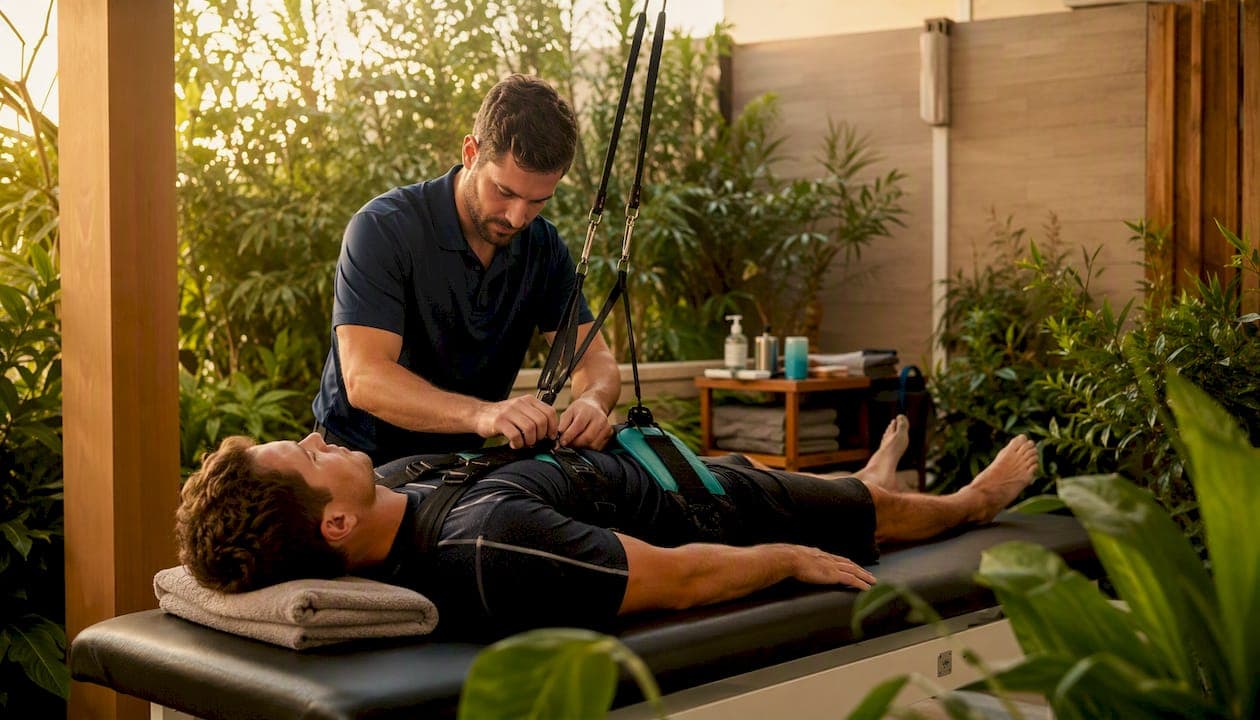
Spinal decompression therapy is a treatment that reduces pressure on compressed spinal discs and nerves, either through surgery or, more commonly for athletes, through non-surgical traction-based techniques. The short version? If you're dealing with a herniated disc, sciatica, or degenerative disc changes that haven't shifted with rest and basic physio, non-surgical decompression is worth understanding. The Cleveland Clinic describes it as one element of a broader care plan, not a standalone cure, and that framing matters enormously for anyone with a return-to-sport goal in mind.
Here's what you need to know upfront:
- Non-surgical decompression uses controlled traction to create negative pressure inside a disc, aiming to reduce nerve compression.
- Evidence from Cochrane reviews is mixed; traction shows limited long-term superiority over active rehabilitation alone.
- It works best as part of a stepped plan that includes progressive loading and movement retraining.
- Sportsinjurydublin integrates decompression-style techniques within a full sports rehabilitation pathway for Dublin athletes.
Table of Contents
- What is spinal decompression therapy and how does it work?
- Who does spinal decompression help, and when should you consider it?
- What does a typical spinal decompression treatment course look like?
- What does the evidence actually say about the benefits?
- Is spinal decompression safe, and what are the risks?
- How does decompression fit into a sports rehabilitation plan?
- How do you choose a clinic in Dublin and what should you ask?
- How Sportsinjurydublin approaches non-surgical spinal care in Dublin
- Practical next steps for an athlete in Dublin
- Key takeaways
- The bit where I give you my honest take
- Sportsinjurydublin: sport-focused spinal care in Dublin
- Useful sources
What is spinal decompression therapy and how does it work?
Non-surgical spinal decompression is a form of mechanical traction applied to the spine with the goal of creating negative intradiscal pressure. Think of a disc like a squashed sponge: sustained compression pushes fluid and disc material outward, irritating nearby nerves. Decompression aims to reverse that by gently distracting the vertebral segments, theoretically drawing disc material back toward the centre and allowing nutrients and oxygen to re-enter the disc.
Surgical decompression (laminectomy, discectomy, spinal fusion) physically removes or restructures tissue to relieve nerve pressure. Non-surgical approaches achieve a similar goal without cutting, using:
- Motorised traction tables: A computer-controlled table applies intermittent, variable traction force via harnesses at the pelvis or head. The clinician sets the angle, force, and timing. You stay fully clothed throughout.
- Manual traction: A therapist applies distraction force by hand or through a specialised segmented table (Cox Flexion-Distraction technique), targeting specific spinal segments with more tactile control.
- Inversion therapy: Gravity-assisted traction using an inversion table. Less precise, less supervised, and generally not equivalent to clinician-delivered decompression.
Pro Tip: Don't confuse a home inversion table with clinical decompression. Clinician-delivered decompression includes supervised parameters and safety checks that home devices simply can't replicate.
Who does spinal decompression help, and when should you consider it?
Non-surgical decompression is typically considered when initial conservative care (rest, anti-inflammatories, standard physio) hasn't resolved symptoms. The Cleveland Clinic lists the main candidates as people with bulging or herniated discs, sciatica, and degenerative disc disease with radicular (nerve-related) symptoms.
| Likely indicated | Not indicated |
|---|---|
| Lumbar or cervical herniated disc with radicular pain | Spinal instability or fracture |
| Sciatica not resolving with standard care | Active infection or malignancy |
| Degenerative disc disease with nerve symptoms | Uncontrolled osteoporosis |
| Failed conservative management over 4–6 weeks | Pregnancy (where contraindicated) |
| Athlete seeking non-surgical option before considering surgery | Severe neurological deficit (bowel/bladder changes) |
A few things worth stressing here:
- A proper clinical assessment, including physical examination and imaging where appropriate, is non-negotiable before starting any decompression course.
- Referred pain from the lower back can sometimes mimic other conditions, which is why understanding whether lower back pain is causing neck and shoulder symptoms matters for accurate diagnosis.
- If you're experiencing sudden severe neurological signs, seek emergency care immediately. Decompression is not the right first call.
What does a typical spinal decompression treatment course look like?
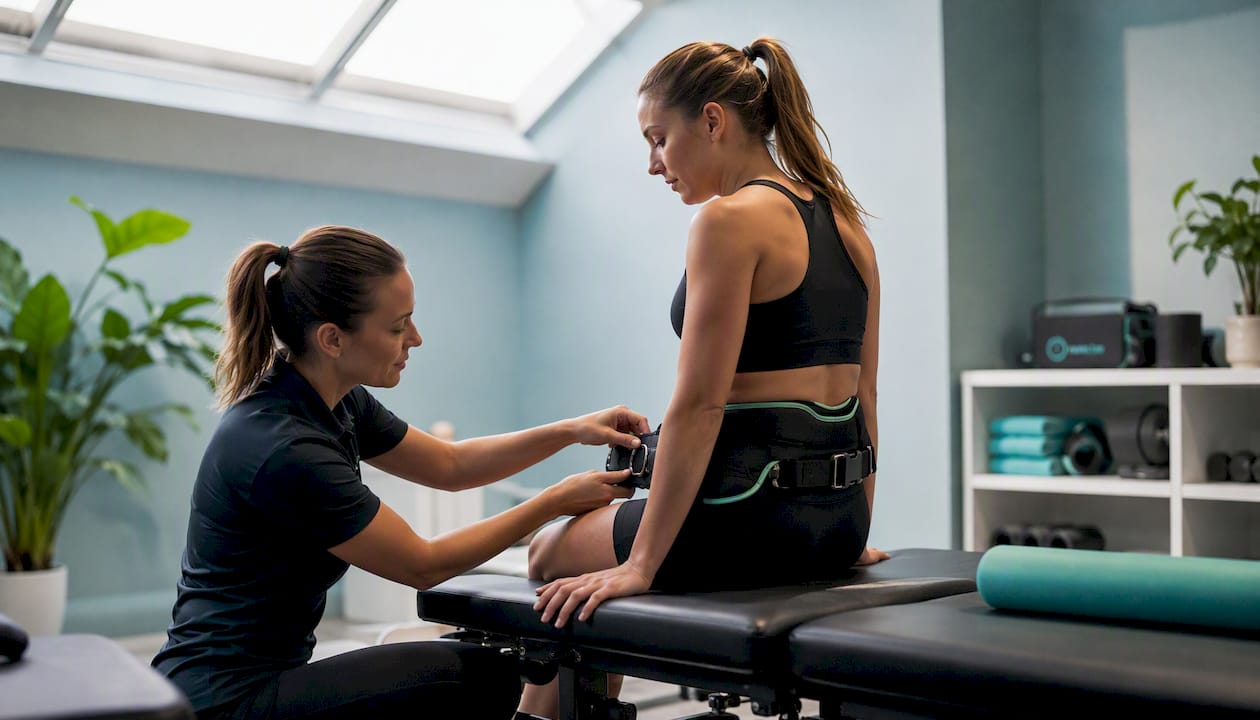
You lie on a padded table, fully clothed, with a harness fitted around your pelvis (for lumbar treatment) or your head and neck (for cervical). The clinician programmes the traction parameters, and the table does its thing in a controlled, intermittent pattern. Most people find it comfortable, occasionally even relaxing (yes, really).
According to WebMD, typical sessions run for a period that may last around half an hour to three quarters of an hour, with courses commonly spanning multiple sessions over several weeks.
| Parameter | Typical range |
|---|---|
| Session length | 30–45 minutes |
| Sessions per week | 3–5 |
| Total course length | several weeks |
| Common adjunct therapies | TENS, ultrasound, ice/heat, exercise |
At your first appointment, expect a diagnostic interview, a focused physical exam, and a discussion of your imaging if you have it. Progress should be tracked using objective measures: pain scores, range of motion, functional tests relevant to your sport. If there's no measurable improvement after a defined trial period, a good clinician will say so and adjust the plan.
What does the evidence actually say about the benefits?
Honest answer: it's complicated. A PMC review found only limited evidence to support the routine use of non-surgical spinal decompression, particularly given the availability of better-researched, less expensive alternatives. A Cochrane review of traction therapies found little clear long-term benefit over active rehabilitation for pain or function.
Randomised controlled trials have shown comparable outcomes between active motorised decompression and sham traction in some studies, which raises a fair question about whether the machine itself is doing the heavy lifting, or whether supervised care and concurrent rehab deserve more of the credit.
Cost note: A typical full course of motorised spinal decompression is reported to cost between $2,000 and $4,000 out-of-pocket, with most insurance plans not covering it. That's a meaningful financial commitment when active rehabilitation has a comparable evidence base at lower cost.
For athletes, short-term symptom relief is useful, but it's not the goal. Durable return to sport requires functional recovery, and that comes from progressive loading, not passive treatment alone. The ACOEM does not recommend motorised decompression as superior to standard conservative care, and that's a guideline position worth knowing before you commit to a package.
Is spinal decompression safe, and what are the risks?
For most people, non-surgical decompression is well-tolerated. That said, it's not risk-free, and a responsible clinic will screen you properly before starting.
Common risks and considerations:
- Temporary soreness after sessions, particularly in the early weeks.
- Symptom flare-up if parameters are set incorrectly or the indication isn't right.
- Rare: worsening of disc symptoms if traction is applied inappropriately.
Absolute contraindications include spinal instability, fracture, active infection, malignancy, advanced osteoporosis, and pregnancy where traction is contraindicated. Any clinic worth its salt will take a full medical history and review imaging before touching the table settings.
Pro Tip: Sudden onset of bowel or bladder changes, severe leg weakness, or rapidly worsening neurological symptoms are red flags requiring emergency assessment, not a decompression session. Go to A&E.
A proper safety screening should include a diagnostic interview, physical examination, review of relevant imaging, and written consent before treatment begins.
How does decompression fit into a sports rehabilitation plan?
Here's where it gets interesting for athletes. Decompression on its own is a passive treatment. Passive treatments have a role, but they don't rebuild the strength, control, and movement patterns you need to get back on the pitch, track, or court.
A sensible clinical sequence for, say, a runner with a lumbar disc herniation and sciatica might look like this:
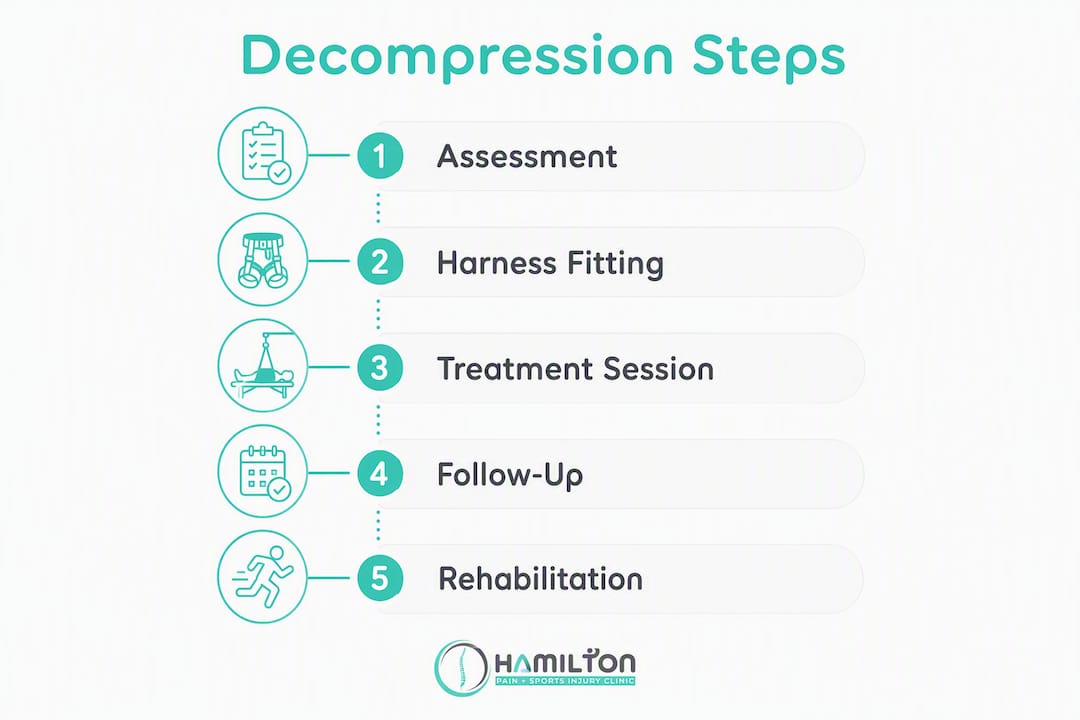
- Assessment: Full clinical exam, symptom history, imaging review, sport-specific movement screen.
- Targeted decompression (if indicated): A time-bound trial, typically 4–6 weeks, with clear outcome measures.
- Progressive loading: Gradual reintroduction of movement, then strength work, then sport-specific drills. Reactive neuromuscular training is one useful progression tool here.
- Return-to-sport testing: Objective performance benchmarks before full clearance.
Adjunct treatments that complement decompression well include manual therapy, dry needling, sports massage, and shockwave or laser therapy where indicated. The key is that decompression sits inside the plan, not above it. Why injuries keep recurring often comes down to skipping the active rehab phase entirely.
How do you choose a clinic in Dublin and what should you ask?
Not all decompression clinics are equal, and some marketing in this space is, shall we say, enthusiastic. Here's a practical checklist:
Verification items:
- Clinician qualifications (physiotherapist, chiropractor, or sports therapist with relevant training).
- Clear assessment process before treatment begins.
- Explicit outcome measures and a defined trial period.
- Transparent session plan and total cost upfront.
- Imaging policy: when they refer, when they don't.
Questions to ask at booking:
- What assessment will you do before starting treatment?
- How will you measure whether it's working?
- What happens if I don't improve after the trial period?
- How does decompression fit with exercise and rehab in my plan?
- What is the total cost, and what does each session include?
Red flags to avoid:
- Guaranteed cure or "86% success rate" claims without citing peer-reviewed evidence.
- Pressure to commit to a full package before assessment.
- No mention of active rehabilitation or exercise alongside treatment.
- Vague protocols with no defined outcome measures or exit criteria.
Before treatment starts, you should receive a written consent form, a clear explanation of the proposed plan, and an honest discussion of expected outcomes and limitations.
How Sportsinjurydublin approaches non-surgical spinal care in Dublin
Hamilton Sports and Injury Clinic (Sportsinjurydublin) takes the kind of approach that actually makes sense for active people: assessment first, treatment second, and active rehab running alongside everything else.
The typical clinic pathway includes:
- A full diagnostic interview and physical examination.
- Imaging referral where clinically indicated.
- A tailored treatment plan that integrates decompression-style techniques with personalised sports rehabilitation.
- Adjunct therapies including shockwave and laser therapy, manual therapy, dry needling, and sports massage.
- Progressive return-to-sport programming with objective performance benchmarks.
Testimonials and case examples are available on request; specific case studies are shared with patient consent. The clinic's focus on individualised care is what separates a passive treatment course from a genuine recovery pathway.
Practical next steps for an athlete in Dublin
Ready to work out whether decompression is right for you? Here's a simple decision flow:
- Self-check: Persistent disc-related pain, sciatica, or radicular symptoms that haven't resolved with standard care over 4–6 weeks? That's the profile.
- Book an assessment: Bring your training history, any existing imaging, and a symptom log (when it started, what makes it worse, what you've tried).
- Short trial with rehab: Commit to a defined trial period with clear goals, not an open-ended package.
- Reassess: If measurable improvement is happening, continue. If not, the plan changes.
Typical timelines for functional improvement, when the pathway is followed properly, range from a few weeks of symptom relief to 8–12 weeks for meaningful return-to-sport progress. Use a mobility restoration checklist between sessions to track your movement quality.
Urgent reminder: Bowel or bladder changes, severe leg weakness, or rapidly worsening symptoms need emergency assessment, not a clinic appointment.
Key takeaways
Non-surgical spinal decompression can reduce disc-related nerve pain in the short term, but durable return to sport requires pairing it with progressive active rehabilitation from the start.
| Point | Details |
|---|---|
| What it is | Traction-based therapy creating negative intradiscal pressure; non-surgical and distinct from laminectomy or discectomy. |
| Who it may help | Athletes with herniated discs, sciatica, or degenerative disc changes unresolved by standard conservative care. |
| Evidence caveat | Cochrane reviews and RCTs show limited long-term superiority over active rehab; some trials show comparable outcomes to sham traction. |
| Active rehab is non-negotiable | Decompression alone does not rebuild strength or movement patterns; progressive loading is required for return to sport. |
| Local next step | Sportsinjurydublin offers assessment-led, sport-specific rehabilitation in Dublin integrating decompression with active rehab. |
The bit where I give you my honest take
Here's something that doesn't get said enough: the decompression machine is probably not the hero of the story. The supervised attention, the structured rest, the concurrent exercise, the fact that someone is actually monitoring your progress — those things matter. A lot. The RCT evidence showing comparable outcomes between active and sham traction should make any honest clinician pause before selling a $2,000–$4,000 package as the answer.
That doesn't mean decompression is useless. For the right person, at the right stage, as part of a properly designed plan, it can genuinely help bridge the gap between acute pain and active rehabilitation. The problem is when it's sold as the whole solution.
My view? Spend your money on a thorough assessment and a rehab plan that gets you moving again. If decompression is part of that plan and the rationale is clear, great. If a clinic wants you to sign up for 28 sessions before they've even examined you, walk out.
Sportsinjurydublin: sport-focused spinal care in Dublin
If you're an active person in Dublin dealing with disc-related back pain, sciatica, or a spinal issue that's keeping you off the pitch, Sportsinjurydublin offers something most passive-treatment clinics don't: a full return-to-sport rehabilitation pathway built around your actual goals.
The clinic combines clinical assessment, targeted manual therapy, shockwave and laser therapy, and progressive strength and movement retraining into one joined-up plan. No vague protocols, no open-ended packages. You get a clear plan, measurable goals, and a clinician who knows the difference between getting you out of pain and getting you back to training.
Book your assessment at Sportsinjurydublin and find out whether spinal decompression belongs in your recovery plan.
Useful sources
- Cleveland Clinic: Spinal Decompression Therapy — defines surgical vs non-surgical approaches and outlines the stepped-care model.
- Cochrane Library: Traction for Low-Back Pain — systematic review finding limited long-term benefit of traction over active care.
- PMC: Non-surgical spinal decompression efficacy review — critical appraisal of marketing claims versus clinical evidence.
- PubMed: Schimmel et al. RCT — randomised trial comparing active and sham traction outcomes.
- WebMD: Spinal Decompression Therapy — patient-facing overview of session parameters and course length.
- Healthline: What is Spinal Decompression? — explains differences between clinical and home traction devices.
- ACOEM — occupational medicine guideline body; does not recommend motorised decompression as superior to standard conservative care.
This article is general information, not medical advice. Consult a qualified clinician or your GP to confirm whether spinal decompression is appropriate for your specific situation.