

Individualized care is the process of building a pain management plan around your specific biology, lifestyle, history, and goals rather than applying a one-size-fits-all protocol. Understanding how individualized care helps pain is the difference between cycling through treatments that never quite work and finally getting somewhere meaningful. The biopsychosocial model recognises that pain is shaped by biological, psychological, and social factors simultaneously. Treating only one of those dimensions is like fixing a puncture but ignoring the bent wheel. Sportsinjurydublin builds every treatment plan around this principle, and the clinical evidence backs it up.
How does personalized pain assessment improve treatment outcomes?
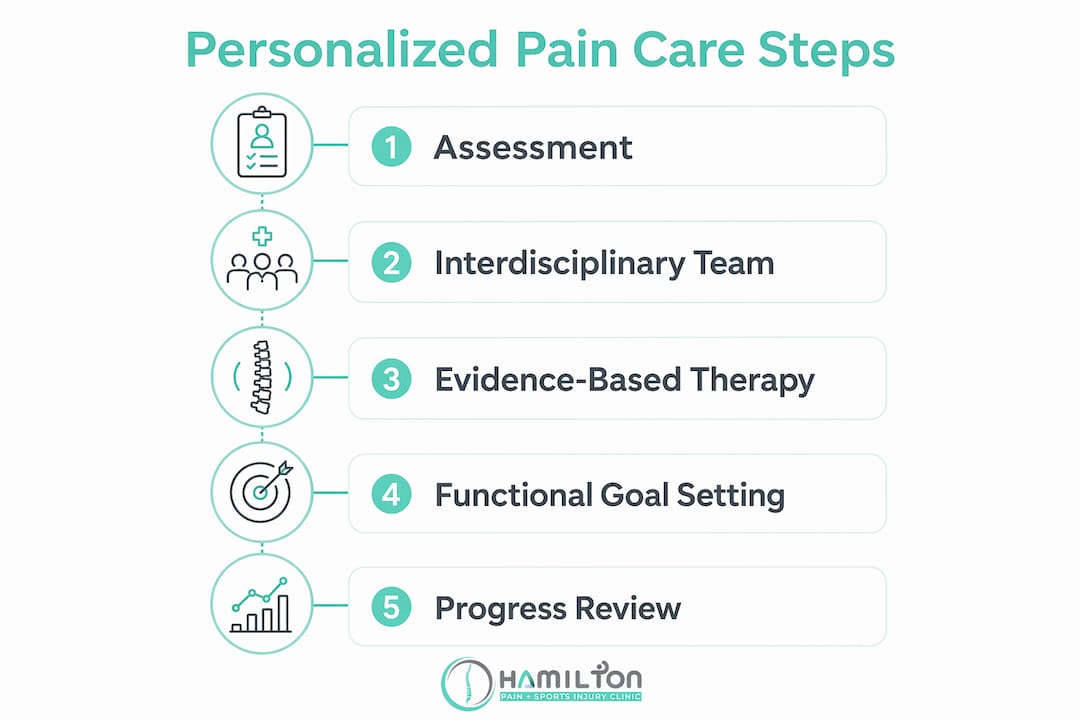
The first thing a good individualized plan does is actually look at you properly. Not just "rate your pain from one to ten" and send you on your way. A thorough assessment covers pain type, severity, neuropathic components, sleep quality, psychological state, and social stressors. Validated tools like the S-LANSS questionnaire help clinicians identify neuropathic pain features that would otherwise be missed and treated incorrectly.
Psychological and social factors matter just as much as the physical ones. Stress, poor sleep, and social isolation all amplify pain signals. A clinician who skips those factors is working with half the picture. That is why a proper assessment includes questions about your daily routine, work demands, relationships, and mental health.
Shared decision-making sits at the heart of this process. You are not handed a plan and told to follow it. Instead, you and your care team build goals together using the SMART/IES framework, which promotes sustained engagement and treatment adherence by anchoring goals to your actual values and priorities. That might mean being able to walk your dog without limping, or returning to five-a-side football, rather than chasing an abstract pain score.
- Pain type and neuropathic features assessed using validated tools like S-LANSS
- Sleep, anxiety, and mood evaluated as direct contributors to pain experience
- Social and occupational factors mapped to understand daily functional barriers
- Goals co-created with the patient using SMART/IES principles
- Baseline functional capacity measured to track meaningful progress over time
Pro Tip: Before your first appointment, write down three specific activities that pain currently stops you doing. Bring that list. It gives your clinician something concrete to build goals around, and it shifts the conversation from "how bad is it?" to "what do you want to get back to?"
What are the evidence-based therapies used in personalized pain management?
Personalized pain management pulls from a wide toolkit, and the mix depends entirely on what your assessment reveals. No two plans look the same. That is the point.
Non-pharmacological therapies form the foundation of most individualized plans. These include:
- Cognitive Behavioural Therapy (CBT) targets the thought patterns that amplify pain and reduce function. It teaches you to respond differently to pain signals rather than fear them.
- Acceptance and Commitment Therapy (ACT) helps you build a life around your values even when pain is present, reducing the psychological suffering that sits on top of physical discomfort.
- Mindfulness-based approaches reduce the emotional reactivity to pain, which directly lowers perceived intensity over time.
- Graded exercise therapy rebuilds physical capacity gradually, avoiding the boom-and-bust cycle that many people with chronic pain fall into.
- Sleep hygiene interventions address one of the most underrated drivers of pain. Poor sleep lowers your pain threshold. Fix the sleep, and pain often becomes more manageable.
- Nutritional support reduces systemic inflammation, which feeds many chronic pain conditions.
- Social connection and community are included because isolation worsens pain outcomes. This is not soft science. It is well-documented.
An interdisciplinary care team including pain physicians, physical therapists, health coaches, and integrative clinicians outperforms single-provider models in reducing pain interference. One clinician simply cannot cover all the dimensions that drive chronic pain. The team approach means each professional addresses their piece of the puzzle while communicating with the others.
Pharmacological treatment has a role, but it is a supporting one. Medications should be prescribed as time-limited trials with scheduled review dates and clear functional targets. If a medication is not producing measurable functional improvement, it gets tapered. That prevents the all-too-common situation where someone accumulates prescriptions over years without ever getting meaningfully better.
Pro Tip: Ask your prescribing clinician to name the specific functional goal your medication is meant to support. If they cannot answer that question, the prescription needs a better rationale. You deserve clarity on what success looks like.
Why do standardized pain protocols often fail where individualized care succeeds?
Generic protocols treat the average patient. The average patient does not exist. Standardised care protocols often fail by ignoring unique anatomy, personal history, and life stressors, which leads to treatment failures and patients cycling through therapies that were never right for them in the first place.
Think about it this way. Two people both present with lower back pain. One is a 28-year-old recreational runner with a recent hamstring tightness issue and high work stress. The other is a 55-year-old office worker with a decade of sedentary habits and mild depression. A standardised protocol gives them the same exercises and the same advice. Neither gets better. The runner needed load management and stress support. The office worker needed movement grading, psychological input, and lifestyle change. Same symptom, completely different root causes.
Here is what standardised approaches consistently miss:
- Unique anatomical variations that change how pain presents and responds to treatment
- Personal pain history, including previous injuries, surgeries, and failed treatments
- Psychological contributors like anxiety, catastrophising, and fear-avoidance behaviour
- Lifestyle factors such as sleep patterns, diet, physical activity levels, and work demands
- Social context including support networks, financial stress, and occupational demands
The result of ignoring all of that is symptom suppression rather than resolution. Pain gets managed just enough to keep the patient coming back, but never addressed at its actual source. Patients who fail multiple standardised treatments are not failing treatment. They are suffering from inadequately tailored plans. That reframe matters enormously, because it shifts responsibility from the patient to the system.
How do you set realistic goals and track progress in individualized pain care?
Measuring progress in pain management is trickier than it sounds. Pain intensity scores alone are a poor guide. Someone can report the same pain score at month three as at month one, yet be sleeping better, walking further, and feeling less anxious. That is real progress. Measuring progress through pain interference and quality of life metrics gives a far more valid picture of treatment success than intensity scores alone.
SMART/IES goals focus on actions and function rather than chasing zero pain. A goal like "walk for 20 minutes three times per week by the end of month two" is measurable and meaningful. "Feel less pain" is neither. Functional goals keep you motivated through the inevitable plateaus that come with chronic pain recovery.
Timeline expectations matter too. Patients with severe baseline pain often see meaningful quality of life gains, such as improved sleep and reduced anxiety, early in treatment, even before pain intensity shifts significantly. Broader functional gains typically take 6–12 months. Knowing that prevents people from abandoning a plan that is actually working.
| Goal type | Example | Timeline |
|---|---|---|
| Sleep improvement | Sleep 6+ hours without waking from pain | 4–8 weeks |
| Anxiety reduction | Report lower pain-related anxiety on validated scale | 6–10 weeks |
| Activity increase | Walk 20 minutes daily without significant flare | 8–12 weeks |
| Functional recovery | Return to sport or specific occupational task | 6–12 months |
| Pain interference reduction | Score lower on pain interference questionnaire | 3–6 months |
Treatment plans need regular review. If a goal is not being met, the plan adjusts. That ongoing monitoring is what separates personalized sports therapy from a static prescription handed out at the first appointment and never revisited.
Key takeaways
Individualized care reduces pain interference and improves quality of life by addressing the biological, psychological, and social factors that generic protocols consistently overlook.
| Point | Details |
|---|---|
| Biopsychosocial assessment | Effective pain care evaluates biology, psychology, and social context together, not in isolation. |
| Interdisciplinary teams work better | Teams including physicians, physios, and health coaches outperform single-provider models in reducing pain interference. |
| Functional goals over pain scores | Measuring sleep, activity, and quality of life gives a more accurate picture of progress than intensity scores alone. |
| Medications need functional targets | Pharmacological trials should have clear goals and tapering plans to avoid unnecessary long-term use. |
| Standardised protocols miss root causes | Patients who cycle through generic treatments are not failing. The plans are failing them. |
What I have learned from watching people finally get the right care
Here is something I find genuinely fascinating, and a little bit maddening. Most people who come in having struggled with pain for years are not difficult cases. They are people who were handed a generic plan that was never going to work for them. And they blamed themselves for it. That is the part that gets me every time.
The shift from "I need to get rid of this pain" to "I want to get back to doing the things I love" is not just philosophical. It is clinically significant. People who reframe their goal around function engage better with treatment, stick with it longer, and report better outcomes. The VA's wHOPE clinical trial published in JAMA showed that interdisciplinary whole health approaches achieve significantly higher reductions in pain interference than standard CBT alone after 12 months. That is not a small finding. That is a fundamental argument for doing things differently.
Trust matters more than most clinicians admit. When someone has been dismissed, misdiagnosed, or handed yet another generic exercise sheet, they arrive guarded. Building that trust takes time and consistency. The best care teams I have seen invest in that relationship as seriously as they invest in the clinical protocol itself.
My honest advice? Find a team that asks more questions than they answer in the first session. If someone hands you a plan before they have properly understood your life, your goals, and your history, walk out and find someone who will actually listen.
— Mark
Tailored pain care at Sportsinjurydublin
If any of this has resonated with you, and you are tired of plans that treat the average person rather than you specifically, Sportsinjurydublin might be exactly what you have been looking for.
Sportsinjurydublin's sports rehabilitation programme is built around your individual assessment, your goals, and your lifestyle. Whether you are recovering from a sports injury or managing long-term pain, the team creates a plan that actually fits your life. Advanced options like shockwave and laser therapy complement hands-on rehabilitation for people who need more than standard physiotherapy. Every session is designed to move you closer to the functional milestones that matter to you, not just a lower number on a pain scale.
FAQ
What does individualized care mean in pain management?
Individualized care means building a treatment plan around your specific pain causes, lifestyle, history, and goals rather than applying a standard protocol. It uses the biopsychosocial model to address biological, psychological, and social contributors to pain simultaneously.
How long does personalized pain treatment take to work?
Early improvements in sleep and anxiety can appear within 4–8 weeks. Broader functional gains, such as returning to sport or reducing pain interference significantly, typically take 6–12 months depending on baseline severity.
Why do generic pain protocols often fail?
Generic protocols treat average symptoms rather than individual root causes, ignoring unique anatomy, personal history, psychological factors, and lifestyle. Patients who cycle through these treatments without improvement are not failing. The plans are failing them.
What therapies are included in a personalized pain plan?
A personalized plan typically combines CBT, ACT, graded exercise, sleep hygiene, nutritional support, and physical therapy. Medications may be included as time-limited trials with clear functional goals and tapering schedules.
How is progress measured in individualized pain care?
Progress is measured through pain interference scores, quality of life metrics, and functional milestones rather than pain intensity alone. This gives a more accurate and motivating picture of how treatment is actually working.