
Most meniscus tears don't need a scalpel. They need a proper plan, some patience, and a way of measuring progress that isn't just "how many weeks has it been". Meniscus tear rehab works for a huge number of people when it's built around milestones rather than the calendar, and the single biggest mistake I see is treating recovery like a countdown timer instead of a checklist.
So here's your starting point. If you've got a confirmed or suspected meniscus tear and no mechanical locking, no fever, and you can bear weight (even if it hurts), you can very likely start rehab now. Begin with:
- Ankle pumps and heel slides to keep the joint moving without loading it
- Quad sets (tightening the thigh muscle without bending the knee) to wake the muscle back up
- Gentle range-of-motion cycling on low resistance, once tolerated
Watch for this: if swelling increases sharply, the knee locks solid, or pain spikes rather than settles, stop and get it checked rather than pushing through.
On timing, regular targeted exercise typically shows a noticeable difference within 3 to 6 months for non-operative cases, while a surgical repair often needs 4 to 9 months and a lot more patience with the process before you're cleared for anything demanding.
Key Takeaways
Meniscus tear rehab works best as a criterion-based, phase-driven process where objective milestones, not the calendar, decide when you progress.
| Point | Details |
|---|---|
| Start low-load, start now | Ankle pumps, heel slides, and quad sets are safe first steps for most non-locked, weight-bearing knees. |
| Progress by milestones | Move phases only when effusion has cleared, motion is near-full, and strength testing supports it. |
| Expect a real timeline | Non-operative rehab often shows change in 3 to 6 months; repairs can need 4 to 9 months. |
| Protect long-term | Ongoing glute, hip, and core strength work reduces the chance of re-injury after rehab ends. |
| Get specialist input when stuck | Sportsinjurydublin's individualised programmes adjust the standard protocol to your own strength numbers and activity goals. |
Table of Contents
- What does meniscus tear rehab involve at the assessment stage?
- Which exercises come first in the protective phase?
- How do you progress strength and balance work safely?
- What tests confirm you're ready for sport and impact activity?
- How should you structure a weekly rehab programme?
- What long-term habits protect the knee after rehab?
- When does a meniscus tear need surgery instead of rehab alone?
- How does a clinic personalise meniscus rehab in practice?
- What matters most when you're doing meniscus rehab exercises at home?
- Which protocols and guidance informed this article?
- What the evidence actually tells us about meniscus recovery
- Where should you go for hands-on meniscus rehab support?
- Frequently asked questions about meniscus tear rehab
- Sources
What does meniscus tear rehab involve at the assessment stage?
Before you commit to a home programme or book a physiotherapy session, run through a quick self-check. This isn't about diagnosing yourself. It's about knowing which category you're in.
- Check for swelling (effusion). A puffy, tight-feeling knee that's worse than the day before suggests ongoing irritation, not necessarily a disaster, but worth flagging to a clinician.
- Test weight-bearing. Can you put your full body weight through the leg, even gingerly? If you genuinely cannot, that's a bigger deal than a tear that lets you limp about.
- Look for locking or catching. A knee that gets stuck at a certain angle and won't straighten is one of the clearest signals that something mechanical is going on inside the joint.
- Rate the pain honestly. Severe, unrelenting pain that doesn't ease with rest is different from the dull ache of "I did too much yesterday".
- Note anything systemic. Fever, redness spreading up the leg, or pins and needles down the shin are red flags that have nothing to do with rehab timelines. See someone promptly.
An initial physiotherapy assessment usually covers your range of motion, a manual test for meniscal irritation (like McMurray's), quad strength, and how you move through squatting or stepping. What they find changes everything. A knee with full extension and mild swelling gets a very different plan to one that's locked at 20 degrees.
Pro Tip: Bring a simple log to your first appointment. Note when the injury happened, what movement caused it, and how the knee has behaved over the following 48 to 72 hours. Clinicians can read a pattern in that timeline far faster than they can read your memory of it under pressure.
If you're stuck between a locked knee and a merely sore one, book the appointment. Urgent review is for true locking or inability to bear any weight; routine referral covers everything else that isn't settling within a week or two of sensible self-management.
Which exercises come first in the protective phase?
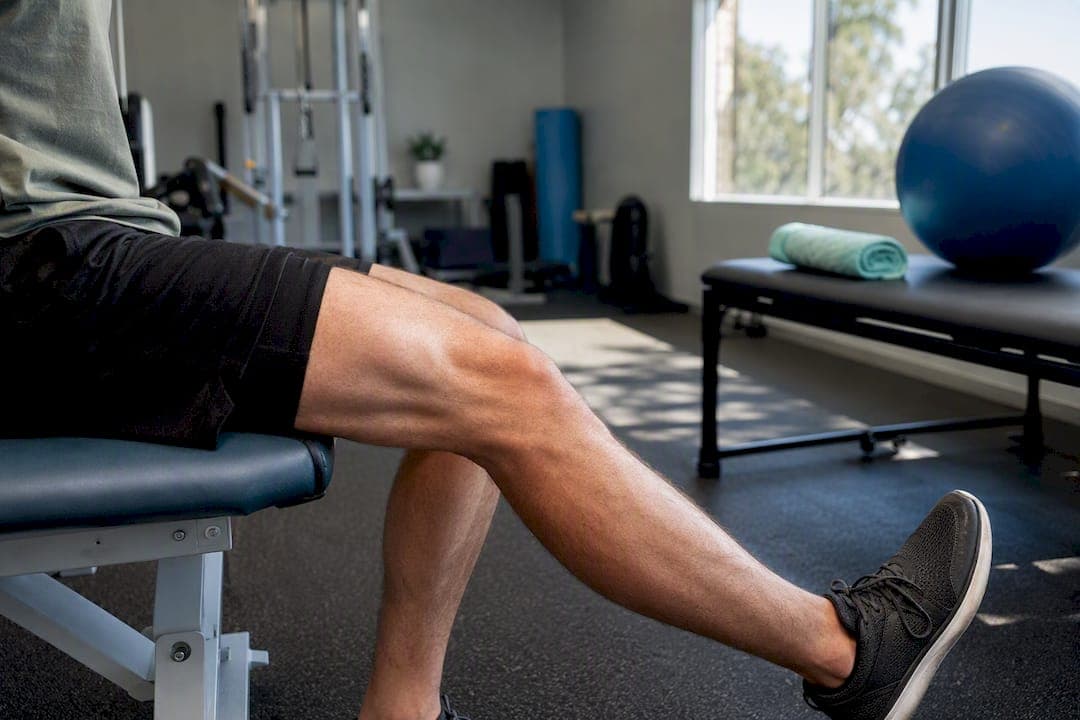
The early phase of meniscus surgery recovery, or non-operative rehab for that matter, has one job: calm the joint down while stopping the quad muscle from switching off. Quads shut down remarkably fast after a knee injury, sometimes within days, and getting them firing again is more important than most people realise.
Your goals here are simple. Reduce swelling. Regain full extension (a knee that won't straighten fully tends to stay weak and irritable). Restore basic quad activation. Keep moving elsewhere so you don't lose general fitness while one joint recovers.
Here's what that actually looks like in practice:
- Ankle pumps. Point and flex the foot, 20 to 30 reps, several times a day. It sounds too easy to matter. It matters, because it keeps circulation moving and reduces swelling pooling around the joint.
- Heel slides. Lying down, slide your heel towards your bottom, bending the knee as far as comfortable, then straighten. This is your main range-of-motion driver early on.
- Quad sets. Push the back of your knee into the floor or bed, tightening the front of the thigh, hold for 5 seconds, release. Do these constantly. They're boring, and they're the exercise that gets skipped most, which is a shame because weak quads are one of the biggest predictors of a knee that stays cranky.
- Straight leg raises (SLR). Once quad sets feel solid, lift the whole leg straight, keeping the knee locked, to about 30 to 45 degrees. Lower slowly.
- Short arc quads. With a rolled towel under the knee, straighten the lower leg from that supported position. This trains the quad through a safe, limited range.
- Gentle stationary cycling. Low or no resistance, focused purely on getting the joint moving through its arc, not on building fitness yet.
Do this daily. Ten to fifteen minutes, once or twice a day, works better than one long session that leaves the knee angry by evening. A useful rule of thumb from the Royal Berkshire NHS non-operative meniscal tear guidance: some soreness during exercise is fine, but pain that lingers for more than an hour afterwards, or swelling that's noticeably worse the next morning, means you've asked too much of the joint that day. Dial the volume back rather than stopping altogether.
Pro Tip: Ice after activity, not before. Icing a cold, stiff joint before you've moved it can mask the early warning signs your knee gives you about how much load it's actually happy with.
This is also where general fitness shouldn't get abandoned entirely. Upper body work, core exercises, and cycling on the unaffected side of things all keep you in reasonable shape while the knee itself does its slower work. Progress out of this phase when swelling has settled, extension is close to full, and a quad set produces a visible, strong contraction rather than a weak flicker.
How do you progress strength and balance work safely?
Once the knee has calmed down, and this is genuinely the phase where meniscus injury recovery either goes well or stalls, the job shifts from protecting the joint to loading it properly. The mistake here runs in both directions: some people stay too cautious for months, others jump straight to squats and wonder why the knee swells up again that evening.
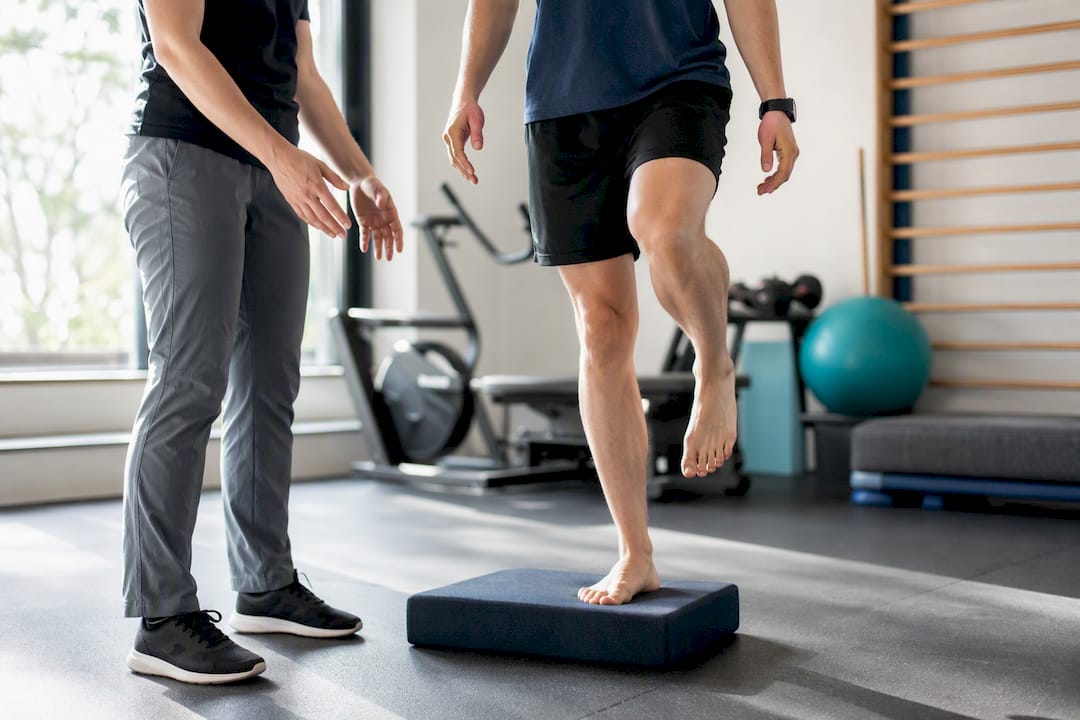
The criteria for moving into this phase are specific, not vague. You want no ongoing effusion, range of motion that's close to matching the other side, and a quad contraction that actually holds against resistance rather than trembling. If you're missing any of those, more time in the earlier phase serves you better than pushing on regardless.
Exercises that earn their place here include:
- Mini-squats, limited to a comfortable range (often 0 to 60 degrees of flexion to start), focusing on control rather than depth
- Step-ups onto a low box, building single-leg strength in a way that mimics stairs and daily movement
- Glute bridges, which sound unrelated to the knee but do a huge amount to reduce the load your meniscus takes during walking and running
- Lateral band walks, targeting the hip abductors that most people neglect completely until an injury forces the issue
- Hamstring curls, balancing out a quad-dominant programme
- Single-leg balance progressions, starting on a stable surface and moving to a cushion or wobble board as control improves
On dosing, two to three sets of 10 to 15 reps for most of these, done every other day rather than daily, gives the tissue time to adapt without accumulating irritation. Balance work can be done more frequently since it's low load. If a session leaves you limping the next morning or the knee is visibly puffier than before, that's your cue to regress the exercise, not abandon the plan. Drop the range of motion on the squat, reduce the step height, or swap a band walk for straight-leg raises for a few days before trying again.
This phase is also where glute and core strength genuinely earns its reputation for protecting the meniscus long term, because a hip that collapses inward during a single-leg task drives extra rotational stress straight through the joint you're trying to heal.
What tests confirm you're ready for sport and impact activity?
This is where a lot of meniscus rehab timelines go wrong, because "it's been four months" isn't a clearance test. Time tells you very little on its own. What matters is whether the knee performs like the other one under load, under fatigue, and under the sudden direction changes that sport actually demands.
Clinical protocols lean on a specific set of numbers rather than gut feeling. A strength deficit of no more than 25% at 180 degrees per second on isokinetic or dynamometry testing is a common bar before progressing to higher-load work, and hop test limb symmetry of around 90% or better is the standard most protocols look for before clearing someone for cutting, pivoting, or full-contact sport.
Before you get anywhere near that testing stage, you need:
- Zero ongoing effusion, checked on a day after a harder training session, not just at rest
- Full range of motion matching the uninjured side
- Consistent, pain-free single-leg squats and step-downs
- Confidence stepping off a box and landing without the knee wobbling or giving way
From there, a staged running and plyometric progression usually runs something like: walking, then a walk-jog interval programme, then continuous jogging, then straight-line running at pace, then introducing lateral movement and controlled jumping, then finally sport-specific drills like cutting, decelerating, and change of direction under fatigue.
Objective performance testing rather than pain alone is the standard clinicians use to clear people, and for good reason. Plenty of knees feel fine sitting on a treatment table and then fold under the demand of a sudden direction change on a pitch. The consensus on meniscus rehabilitation is blunt about this: criterion-based milestones, not a date circled on a calendar, are what should decide when you're cleared. Rushing this stage is how re-tears happen.
How should you structure a weekly rehab programme?
A good programme has rules baked in, so you're not guessing week to week whether to push or pull back.
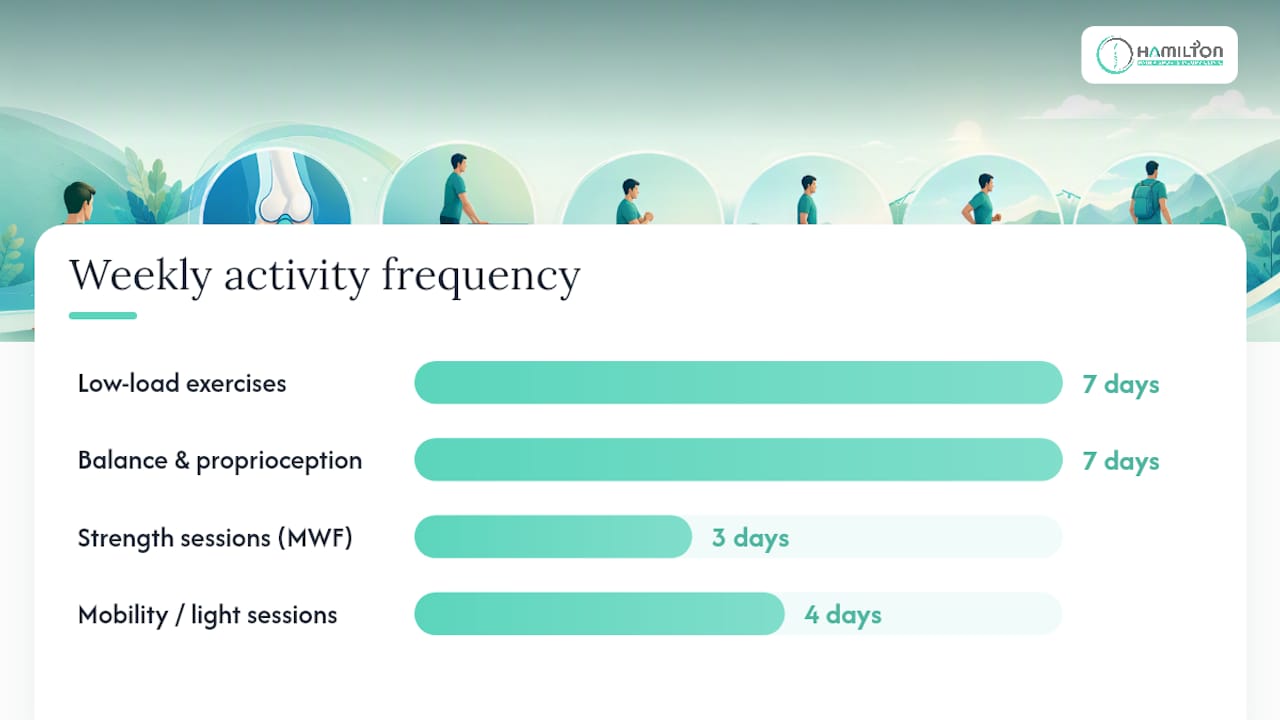
- Low-load work happens daily. Ankle pumps, quad sets, gentle ROM work, these tolerate daily frequency because the load is minimal.
- Higher-load strength work happens every other day. Squats, step-ups, resisted work need 48 hours to adapt properly; daily loading here tends to accumulate irritation rather than strength.
- Progress only when milestones are met, not when the week ticks over. No effusion, adequate range of motion, and a strong quad contraction unlock the next phase; a Tuesday on the calendar does not.
- Log your symptoms honestly. Note swelling, pain during activity, and pain the following morning. Mild muscle soreness that fades within a day is fine. Swelling that's worse the next morning is your body asking you to ease off.
A sample early-phase week might run: Monday through Sunday, daily ankle pumps, heel slides, and quad sets, with gentle cycling three or four times through the week and rest days built in wherever soreness lingers.
An intermediate-phase week looks different: strength work (mini-squats, step-ups, glute bridges) on Monday, Wednesday, and Friday, balance and proprioception work daily, and a lighter mobility-focused session on the off days to keep things moving without adding load.
What long-term habits protect the knee after rehab?
The work doesn't stop once symptoms settle, and this is the part most people skip, usually right before the tear comes back.
- Keep training your glutes and core. They control how much rotational stress reaches the meniscus during everyday movements like stairs, turning, and running, so this isn't a phase you graduate from, it's maintenance for life.
- Choose aerobic activity that suits the joint. Cycling and swimming both work well, though breaststroke's kicking action can aggravate a healing knee thanks to the twisting motion involved, so freestyle or backstroke tend to sit better if swimming is your thing.
- Manage load on the joint sensibly. Carrying extra weight increases the force through the knee with every step, so even modest weight management pays dividends for meniscal health.
- Get proper footwear for your activity. Worn-out trainers change how force travels up through the leg, and that matters more once you've already had one meniscus issue.
- Pace new activities rather than diving straight back in. A sudden jump from rehab exercises to a five-a-side match is exactly the scenario that causes flare-ups, even in a knee that's otherwise recovered well.
When does a meniscus tear need surgery instead of rehab alone?
Surgery tends to enter the conversation in a few specific scenarios, not as a default first option.
- True mechanical locking that doesn't resolve, where the knee genuinely gets stuck rather than just feeling stiff
- Large, unstable tears identified on imaging that are unlikely to settle with exercise alone
- Failure of conservative care, usually judged after a genuine trial of structured rehab for around three months without meaningful improvement
If repair surgery does happen, the rehab afterwards differs meaningfully from meniscectomy (where damaged tissue is trimmed rather than stitched). Repairs generally involve a period in a brace, restricted early range of motion, and protected weight-bearing to let the repair heal, and this extends the overall timeline. Some repair types carry stricter rules again. Root and radial repairs often require non-weightbearing restrictions for the first several weeks because of how those tear patterns disrupt the meniscus's normal load-bearing structure.
Meniscectomy recovery tends to move faster since there's no repair tissue to protect, but "faster" doesn't mean "skip the milestones". If pain or swelling isn't tracking in the expected direction at any point, that's the signal to get back to your surgeon or physiotherapist rather than waiting it out.
How does a clinic personalise meniscus rehab in practice?
Generic protocols are a useful skeleton, but they're not built for your job, your sport, or the fact that your left knee has always been the wonky one. That's where individualised programming earns its keep.
-
Rehab gets adjusted around your actual activity level, whether that's returning to five-a-side football or just wanting to manage the school run without wincing on stairs.
-
Progression is tracked against your own strength and mobility numbers rather than a generic week-by-week template.
Pro Tip: If your rehab has plateaued for more than two or three weeks with no clear reason, that's usually a sign the programme needs reassessing by someone hands-on, not that you need to try harder at the same exercises.
What matters most when you're doing meniscus rehab exercises at home?
Recovery isn't purely physical, and pretending otherwise sets people up to feel like failures when motivation dips. Weeks of unglamorous quad sets and heel slides get tedious fast, and it's completely normal for enthusiasm to sag around week six or seven, right when the exciting improvements have slowed and the boring maintenance work continues.
A few things help. Track objective progress, not just how the knee feels that day, because feelings lie and range-of-motion measurements don't. Set phase-based goals rather than one distant "back to normal" target, since ticking off "full extension achieved" feels a lot more real than waiting for an abstract sense of being "better". And accept that some sessions will feel pointless while the adaptation happens quietly underneath.
On pain management through all this: ice after activity, over-the-counter anti-inflammatories if your GP or pharmacist has confirmed they're appropriate for you, and short rest periods between harder sessions rather than total inactivity. Total rest tends to make knees stiffer, not better.
Nutrition plays a smaller but real role too. Adequate protein supports the muscle rebuilding that rehab demands, and staying generally well-nourished (rather than under-eating while injured and less active) supports the slower business of tissue repair happening inside the joint itself.
Which protocols and guidance informed this article?
- Royal Berkshire NHS non-operative meniscal tear leaflet, a patient-facing clinical guidance document
- CHOP meniscus repair protocol, a hospital rehabilitation protocol with objective testing criteria
- JOSPT Open EU-US meniscus rehabilitation consensus, a formal international consensus statement
- Dartmouth-Hitchcock meniscus repair physical therapy protocol, a phased post-surgical rehab framework
- Springer review on rehabilitation principles after meniscus repair, covering tear-specific precautions
What the evidence actually tells us about meniscus recovery
The conventional advice on meniscus tears has always leaned too hard on time. Six weeks for this, three months for that, as though tissue heals on a schedule dictated by the calendar rather than by how it's actually loaded. The research doesn't support that framing, and the consensus statements are increasingly explicit about it: criterion-based progression beats calendar-based progression, full stop.
What's underrated is how much the boring early phase determines everything downstream. Skimp on quad activation in week one because it feels pointless, and you're often still fighting to close a strength deficit months later during return-to-sport testing. The unglamorous exercises aren't filler content before the "real" rehab starts. They're the foundation the later stages depend on.
If I had to pick one priority for someone starting out, it wouldn't be an exercise at all. It would be getting a proper assessment early, so the programme is built around your actual knee rather than a generic template that ignores whether you've got a stable tear or an unstable one heading towards surgery.
Where should you go for hands-on meniscus rehab support?
Reading a protocol online gets you moving in the right direction, but a template can't feel your effusion, measure your actual range of motion, or tell you honestly whether that strength deficit has closed enough for you to trust the knee on a football pitch again. That's the gap Sportsinjurydublin closes for readers who want more than a generic exercise sheet.

Sportsinjurydublin's Sports Rehabilitation Programme is built around individualised assessment rather than a one-size-fits-all handout, considering your activity level, your sport, and your actual test results at each phase rather than assuming everyone recovers at the same pace. That matters most in the middle and later phases of meniscus rehab, where the difference between "back to jogging" and "back to five-a-side without hesitation" comes down to objective testing most people can't run on themselves. Whether you're weeks into home rehab and stuck, or just past a diagnosis and want a proper plan from day one, book an assessment through the Sports Rehabilitation Programme and get a progression plan built around your own knee, not a generic template.
Frequently asked questions about meniscus tear rehab
How long does meniscus tear rehab usually take? Non-operative rehab often shows meaningful improvement within 3 to 6 months with consistent, targeted exercise. If surgical repair is involved, expect a longer road, often 4 to 9 months depending on the tear's complexity and location.
Can you heal a meniscus tear without surgery? Many tears, particularly stable ones without mechanical locking, respond well to a structured, phase-based exercise programme. Surgery becomes more likely when locking persists, the tear is large and unstable, or conservative rehab hasn't helped after a genuine three-month trial.
What exercises should you avoid early after a meniscus tear? Deep squatting, twisting or pivoting movements, and any high-impact activity like running or jumping should wait until swelling has settled and range of motion is close to normal. Pushing into these too early is one of the more common causes of setbacks.
How do you know if you're ready to return to sport? Clearance should be based on measurable criteria, not just how the knee feels.
Is walking okay during meniscus rehab? Generally yes, provided it doesn't cause locking, sharp pain, or a marked increase in swelling afterwards. Walking is often encouraged early on precisely because gentle, tolerable movement supports healing better than complete rest.
This article is general information, not a substitute for advice from a qualified doctor. Consult a qualified healthcare professional about your own circumstances before acting on anything here.
Sources
- Acute meniscal tears non-operative management (Royal Berkshire NHS leaflet)
- Meniscus repair protocol (CHOP)
- The Formal EU‑US Meniscus Rehabilitation 2024 Consensus: Part I (JOSPT Open)