

Healthy joints let your body transfer force efficiently, and that's the whole ball game: more power, better endurance, and a lot less chance of ending up on the physio table. When your knee, hip or shoulder moves the way it's meant to, the muscles around it do their job properly instead of quietly compensating for a problem you haven't noticed yet.
Three things happen when your joints are in good nick:
- Force transfer improves — power moves cleanly from the ground through your legs, hips and core instead of leaking out at a stiff or unstable joint.
- Injury risk drops — a very large majority of injury-related healthcare visits involve joints, bones and muscles, according to the American Chiropractic Association, which tells you how often joint problems are the actual root cause, not a side note.
- Recovery speeds up — well-conditioned joints and the muscles around them bounce back from training load faster, according to the Cleveland Clinic, which means less time lost between sessions.
Ignore your joints and you're not just risking an injury somewhere down the line. You're leaving performance on the table right now.
Key Takeaways
Healthy joints improve athletic performance because efficient force transfer, strong surrounding muscle, and good proprioception together reduce compensatory loading and injury risk.
| Point | Details |
|---|---|
| Force transfer depends on joint health | Stiff or inflamed joints break the kinetic chain, cutting power in movements like jumping. |
| Movement feeds cartilage | Cartilage has no blood supply, so regular motion is what pumps nutrients in via synovial fluid. |
| Strength training is joint protection | Muscle acts as a shock absorber, reducing direct load on cartilage and ligaments. |
| Weight and inflammation raise joint stress | Managing bodyweight lowers mechanical load on knees and hips directly. |
| Proprioception prevents silent wear | Balance and neuromuscular drills catch compensation patterns before they cause injury. |
Table of Contents
- Why joint health impacts performance at the biomechanical level
- What actually wears joints down and cuts athletic output
- Strength and mobility work that keeps joints performance-ready
- Nutrition, sleep and supplements that support joint recovery
- When to bring in a sports therapist about joint issues
- Sports therapy perspective on joint care and performance
- Sources
Why joint health impacts performance at the biomechanical level
Your joints are where cartilage, synovium, ligaments, tendons and muscle all meet to do one job: let bones move against each other without grinding themselves down. Cartilage is the smooth, shock-absorbing surface on the end of your bones. Synovium produces the fluid that lubricates the joint. Ligaments hold bone to bone, tendons hold muscle to bone, and the muscles themselves provide the actual horsepower. Weaken or irritate any one part, and the whole chain gets less efficient.
Here's the bit most people don't know: cartilage has no blood supply. It gets fed by a process called imbibition, where movement pumps synovial fluid (and the nutrients in it) into the cartilage like a sponge soaking up water, according to the ACA. Sit still for too long and that feeding process slows right down, which is a big part of why "rest" isn't always the recovery strategy people think it is.
Now picture a jump. A clean vertical jump relies on triple extension, your ankle, knee and hip straightening in sequence to fire force through the ground. If your knee is inflamed or your ankle lacks range, that sequence breaks down. You don't just jump a bit lower. You lose power at the exact moment you need it, and your body quietly redirects load somewhere else to compensate, usually your lower back or your other leg.
That compensation only works because of proprioception, your body's sense of where its joints are in space without looking. Good proprioception keeps movement efficient and joints properly aligned under load. Damage or fatigue that system and technique falls apart before strength does, which is exactly why so many injuries happen late in a match or a long run, not at the start.

What actually wears joints down and cuts athletic output
Overuse is the obvious one. Repeated high load without adequate recovery accelerates cartilage wear faster than the tissue can repair itself, and acute injuries (a bad landing, a twisted ankle) leave micro-damage that changes how a joint moves even after the pain fades.
Bodyweight and inflammation matter more than most athletes assume. Carrying excess weight increases mechanical stress on weight-bearing joints like the knees and hips, according to the Arthritis Foundation, and that stress compounds with every stride or squat.
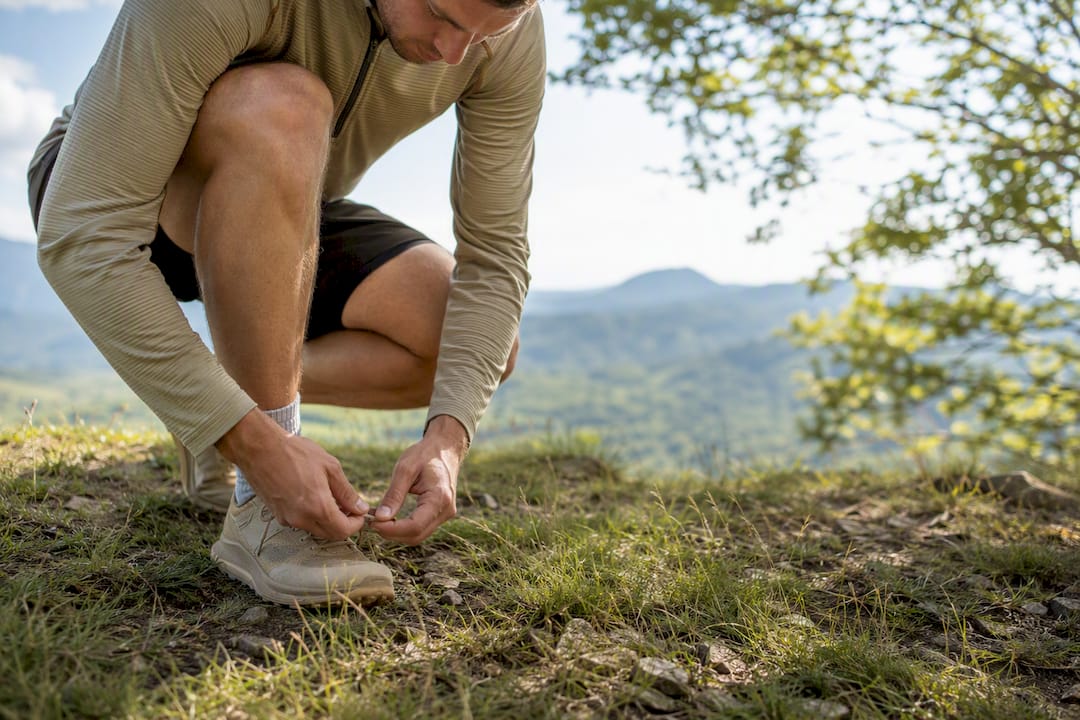
A very large majority of injury-related healthcare visits stem from musculoskeletal problems involving joints, bones and muscles, per the ACA, and knees, shoulders, ankles and the spine are the usual suspects.
The factors that tend to stack up against you:
- Repetitive high-impact training without deload weeks
- Excess bodyweight loading knees and hips beyond their tolerance
- Age-related changes to cartilage thickness and joint fluid quality
- Generalised joint hypermobility, which can aid flexibility-heavy sports but is linked to proprioceptive deficits and higher injury risk unless it's managed with targeted training, according to a 2025 study in Scientific Reports
- Weak stabiliser muscles that force the joint itself to absorb load meant for muscle
None of these act alone. An ageing runner with weak glutes and a few extra kilos isn't dealing with one problem, they're dealing with four that all point at the same knee.
Strength and mobility work that keeps joints performance-ready
Muscle is your joint's shock absorber. Build it properly and you take load off cartilage and ligaments that were never designed to handle force alone, a principle the Cleveland Clinic backs directly. Skip it, and every mile or rep asks your joints to do a muscle's job.
A sensible approach looks like this:
- Strengthen the muscles around the joint, not just the prime movers. Glute bridges, single-leg squats and calf raises build the support structure around knees and ankles that most training programmes neglect.
- Train range of motion actively, not just passively. Controlled squats, hip openers and shoulder circles through full range keep synovial fluid moving and cartilage fed, echoing the ScienceAlert summary of exercise's role in joint nutrition.
- Add proprioceptive and balance drills. Single-leg stands, wobble board work and lateral hops retrain the nervous system to sense joint position, which matters even more if you're naturally hypermobile.
- Load progressively and track return-to-play signals. Increase intensity in small steps and treat swelling, persistent pain or loss of range as a signal to scale back, not push through.
Pro Tip: If a joint feels "off" for more than 48 hours after training, that's your body asking for a proper assessment, not just a rest day. A sports therapist can spot the compensation pattern before it becomes the next injury, which is exactly the kind of gap strength-focused injury prevention work is designed to close.
Movement screens and load-tracking tools also help here. Athletic testing platforms like the ones covered in GetOffered's breakdown of performance metrics show how measurable movement data flags asymmetries long before they show up as pain.
Nutrition, sleep and supplements that support joint recovery
Extra bodyweight adds direct mechanical stress to weight-bearing joints, so managing it is one of the simplest levers you have, according to the Arthritis Foundation. Pair that with an anti-inflammatory eating pattern and you reduce the background inflammation that makes joints feel worse after training.
Sleep and hydration aren't glamorous, but synovial fluid production and tissue repair both depend on them. Skimp on either and recovery between sessions slows down, whatever your training plan says.
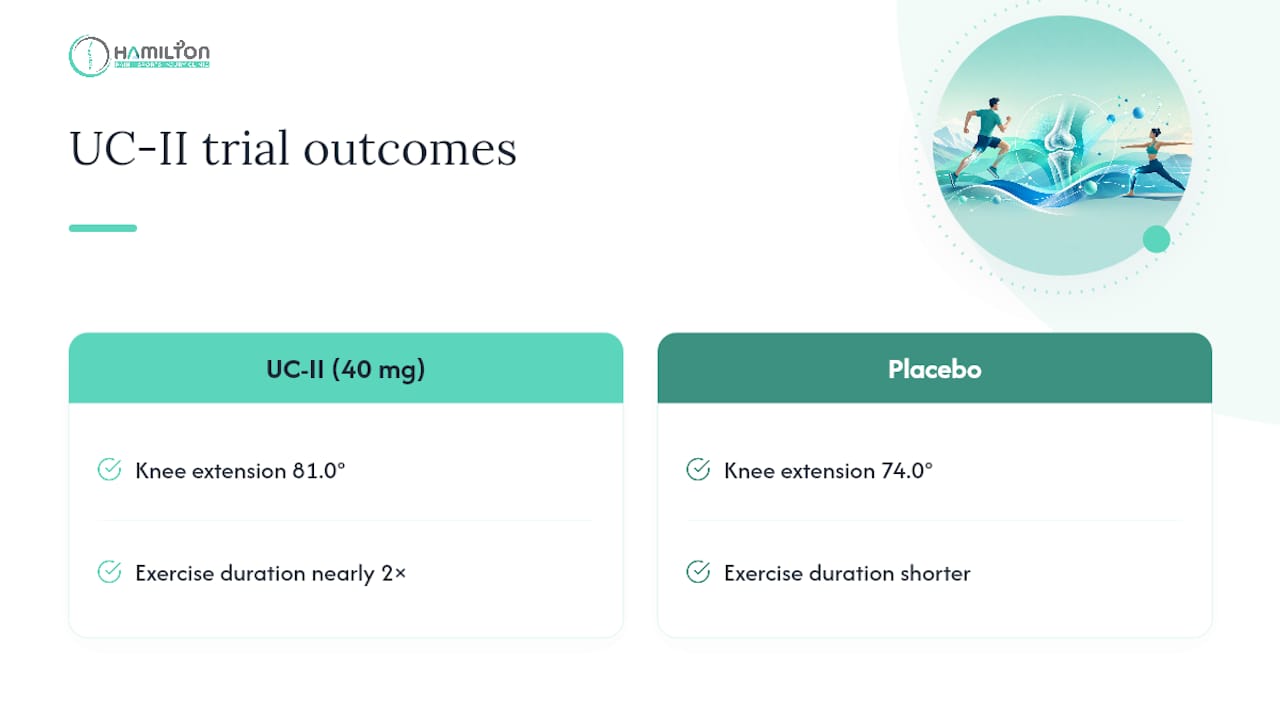
A 2013 randomised, double-blind trial found that 40mg of undenatured type II collagen (UC-II) daily for 120 days improved knee extension (81.0° versus 74.0° for placebo) and let participants exercise nearly twice as long before pain set in, according to the published trial. That's a genuinely useful data point, but it's one study, not a guarantee.
Glucosamine is murkier. Human evidence for pain relief is inconsistent, though some preclinical work suggests a role in exercise capacity, according to the ACSM's 2022 summary. Treat supplement marketing with a raised eyebrow and ask a clinician whether a specific product's evidence actually applies to your situation before you spend money on it.
When to bring in a sports therapist about joint issues
A proper clinical assessment goes well beyond asking where it hurts. At Sportsinjurydublin, that typically means a movement screen to spot compensation patterns, strength testing to find the weak links, and proprioception checks to see how well you sense joint position under fatigue.
From there, treatment is built around what the assessment actually finds, not a generic protocol:
- Manual therapy and dry needling to address restricted tissue around the joint
- A tailored exercise programme targeting the specific weaknesses found in testing
- A structured return-to-sport plan with clear load progression, not a vague "ease back in"
Clients often report major improvements fast, sometimes describing a session as the turning point in their recovery. If a joint issue is limiting your training rather than just annoying you, a sports rehabilitation programme built around your specific movement pattern gets you back to full output faster than guessing on your own.
Sports therapy perspective on joint care and performance
Most athletes still treat joint care as a rehab conversation, something you address after the MRI, not before. That's backwards. The strongest evidence here, the UC-II trial's exercise-tolerance data, the ACA's injury statistics, the proprioception research on hypermobility, all points the same direction: joint condition is a performance variable you can train, not a fixed limitation you manage around.
The conventional advice ("stretch more, rest when it hurts") undersells the two things that actually move the needle: targeted strength work around the joint, and proprioceptive training that keeps your nervous system in sync with your body. Supplements get disproportionate attention because they're easy to sell. Muscle conditioning and movement screening get comparatively little because they require actual effort.
If you take one thing from this, prioritise a proper movement assessment before your next injury forces one on you. Catching a compensation pattern early is cheaper, faster and far less frustrating than rebuilding after a breakdown.
— Mark
Sources
- Joint health (American Chiropractic Association PDF)
- How to keep your joints healthy with the right exercise (Cleveland Clinic)
- Exercise can protect your joints — ScienceAlert (2026)
- The effects of joint hypermobility on strength, proprioception and functional performance (Scientific Reports, 2025)