
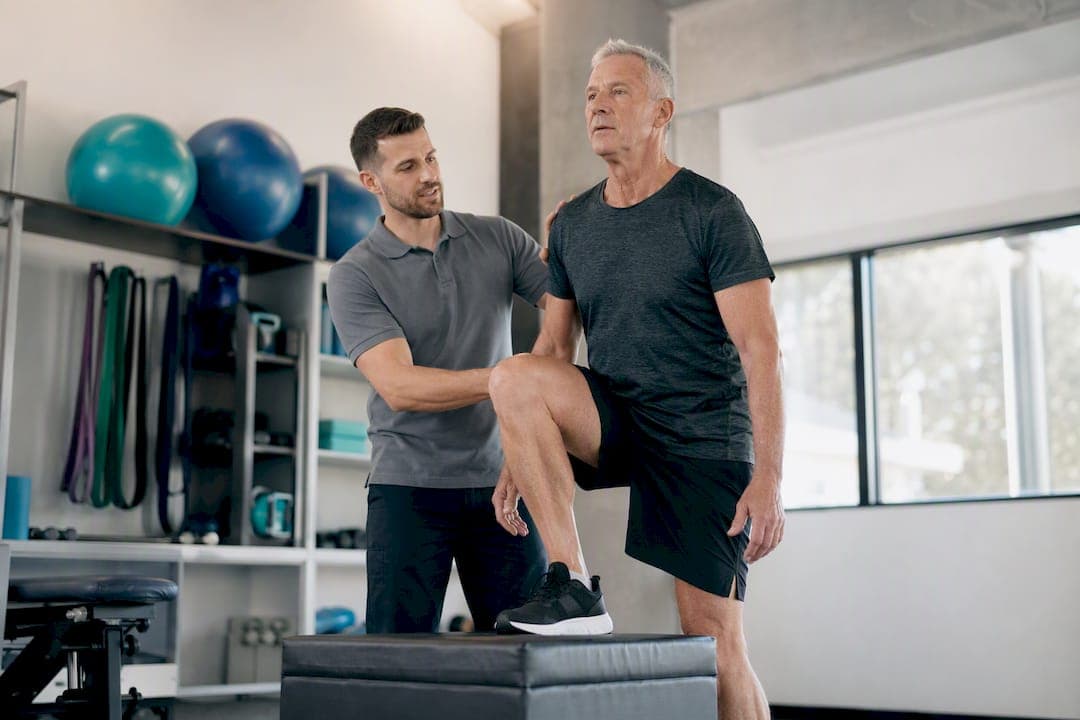
Clinic-grade functional movement training is a therapist-led, individualised programme that rebuilds pain-free, task-specific movement so you can get back to sport or daily life without guarding, compensating, or bracing for the next flare-up. The goal isn't "feeling a bit better." It's measurable: reduced pain, restored function, and objective readiness to return to the activities you actually care about.
Core components usually include:
- A movement and pain assessment (often using tools like the Functional Movement Screen)
- Sensorimotor and neuromuscular retraining
- Manual therapy to calm guarding and open a window for change
- Graded, progressive loading tied to your sport or job
If you've tried rest, painkillers, or a generic gym programme and you're still guarding a joint or dodging a movement, this is the approach worth considering next.
Key Takeaways
Clinic-grade functional movement training works by combining objective assessment, a staged mobility-to-loading hierarchy, and therapist-led progression to restore pain-free, sport-ready movement.
| Point | Details |
|---|---|
| Follow the hierarchy | Mobility, then stability and motor control, then strength, then functional loading, restores movement without reinforcing bad patterns. |
| Expect real dosage | Outpatient care often runs a median of nine sessions over five months, with roughly half improving meaningfully by one year. |
| Track objective markers | Hop tests, symmetry scores, and strength-to-body-weight ratios matter more than how you feel on a given day. |
| Address the nervous system | Manual therapy and graded exposure interrupt pain-guarding cycles before active retraining begins. |
| Choose individualised care | Hamilton Pain and Sports Injury Clinic builds programmes around your specific movement deficits rather than a fixed protocol. |
Table of Contents
- Who benefits and what results to expect
- Why rehab follows mobility, stability, strength, then load
- What does a functional movement training programme actually include?
- How do clinicians measure progress and readiness?
- What does the research say about timelines and dosage?
- How does pain science shape the treatment approach?
- What happens from your first session to discharge?
- How do you choose the right clinic?
- A clinician's view on why this approach works
- Book a clinic-grade rehabilitation assessment
- Frequently asked questions
- Sources
Who benefits and what results to expect
Three groups tend to get the most out of clinic-grade functional movement training: athletes rebuilding trust in an injured joint before returning to sport, people with persistent pain that hasn't responded to a single treatment type, and anyone who's been told to "just rest it" without ever getting a proper movement diagnosis.
The evidence backs this up. In one cohort of physiotherapist-led, one-to-one rehabilitation, patients received a median of nine sessions over five months, combining education, sensorimotor training, and manual therapy. Around half reported clinically important improvements in pain, disability, and overall health a full year later.
Realistic outcomes to expect:
- Measurable pain reduction, not just "it feels different"
- Improved function on objective tests, not just subjective confidence
- A documented return-to-sport or return-to-work timeline
Prioritise supervised, therapist-led care if you've already tried self-managed stretching or generic strength work and the same pain keeps resurfacing. That pattern usually means the underlying movement fault, not just the symptom, hasn't been addressed.
Why rehab follows mobility, stability, strength, then load
Clinicians don't jump straight to loading a sore joint, and there's a good clinical reason for that. The hierarchy runs: restore mobility first, then rebuild stability and motor control, then build strength, and only then apply functional, sport-specific loading.
Skip a step and you risk two things: re-injury, because the tissue isn't ready, and reinforcement of the very movement fault that caused the problem in the first place. Loading a knee that hasn't regained proper motor control just teaches the body to compensate more efficiently, which is the opposite of what you want.
Before any loading begins, clinicians often need to de-threaten the nervous system. Persistent pain frequently comes with guarding, a protective pattern where muscles brace unnecessarily. Manual therapy and graded exposure work together to interrupt that cycle, easing the nervous system's alarm response before active retraining starts.
- Mobility: can the joint move through its full range without compensation?
- Stability and motor control: can you control that range under load?
- Strength: can you generate force through that controlled range?
- Functional loading: can you apply that strength to your actual sport or task?
Pro Tip: If a client's form breaks down or pain spikes when a load increases, that's a signal to pause and re-test motor control, not to push through. Progressing on a shaky foundation almost always costs more time later.
What does a functional movement training programme actually include?
A clinic-grade programme blends several interventions rather than relying on one fix. Assessment comes first, often using Functional Movement Screen (FMS™) protocols to spot asymmetries and compensations before they cause bigger problems. From there, sensorimotor and neuromuscular training rebuilds the brain-to-muscle connection, manual therapy opens a short window to work on movement quality, and progressive loading rebuilds capacity in a controlled sequence.
For more complex or chronic cases, multidisciplinary models such as functional restoration programmes (FRP) or interdisciplinary multimodal pain therapy (IMPT) bring in occupational therapy, psychology, and medical oversight alongside physiotherapy.
Equipment varies widely. Some clinics use biofeedback platforms like the HUBER® 360 for supervised neuromuscular training, while plenty of effective work happens with bands, cones, and sleds.
Manual therapy isn't a cure on its own. It creates a short-duration window of reduced guarding that must be immediately consolidated with active motor control exercises, or the benefit fades.
One-to-one sessions allow tighter individualisation of intensity and exercise selection, whereas group formats can suit maintenance-phase work once the foundational patterns are in place.
How do clinicians measure progress and readiness?
Progress in functional movement training isn't judged by how much weight you can lift. It's judged by movement quality: alignment, deceleration control, and symmetry between limbs.
Common objective benchmarks include:
- Hop testing (single-leg hop for distance, triple hop, crossover hop)
- Dynamic balance metrics
- Strength-to-body-weight ratios
- Lift and carry capacity tests
- Time-to-fatigue measures
- Side-to-side symmetry scores
Early in rehab, symmetry and motor control matter more than raw load. A strong but asymmetrical landing pattern is a red flag, not a green light. As you progress, thresholds shift toward sport-specific demands, and these figures are what shape return-to-sport clearance and eventual discharge, not how you subjectively feel on a given day.
What does the research say about timelines and dosage?
Programme length depends heavily on complexity, but two dosage patterns recur across the evidence. Outpatient, one-to-one physiotherapy tends to run around a median of nine sessions over five months, with roughly half of patients reporting clinically important improvement at one year.
For more intensive cases, 4 to 8 week programmes are common. A four-week interdisciplinary multimodal pain therapy programme using supervised HUBER® 360 training produced significant reductions in pain and improved psychological measures, with effects still present three months later. Separately, an 8-week functional restoration programme showed significant gains in depression, anxiety, self-efficacy, and physical function compared with conventional medical management.
A rough timeline template:
- Assessment and goal-setting (session one)
- Intensive phase (4 to 8 weeks) or extended outpatient care (around nine sessions over several months)
- Maintenance phase with reduced frequency
Worth noting: much of this evidence comes from cohort and observational studies rather than large randomised trials, so results should be read as strong signals of what works, not guarantees.
How does pain science shape the treatment approach?
Persistent pain often triggers a guarding cycle: the brain flags a movement as dangerous, muscles brace protectively, and that bracing itself becomes a source of stiffness and further pain. Manual therapy and graded exposure exist to interrupt that loop, reducing perceived threat so the nervous system will actually allow movement again.
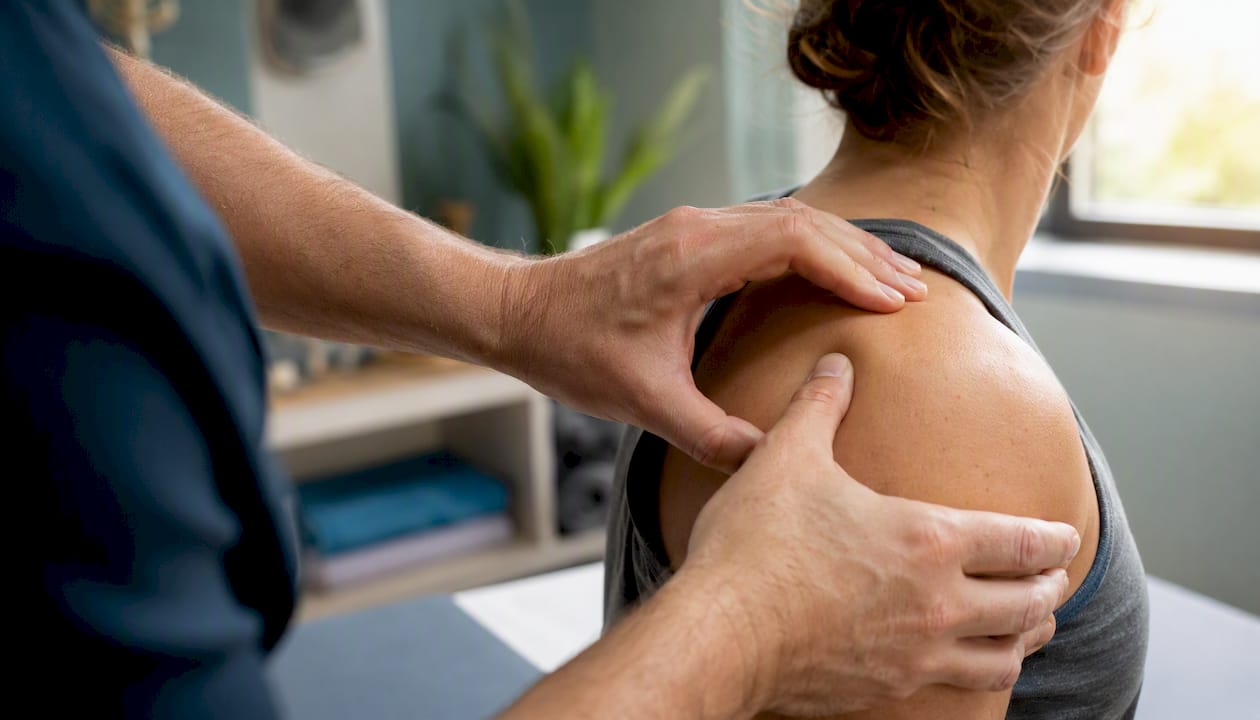
Clinicians typically choose between two approaches. Pain-contingent progression waits for symptoms to settle before advancing. Time-contingent progression advances on a set schedule regardless of day-to-day pain fluctuation, which is often more effective for breaking a guarding pattern. Deciding which one to use is a clinical judgement, not a one-size-fits-all rule.
None of this happens in isolation from the rest of your life. A biopsychosocial approach recognises that sleep, stress, and nutrition all influence how the nervous system interprets pain, which is exactly why multidisciplinary programmes fold education and lifestyle coaching in alongside the physical work.
What happens from your first session to discharge?
A typical pathway runs in five stages:
- Intake and goal-setting, where you and the therapist agree what "recovered" actually means for your sport or job
- Objective testing (movement screening plus functional tests) to establish a baseline
- An individualised plan built around your specific deficits
- Supervised sessions combining manual therapy, motor control drills, and progressive loading
- Periodic re-testing against discharge criteria, followed by a maintenance plan
A single session might include a brief warm-up, targeted manual therapy, a few motor control drills, one or two progressive loading exercises, and a quick review of your home exercise programme (HEP).
- HEP adherence matters more than people expect
- Clinic sessions are largely for evaluation and adjustment
- Consistent home practice is where most of the actual adaptation happens between visits
How do you choose the right clinic?
Ask these questions before committing to a programme:
- What assessment tools do you use, and will I get objective baseline numbers?
- What does a typical programme length look like for someone with my injury?
- Do you have access to multidisciplinary support if I need it?
- What are the criteria for discharge, and how will we track progress?
Red flags to walk away from: a one-size-fits-all exercise sheet handed out on day one, no objective testing at any point, no clear discharge plan, or pressure to buy a large package before any assessment has happened.
Trust signals worth looking for include clinicians who reference objective testing tools, clear individualised goals, and a documented home programme. Hamilton Pain and Sports Injury Clinic builds its chronic pain treatment plans around exactly this kind of individualisation rather than a fixed protocol.
Pro Tip: If a clinic can't tell you how they'll measure whether the programme is working, that's worth questioning before you book a package of sessions.
A clinician's view on why this approach works
Patients rarely need convincing that they're in pain. What they need is a clear reason why one movement hurts and another doesn't, and a stepwise plan to fix it. That's the real value of clinic-grade functional movement training: it replaces guesswork with a hierarchy, objective tests, and a plan you can actually see progress against.
None of it works overnight, and the sessions themselves are only half the job. Your consistency with home exercises between visits usually decides how quickly you get back to full training.
Book a clinic-grade rehabilitation assessment
If you're dealing with a stubborn injury that hasn't responded to rest, painkillers, or a generic exercise sheet, Hamilton Pain and Sports Injury Clinic offers something a Google search and a YouTube routine can't: an individualised assessment that identifies exactly which movement fault is driving your pain, then builds a progression around it rather than a template.
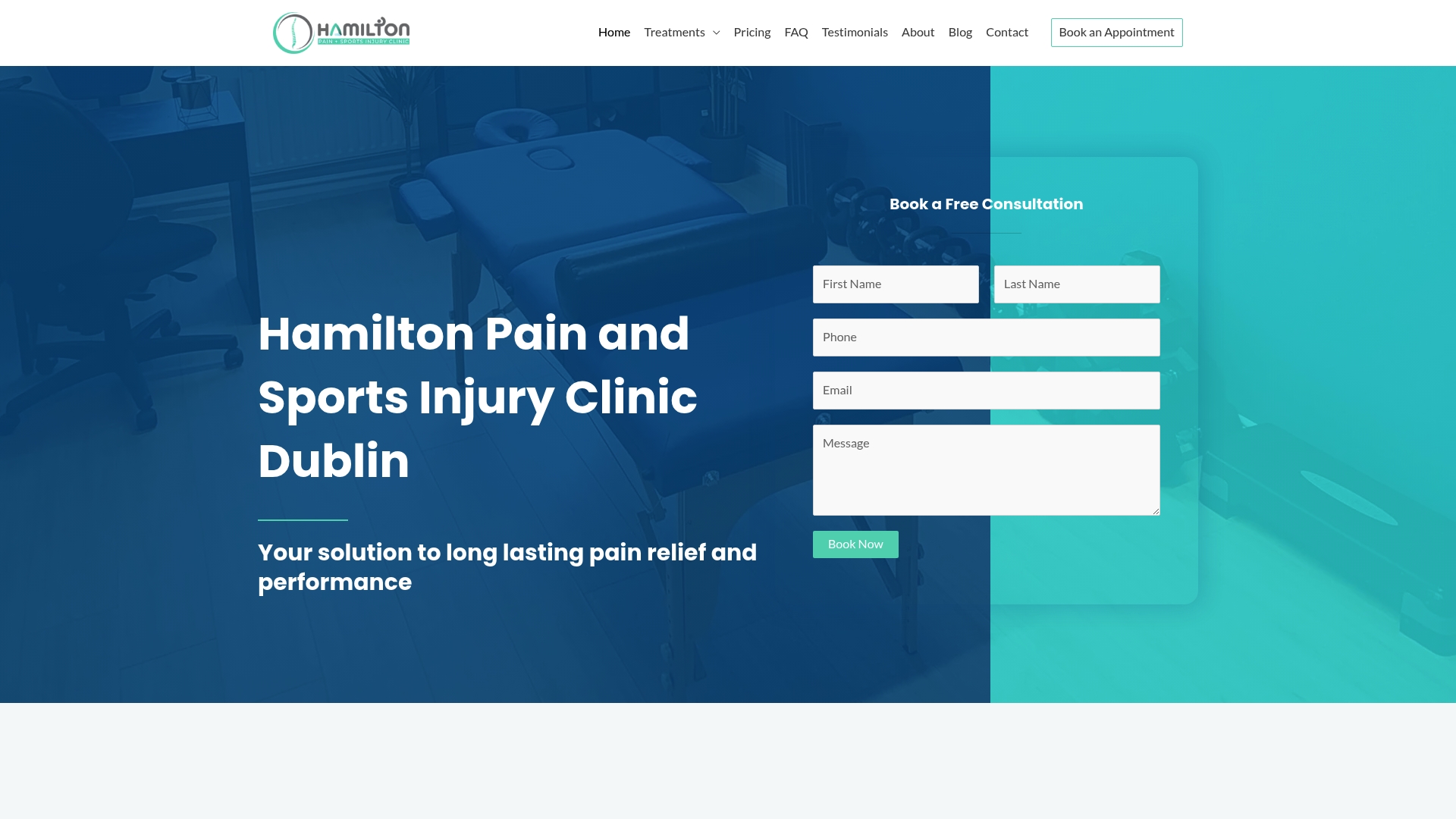 Alt text: Physiotherapist guiding a patient through a functional movement assessment at Hamilton Pain and Sports Injury Clinic
A first appointment typically covers a detailed movement assessment, a discussion of your sport or activity goals, and the start of an individualised plan rather than a generic handout. For athletes specifically working towards a return to competition, the clinic's return-to-sport rehabilitation service builds staged progressions around objective readiness testing, not guesswork. Book an initial sports rehabilitation assessment to get a clear picture of what's actually driving your pain and a realistic timeline for fixing it.
Frequently asked questions
What is functional movement training in a clinical setting? It's an individualised, therapist-led rehabilitation approach that assesses your specific movement faults, then progresses you through mobility, motor control, strength, and functional loading to restore pain-free movement.
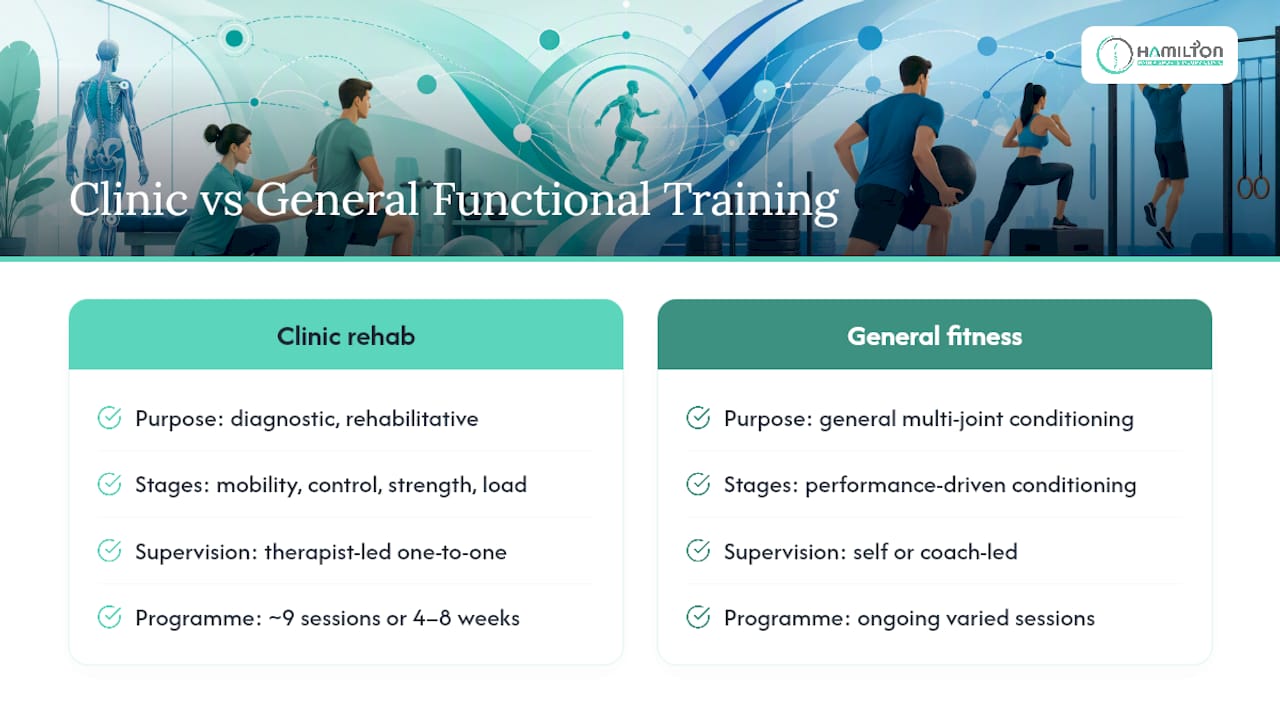
How is it different from general functional fitness training? General functional fitness focuses on multi-joint conditioning for everyday performance. Clinic-grade functional movement training is diagnostic and rehabilitative, built around correcting a specific injury or pain pattern under professional supervision.
How many sessions does a typical programme need? Outpatient one-to-one care often runs around nine sessions over five months, while more intensive functional restoration or interdisciplinary programmes typically run 4 to 8 weeks.
When should I see a therapist instead of managing pain myself? If pain persists beyond a few weeks, keeps recurring despite rest, or you notice you're avoiding or compensating around a specific movement, a professional assessment will identify the underlying cause faster than continued self-management.
This article is general information, not a substitute for advice from a qualified doctor. Consult a qualified healthcare professional about your own circumstances before acting on anything here.