
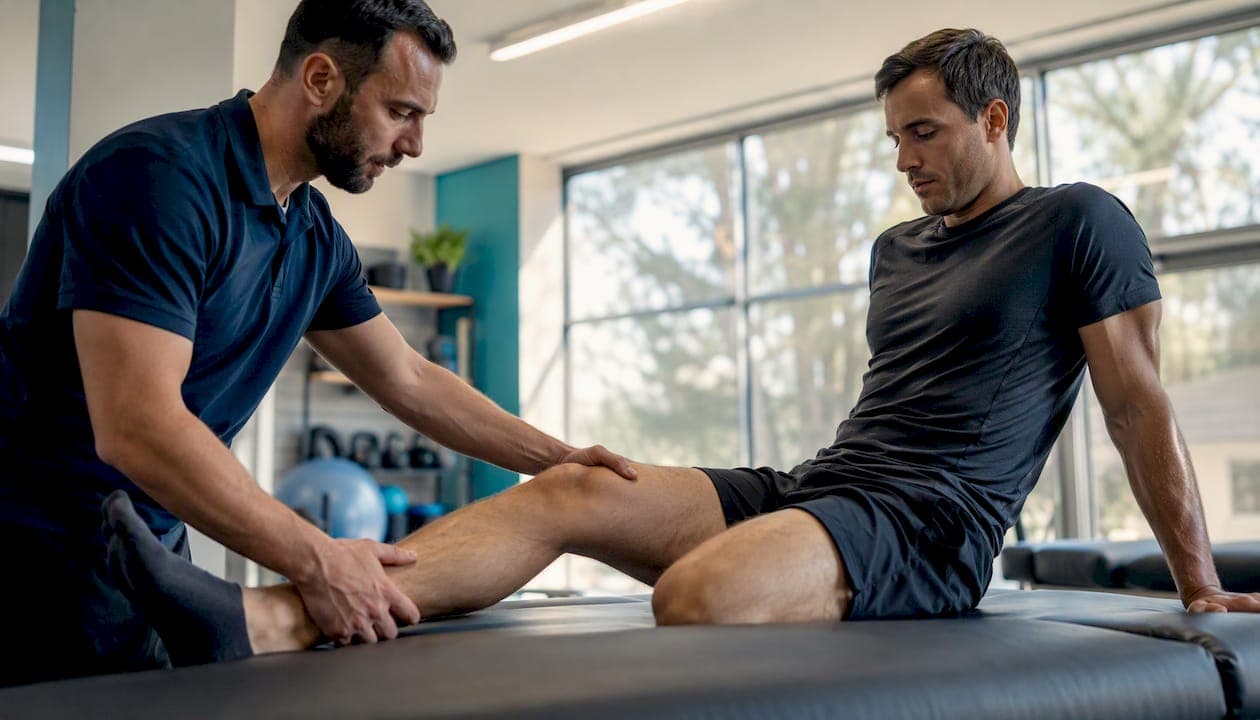
Injured runners heal faster and stay injury-free longer with an individualized, assessment-led rehabilitation plan than with any generic programme off the internet. Many runners pick up an injury each year, according to a systematic review of running-related injuries, and generic fixes rarely address why it happened to you specifically. Clinics that use a structured approach, like the RISK framework, alongside tools such as 2D clinical gait analysis, build plans around your actual tissue capacity and movement pattern rather than a template.
Here's what changes when the plan is actually built around you:
- Your history and load are assessed before anything is prescribed, not guessed at
- Progression is measured against your numbers, not a generic six-week schedule
- Your goals, stress levels, and life context shape the plan, not just your scan
Key Takeaways
Individualized, assessment-led rehabilitation gives injured runners a measurably better path to pain reduction and safe return to running than generic protocols.
| Point | Details |
|---|---|
| Assessment comes first | History, physical exam, strength testing, and gait analysis shape the plan before any exercise is prescribed. |
| RISK framework guides treatment | Reduce load, improve capacity, shift loads, and keep adapting as progress or setbacks occur. |
| Gait retraining is targeted, not universal | Best used when assessment links a specific kinematic finding to your symptoms, not applied to every runner. |
| Progression follows markers, not the calendar | Pain levels, strength gains, and form consistency on video decide when you advance. |
| Sportsinjurydublin builds plans around assessment | Uses 2D gait analysis and the RISK framework to structure individualised care from the first session. |
Table of Contents
- Why runners need individualized plans instead of generic programmes
- What does a proper running injury assessment involve?
- How does the RISK framework guide your treatment plan?
- Where does gait retraining actually help?
- How long does running rehabilitation usually take?
- Why do generic rehab programmes often fail runners?
- How do you choose the right clinician for running rehab?
- Book an individualized rehabilitation plan with Sportsinjurydublin
- Frequently asked questions
- Sources
Why runners need individualized plans instead of generic programmes
A generic strengthening plan assumes every runner's hips, tendons, and training history look roughly the same. They don't. One runner's Achilles pain might come from a sudden mileage jump; another's identical symptoms might trace back to calf weakness that's been quietly building for two years. Treat both with the same six-week protocol and you'll likely under-load one and overload the other.
This is where personalized sports therapy earns its keep. Instead of starting from "here's what usually works," a proper assessment starts from "here's what's actually going on with you," and builds the plan backwards from there. It's a subtle shift, but it changes everything about how progression is paced, what exercises get prioritised, and when you're actually cleared to run again.
The evidence backs this up. Clinical consensus in sports medicine recommends tailoring rehabilitation to each runner specifically, treating gait retraining, load management, and exercise therapy as components that need to be combined differently for different people rather than applied as a single formula.
What does a proper running injury assessment involve?
A thorough assessment starts long before anyone touches a treatment table. It usually covers:
- A structured history: your running goals, when symptoms started, recent changes in training load, past injuries, and what's going on in your life outside running (stress, sleep, work demands)
- A physical exam: tissue provocation testing, strength and flexibility checks, single-leg balance and hop tests, and a look at foot and hip mechanics
- Objective measures: 2D video-based running gait analysis, validated strength tests, and a baseline read on load capacity using submaximal testing
Imaging or ultrasound gets added selectively, not as standard practice. If red flags show up on physical exam (unexplained swelling, night pain, mechanism suggesting a stress fracture) it's worth pursuing. For most runners with straightforward overuse presentations, imaging adds cost without changing the treatment plan.
Clinicians using systematic 2D biomechanics analysis work through movements distal-to-proximal, checking foot strike, then knee, hip, and trunk in sequence, on slow-motion video that doesn't need expensive lab equipment.
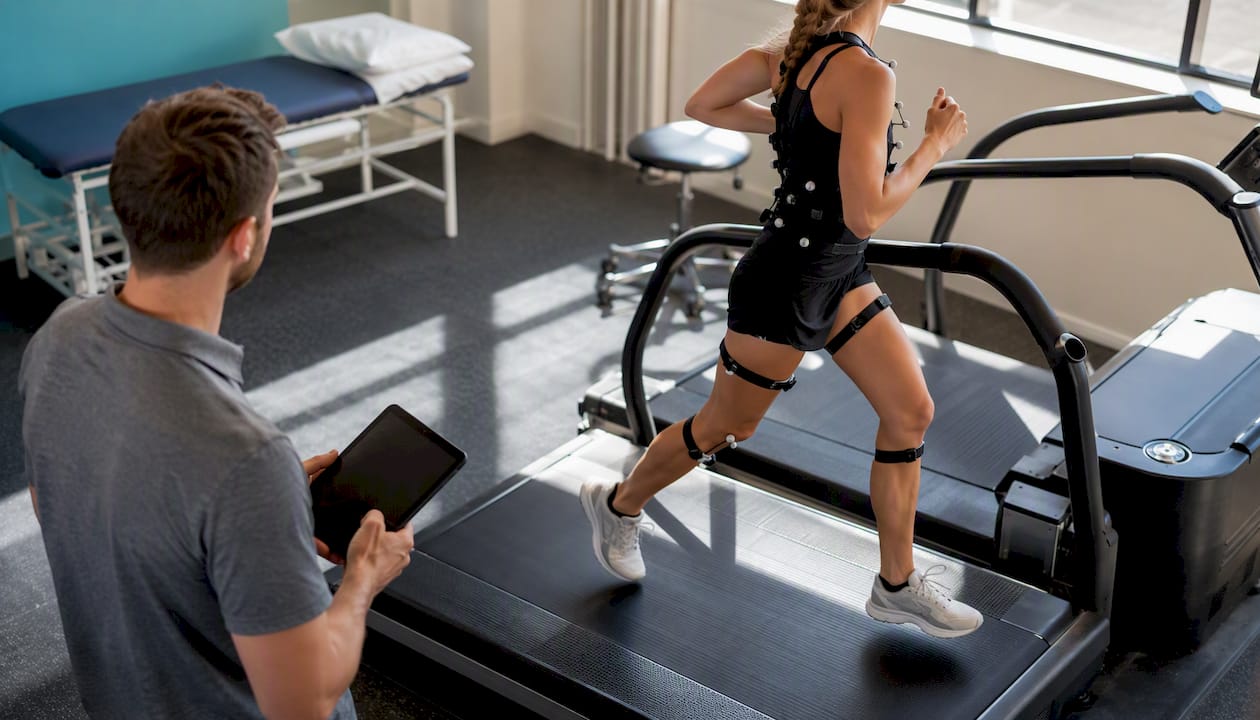
Pro Tip: If you're genuinely struggling with pain during specific movements, ask your clinician about symptom-provocation testing, and whether they capture gait video after you've run for a while rather than fresh out the door. Fatigue changes form, and that's often when the real problem shows up.
How does the RISK framework guide your treatment plan?
Once the assessment is done, the plan needs structure. The RISK framework gives clinicians four decision points, and working through them in order is what actually turns a diagnosis into a recovery plan.
Reduce overall load. Before anything else, your total training stress needs to come down to a level your tissues can tolerate. For a runner with medial tibial stress syndrome, that might mean cutting weekly mileage by a third and swapping some runs for cycling.
Improve capacity. Strengthening and conditioning work targets the specific weakness the assessment found. Patellofemoral pain often responds to targeted hip and quad strengthening rather than generic squats.
Shift loads. Sometimes the fix is redistributing stress across the body, through cues like cadence increases or short-term changes to foot strike, particularly useful for Achilles tendinopathy where reducing peak load on the tendon matters more than avoiding running altogether.
Keep adapting. The plan isn't static. As you progress (or hit a setback), it gets revised against your goals and your tissue's actual response.
Worth flagging: exercise therapy rarely changes your running form instantly. It builds the capacity that lets form improve gradually, which is a different timeline to what most runners expect.
Where does gait retraining actually help?
Gait retraining is a targeted tool, not a standalone fix. It works best when the assessment has already linked a specific kinematic finding, like excessive pelvic drop or overstriding, to your actual symptoms.
Practical uses include:
- Increasing cadence slightly to reduce overstride and impact loading
- Cueing a softer, quieter foot strike as a load-shift strategy for certain tendon issues
- Addressing pelvic drop, which one prospective study on running kinematics found to be a strong predictor among injured runners
The limits matter just as much. There's no solid evidence that changing an uninjured runner's biomechanics prevents future injury, so blanket gait modification for everyone isn't justified. Retraining also adds a new demand to the nervous system, so it needs to be phased in carefully.
Pro Tip: Good clinicians use "faded feedback", cueing changes heavily at first, then backing off the coaching over several sessions so the new pattern becomes automatic rather than something you're consciously forcing.
How long does running rehabilitation usually take?
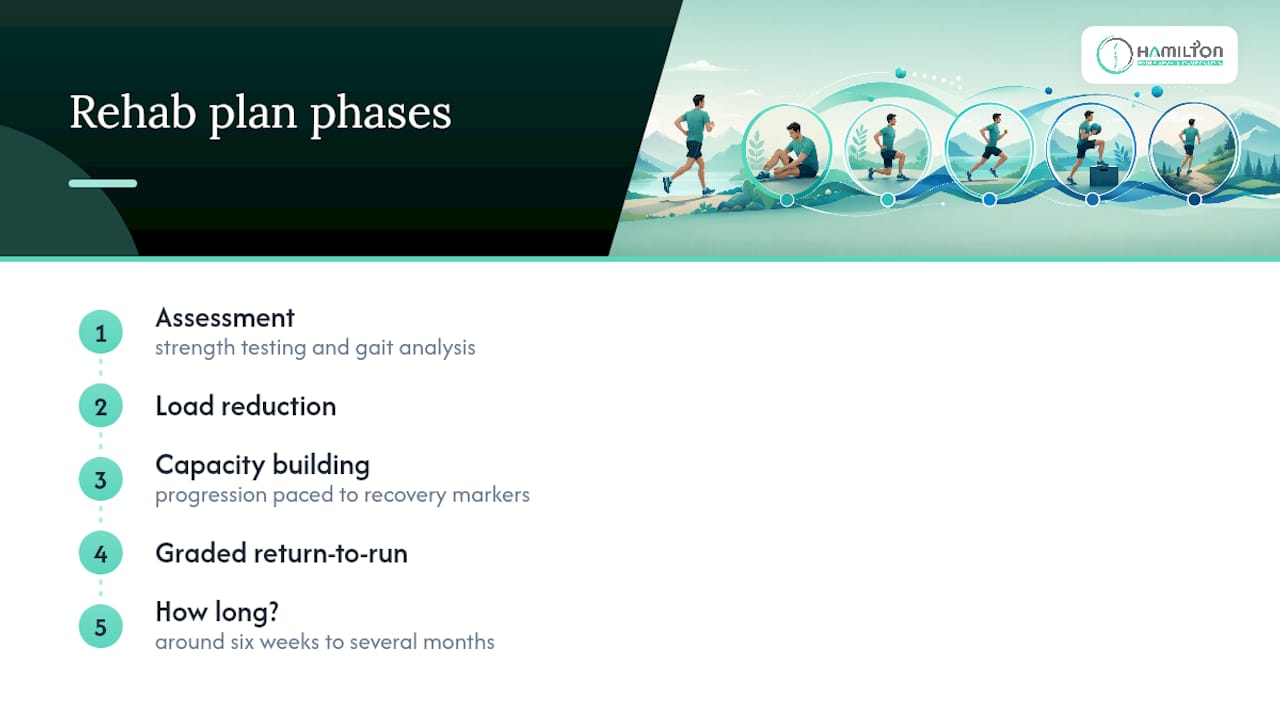
Recovery timelines vary by tissue and severity, but most individualized plans follow a similar shape:
- Assessment and short-term load adjustment (roughly one to two weeks): identifying the problem and reducing aggravating factors
- Capacity building (roughly four to twelve weeks): targeted strengthening, depending on which tissue is involved and how reactive it is
- Graded return-to-run (roughly four to eight weeks): structured reintroduction of running volume and intensity
Progress gets tracked against real markers, not the calendar:
- Pain levels during and after running sessions trending down
- Measurable strength gains on repeat testing
- Consistent running form across video checks
- Ability to complete target sessions without a symptom flare
If those markers stall or reverse, that's a signal to slow down, not push through. Clinical experience consistently shows that rushing load increases is one of the most common ways runners create a second injury on top of the first.
Why do generic rehab programmes often fail runners?
Standardised protocols miss the things that actually determine your recovery: your specific tissue capacity, your individual biomechanics, and what's happening in the rest of your life. A runner following a generic hip-strengthening plan might re-injure not because the exercises were wrong, but because nobody measured their actual training load spikes or accounted for the work stress affecting their recovery capacity.
This is the biopsychosocial gap. Two runners with the same diagnosis can have wildly different recovery paths once you factor in sleep, stress, and life demands. An individualized plan builds in monitoring and accountability around your specifics, not a population average.
How do you choose the right clinician for running rehab?
Look for a few concrete signals before booking:
- Physiotherapy or sports therapy credentials, ideally with specific experience treating runners
- Use of objective measures, such as 2D video gait analysis, rather than opinion alone
- A written, measurable progression plan rather than a vague "see how it goes" approach
- Clear follow-up intervals and defined return-to-run criteria
At your first contact, it's worth asking:
- How do you assess load and capacity before building my plan?
- Do you use faded feedback if gait retraining is part of my care?
- How often will we reassess, and what markers decide when I'm ready to progress?
Be wary of anyone promising an instant fix, prescribing the same gait changes for every runner regardless of assessment, or offering no measurable plan for how you'll progress. For more on what a full rehabilitation pathway looks like, see this guide to sports injury rehabilitation, and for background on load-based strategies, weighted running is worth a read if you're building capacity between sessions.
Clinician perspective: why we prioritise individualised plans
In clinic, the runners who stick with their rehab and actually get back to running well are almost always the ones on a plan built around their own numbers, not a printed sheet. We've seen individualised care using the RISK framework produce steadier recovery than one-size-fits-all exercises, because the plan respects both the tissue and the person carrying it.
Book an individualized rehabilitation plan with Sportsinjurydublin
Sportsinjurydublin builds every plan around your assessment results, not a generic template pulled from a filing cabinet. That means your first session includes a structured history, strength and movement testing, and, where relevant, 2D running gait analysis, so your plan targets what's actually driving your pain.
Treatment follows the RISK framework: reducing aggravating load first, then building capacity, shifting movement patterns where it genuinely helps, and adjusting the plan as you progress or hit setbacks. Whether you need sports rehabilitation for an acute injury or a structured return-to-sport programme after time out, the plan is built from your assessment, not a template.
Ready to find out what's actually going on with your running injury? Book an assessment with Sportsinjurydublin and expect a full history review, physical testing, and a written plan with clear progression markers before you leave.
Frequently asked questions
Should runners use individualized plans instead of generic training programmes? Yes. Individualized plans account for your specific tissue capacity, biomechanics, and life context, factors a generic programme can't measure or adjust for.
What makes custom running training plans more effective for injury recovery? They're built from your own assessment data, including strength testing and gait analysis, so progression is paced against your actual recovery markers rather than a fixed schedule.
How long does an individualized running rehabilitation plan take? Most plans run from around six weeks to several months, depending on tissue involved and severity, moving through load reduction, capacity building, and graded return-to-run phases.
Can gait retraining alone fix a running injury? Rarely on its own. It works best as one part of a broader plan that also addresses load management and strength, and only when assessment ties a specific movement pattern to your symptoms.
What should I ask before starting rehab with a new clinician? Ask how they assess load and capacity, whether they use objective measures like gait video, how often they reassess, and what specific criteria they use to clear you to return to running.
This article is general information, not a substitute for advice from a qualified doctor. Consult a qualified healthcare professional about your own circumstances before acting on anything here.
Sources
- Expert clinical consensus recommending individualised rehabilitation approaches in sports medicine
- An evidence-based videotaped running biomechanics analysis
- Is there a pathological gait associated with common soft tissue running injuries?
- The study of prevalence, management and outcome of musculoskeletal injuries in runners: a comprehensive systematic review