
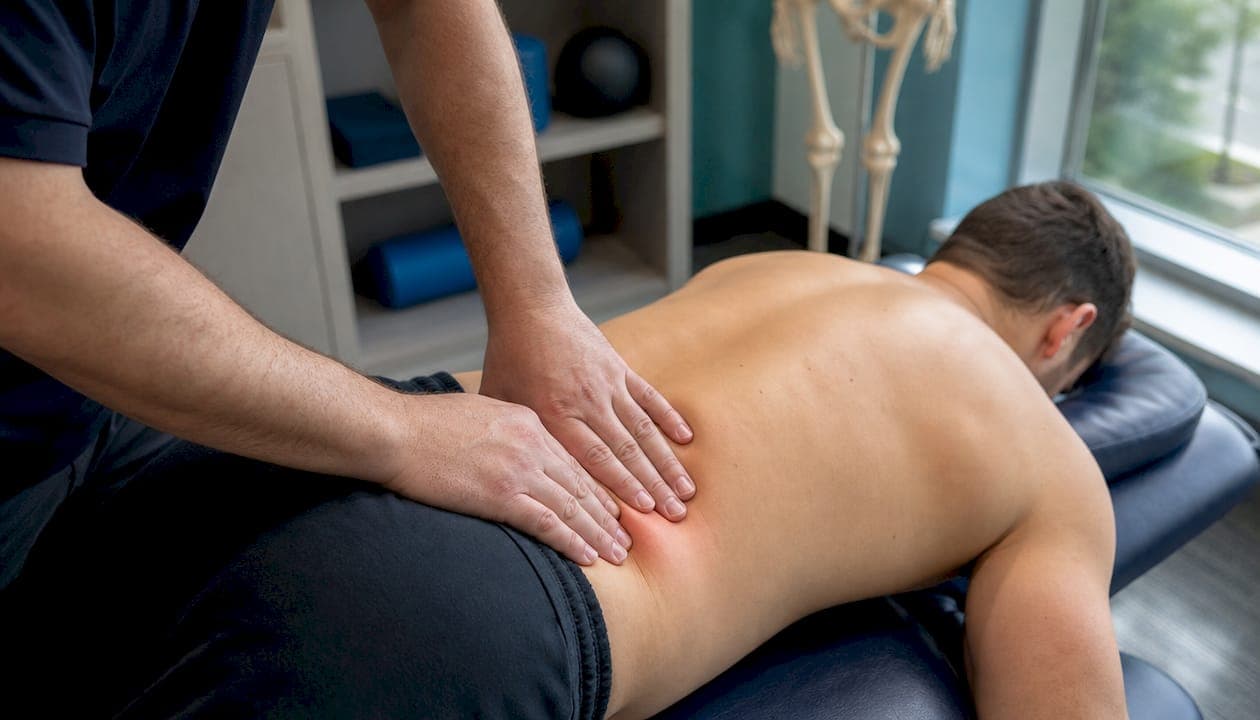
A holistic chronic pain treatment approach is a coordinated, patient-centred programme that treats the biological, psychological and social drivers of persistent pain together, rather than chasing symptoms one at a time. It's not a single therapy. It's a system.
The core elements look like this: graded exercise and rehabilitation, pain education and psychological support, lifestyle optimisation (sleep, stress, nutrition), selected complementary therapies, and someone actually coordinating all of it so you're not just collecting random advice from six different sources.
Three things you can do this week:
- Book a proper coordinated assessment rather than another one-off treatment
- Start a simple graded activity plan, even five minutes counts
- Track your sleep and pain daily for two weeks so you (and whoever's helping you) have real data to work with
Key Takeaways
A holistic chronic pain treatment approach works because it addresses biological, psychological and social drivers together through a coordinated, personalised, and regularly measured plan.
| Point | Details |
|---|---|
| Biopsychosocial model | Treats pain as biological, psychological and social factors interacting, not a single tissue problem. |
| Multidisciplinary beats single-modality | Programmes with two or more professional disciplines show consistently greater gains in pain and function. |
| Movement is the backbone | Graded exercise and exposure rebuild capacity and confidence when dosed correctly, avoiding flare-ups. |
| Passive therapies need pairing | Acupuncture and manual therapy help short-term but require active exercise and education to last. |
| Lifestyle drives outcomes | Sleep, stress and nutrition changes reduce the inflammatory fuel that keeps pain systems active. |
| Personalised coordination | Sportsinjurydublin's Hamilton Pain and Sports Injury Clinic builds individualised, measured plans rather than generic protocols. |
Table of Contents
- What does "holistic" actually mean for chronic pain?
- What are the core components of a holistic pain programme?
- How does graded exercise fit into a holistic pain plan?
- Which psychological therapies genuinely help with chronic pain?
- Do complementary therapies like acupuncture and massage actually work?
- Why do sleep, stress and diet matter so much for pain?
- Does multidisciplinary care actually beat single-modality treatment?
- How is a personalised multimodal plan actually built?
- What results should you expect, and roughly how soon?
- How do you choose a credible pain clinic or programme?
- What does a real personalised pain pathway look like in practice?
- What matters most, in a clinician's honest opinion?
- Ready for a coordinated assessment?
- Frequently asked questions
- Sources
What does "holistic" actually mean for chronic pain?
Here's the bit most people skip past: pain that's stuck around for months or years usually isn't purely a "tissue damage" problem anymore. This is where the biopsychosocial model comes in, and no, it's not just a fancy way of saying "be more positive." It's a clinical framework that recognises pain as the product of three interacting systems: what's happening in your body, what's happening in your mind, and what's happening in your life.
Picture it as three overlapping circles. The biological circle covers things like joint stiffness, old injuries, or inflammation. The psychological circle covers stress, fear of movement, catastrophising ("this pain means something is seriously wrong"), and low mood, which is incredibly common and nothing to be embarrassed about. The social circle covers your job, your sleep environment, your support network, even whether you can afford time off to recover properly.
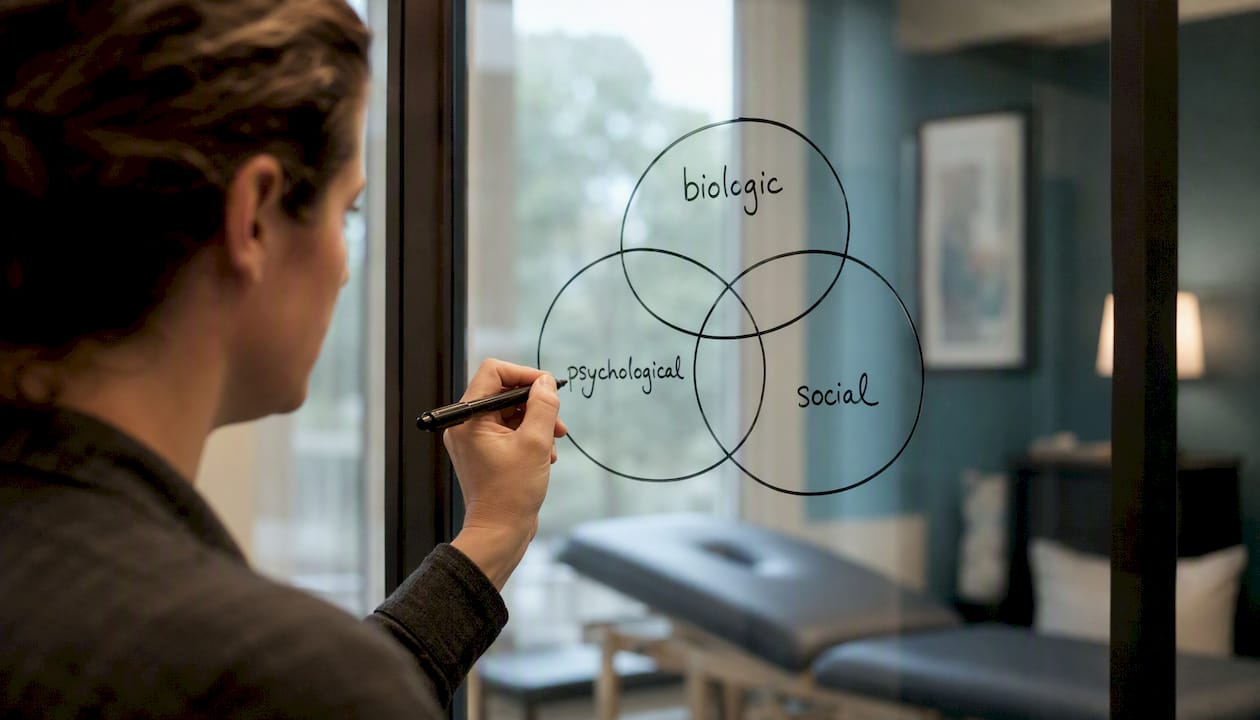
Symptom-only care treats the biological circle and ignores the other two. That's why so many people end up bouncing between treatments that help for a fortnight and then stop working. Comprehensive clinical overviews of chronic pain recommend a genuinely multimodal approach precisely because addressing pain alongside its psychiatric and lifestyle comorbidities produces better outcomes than treating pain in isolation.
Professional pain bodies go further, treating the biopsychosocial model as close to a gold standard, because it's the only framework flexible enough to explain why two people with an identical MRI scan can have wildly different pain experiences. One has supportive colleagues and sleeps well. The other is exhausted, stressed about money, and terrified that moving will "make it worse." Same scan, completely different approach to chronic pain management required.
What are the core components of a holistic pain programme?
You don't need every single one of these on day one. Think of it as a toolkit you build into over time, not a checklist you tick off in a weekend.
- Structured exercise and physiotherapy — rebuilds capacity, confidence, and tolerance to movement
- Pain neuroscience education and psychological therapy — changes how your nervous system interprets and responds to pain signals
- Sleep, stress and nutrition optimisation — removes the fuel that keeps pain systems switched on
- Self-management skills — pacing, goal setting, and flare-up plans you control yourself
- Selected complementary therapies — manual therapy, acupuncture, or massage used strategically, not as a crutch
Each piece does a different job. Exercise rebuilds physical capacity. Education reduces fear and catastrophising. Lifestyle changes reduce the background inflammation and stress that keep the nervous system on high alert. Self-management puts you back in the driver's seat instead of waiting for someone else to fix you.
A good clinician layers these in based on what you actually need, not what's easiest to sell you. Someone with severe sleep disruption and mild deconditioning needs a very different starting point to someone who's physically fit but terrified of bending over.
How does graded exercise fit into a holistic pain plan?
Movement is the engine of most credible pain programmes, and honestly, it's the bit people resist the most. Understandable. If bending down hurts, why on earth would you want to do more of it on purpose?

Graded activity means increasing what you do in small, planned steps rather than either avoiding movement entirely or pushing through until you crash. Graded exposure specifically targets movements or activities you've started avoiding out of fear, gradually reintroducing them at a tolerable level. Cognition-targeted exercise therapy adds a layer on top, pairing movement with education about what's actually happening in your body, so you're not just doing exercises blindly.
A sensible starter plan looks like this:
- Get a baseline assessment from a clinician who actually measures your current function, not just asks "does it hurt?"
- Set two or three graded activity goals tied to things you want to do again (walking the dog for 20 minutes, climbing stairs without gripping the rail)
- Agree frequency and progression with your clinician, usually small increases every one to two weeks
- Review and adjust based on how your body responds, not how you think it "should" respond
Pro Tip: Progress slower than feels necessary. The single biggest reason people abandon graded exposure is pushing too hard too early, getting a flare-up, and concluding "exercise doesn't work for me." It wasn't the exercise. It was the dosing.
Red flags that mean you pause and get urgent assessment rather than pushing through: sudden loss of bladder or bowel control, new numbness or weakness spreading down a limb, unexplained weight loss alongside worsening pain, or pain following a significant trauma. None of that is "normal flare-up" territory. That's a "see someone today" situation.
For readers whose pain is linked to a specific sport or activity, movement-based rehabilitation programmes and structured strength progressions tend to work better than generic exercise sheets, because they respect the actual demands your body needs to return to.
Which psychological therapies genuinely help with chronic pain?
This is the part people are most sceptical about, and fair enough. "Have you tried thinking about it differently?" is one of the most patronising things you can say to someone in pain. But the evidence here isn't about positive thinking. It's about specific, structured techniques that change how your nervous system processes pain signals.
Cognitive behavioural therapy (CBT) targets catastrophising and unhelpful pain-related beliefs, the "this will never get better" thought loops that keep stress hormones elevated and muscles guarded. Pain neuroscience education explains, in plain terms, why pain persists even after tissue has healed, which sounds simple but genuinely reduces fear-driven avoidance once people understand it. Acceptance and commitment therapy (ACT) helps people re-engage with valued activities despite some ongoing discomfort, rather than waiting for pain to hit zero before living again. Mindfulness-based stress reduction (MBSR) targets the stress response directly, and systematic reviews show consistent benefit for pain-related distress and function across a range of chronic pain conditions.
Here's the practical link: pain education isn't just interesting trivia, it's what makes graded exercise possible. Someone who believes "movement equals damage" will never stick with a rehabilitation programme, no matter how well designed it is. Understanding why pain persists, and that it doesn't always mean ongoing harm, is often what unlocks everything else.
You don't need to find a specialist psychologist to start. Structured workbooks, accredited group pain management programmes, and reputable mindfulness apps are a reasonable first step while you arrange more formal support if needed.
Do complementary therapies like acupuncture and massage actually work?
Short answer: yes, but with an important caveat that most clinics won't tell you upfront.
Integrative medicine reviews report that acupuncture and certain manual therapies provide clinically meaningful short-term relief for specific conditions, including chronic low back pain and knee osteoarthritis. Randomised controlled trials back this up for particular pain types, though the strength of evidence varies quite a bit depending on the condition and the specific technique used.
Manual therapy and massage tend to give relief that lasts days rather than months. Acupuncture effects, when they occur, often build over a course of several sessions rather than appearing after one visit. Tai chi and yoga sit somewhere in between; the physical component builds strength and balance over weeks, while the mindfulness component chips away at stress in the background.
Here's how to use these strategically:
- Use manual therapy or massage after a flare-up, or before a big push in your exercise programme, not as your only treatment
- Book acupuncture as a course (typically six to eight sessions) rather than a single trial if you're testing whether it helps you
- Layer tai chi or yoga in once you've got baseline strength and confidence with movement
The caveat: practitioners are consistent that passive treatments alone usually give temporary relief. If a course of massage feels great in the room and you're back to square one within days, that's not a sign massage doesn't work, it's a sign it's being used without the active components (exercise, pacing, education) that make relief stick. Manual therapy paired with an exercise-based programme shows meaningfully better function outcomes than either used alone, which is exactly why coordination matters more than the individual therapy. You can read more on how manual therapy actually reduces pain if you want the mechanism behind it.
Why do sleep, stress and diet matter so much for pain?
This is the section people want to skip, and it's usually the section that moves the needle most.

Recent reviews link poor sleep, chronic stress and unhealthy diet to increased pain sensitivity, largely through raised systemic inflammation and a nervous system that's permanently a bit "switched on." Fix the fuel, and the fire tends to calm down, even without touching the injury site directly.
Practical, boring, effective steps:
- Fix a consistent wake time (even weekends), which does more for pain-related fatigue than a consistent bedtime
- Get 10 minutes of daylight within an hour of waking to anchor your body clock
- Build in one deliberate stress-reduction practice daily, breathing exercises, a short walk, journaling, whatever you'll actually do
- Prioritise whole foods, oily fish, vegetables, and reduce ultra-processed food where realistic, aiming for anti-inflammatory patterns rather than a strict diet
- Cut alcohol on days pain is already elevated; it disrupts sleep architecture even when it feels relaxing at the time
If fatigue and pain feel disproportionate to your activity levels, ask a clinician about screening for micronutrient deficiency (iron, vitamin D and B12 are common culprits). Don't start supplementing blind. Get tested first.
Behavioural targets work best small: "lights off by 11pm four nights this week" beats "fix my sleep." Partner content on load management habits covers similar territory if your pain is linked to training volume rather than general lifestyle drift.
Does multidisciplinary care actually beat single-modality treatment?
Yes, and the evidence gap isn't small. Multidisciplinary programmes that involve at least two healthcare professionals from different backgrounds consistently show significant improvements in pain, function and disability from baseline, compared with single-modality approaches. That's not a marginal edge, it's a fairly consistent finding across the review literature, even accounting for variation between studies.
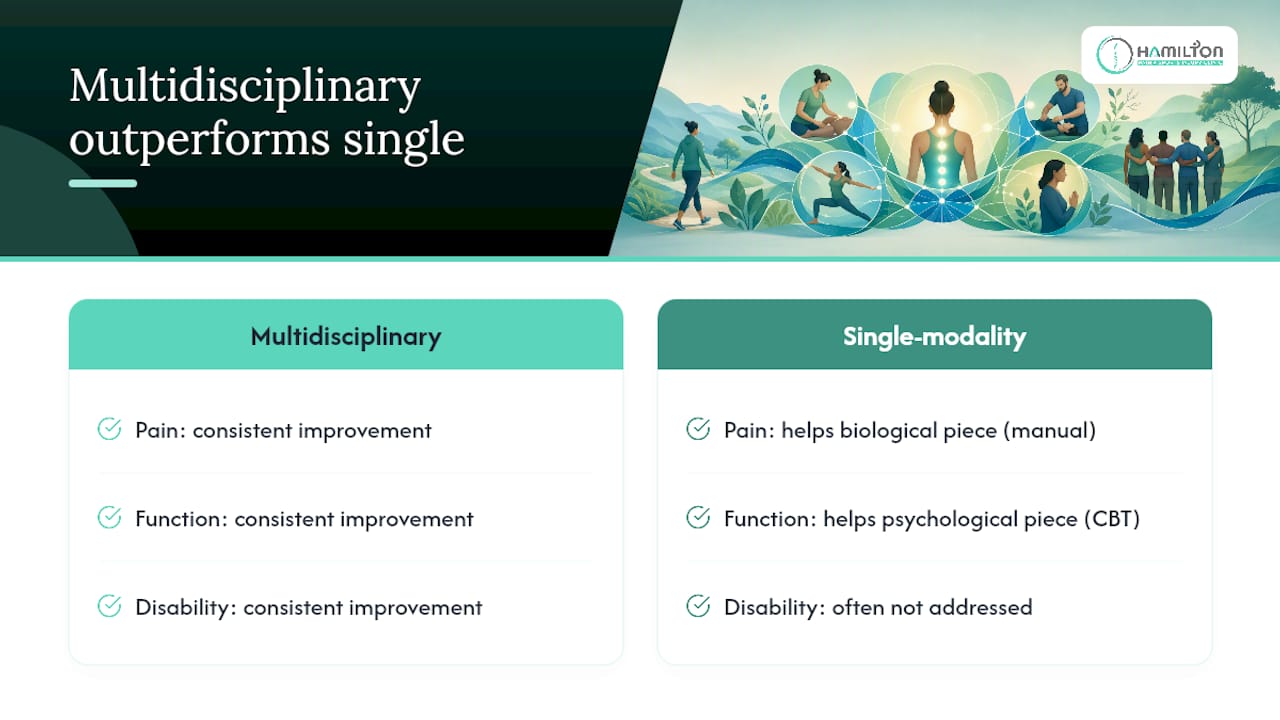
The typical review-level pattern looks like this:
The pattern holds because a single therapy can only address one part of the biopsychosocial picture. Manual therapy alone helps the biological piece. CBT alone helps the psychological piece. Neither, alone, touches the other two.
There's heterogeneity here worth being honest about: not every study measures outcomes the same way, and results vary by condition, programme length, and how well the professionals involved actually coordinate rather than just working in parallel. A practitioner-level analysis makes the point sharply: success depends on genuine integration of movement, psychological support and lifestyle change under one coherent plan, not simply stacking more therapies on top of each other. Uncoordinated "DIY" combinations of therapies without professional oversight can actually slow progress down through conflicting advice and wasted time.
How is a personalised multimodal plan actually built?
Here's the framework worth asking any clinician about, because if they can't answer these steps, that's useful information in itself.
- Comprehensive assessment covering physical function, sleep, stress levels, mood, and what activities matter most to you
- Shared goal-setting, meaning you and the clinician agree on targets together, not a generic protocol handed to you
- Prioritised component list based on what's actually driving your pain most right now, not everything at once
- A measurable plan with specific, trackable targets
- Regular review and adaptation, adjusting components up or down based on how you respond
A sample SMART goal might read: "Walk 20 minutes without needing to stop, three times a week, within six weeks." Specific, measurable, achievable, relevant, time-bound. Compare that to "get fitter," which nobody can actually track.
Your measurement checklist doesn't need to be complicated: function (can you do the thing you couldn't before?), sleep quality, mood, and a simple daily pain diary, even just a number out of ten. This is exactly the kind of tracking a clinic helping you personalise your treatment plan should be doing with you at every review.
Pacing is the part people get wrong most often. If a component isn't showing benefit after a fair trial (typically four to six weeks), drop it or adjust it rather than persisting out of stubbornness. Equally, if something's working, that's your cue to build on it, not switch to the next shiny therapy you read about online.
What results should you expect, and roughly how soon?
Timelines vary by component, and it's worth knowing them so you don't give up on something that's actually working slowly.
- Graded exercise: initial improvements in function typically appear within 4 to 8 weeks of consistent practice
- MBSR and structured psychological programmes: benefits for stress and pain-related distress often show within roughly 8 weeks
- Acupuncture: effects, where present, usually build across a course of several sessions rather than a single visit
- Full multidisciplinary programmes: meaningful, sustained gains in pain and function tend to appear across 3 to 12 months
On cost: clinician-led services (physiotherapy, structured rehabilitation, personal training) are typically billed per session or per programme, while complementary therapies vary widely by provider. Check what your health cover includes locally before committing to a long course of any single therapy.
Red flag worth repeating here: any new numbness, weakness, bladder or bowel changes, or unexplained worsening pain needs urgent medical review, not another round of self-management.
How do you choose a credible pain clinic or programme?
Ask these questions before you book anything expensive:
- Who coordinates my care if I'm seeing more than one professional here?
- What professional backgrounds are actually involved (physiotherapy, psychology, medical)?
- How often will progress be measured, and against what?
- What does a typical review look like, and will the plan change if something isn't working?
Red flags to walk away from: anyone promising a guaranteed cure, programmes built almost entirely around passive treatments (massage, manipulation) with no active exercise or education component, and any push to buy a long, expensive package before you've even had a proper assessment. Genuine clinics assess first, sell later.
Check clinician credentials and, more importantly, ask whether the programme is actually personalised or whether everyone gets the same laminated sheet of exercises. If posture and movement quality are relevant to your case, look for clinics that address posture as part of the whole picture rather than treating it in isolation.
What does a real personalised pain pathway look like in practice?
At Hamilton Pain and Sports Injury Clinic, a first assessment covers movement screening, a detailed history of the pain pattern, and a conversation about sleep, stress and activity levels, not just "where does it hurt?"
A typical anonymised pathway might run something like this: initial assessment identifies deconditioning around a chronically painful knee, alongside significant fear of stairs and running. Weeks one to four combine gentle graded loading with straightforward education about why the knee hurts despite no ongoing structural damage. Weeks five to eight add manual therapy around flare-ups and progressive strength work. By twelve weeks, review shows measurable gains in walking tolerance, reduced fear around stairs, and a self-managed flare-up plan the patient can use independently going forward.
The clinics that get this right measure everything. Not because numbers are magic, but because "I think I'm improving" and "I'm walking 15 minutes further than eight weeks ago" are very different conversations to have with a clinician.
Look for credentials in physiotherapy or sports rehabilitation, and a clear willingness to explain what "progress" means in your specific case, not a generic promise of recovery. You can read further examples of successful recovery pathways if you want to see the range of what personalised planning looks like across different conditions.
What matters most, in a clinician's honest opinion?
Right, my honest take. Most people engage with pain programmes like they're waiting to be fixed, and the ones who actually improve are the ones who show up as active participants from day one. Realistic goals, consistent small effort, genuine engagement with the education piece rather than skipping straight to "just give me the exercises."
Quick reminders that actually help:
- Start smaller than feels necessary, consistency beats intensity every time
- Measure something, anything, so you're not guessing whether it's working
- Show up for the boring weeks; most gains happen after week four, not week one
One more thing worth saying plainly: integrated, holistic care is complementary to good medicine, not a replacement for it. If you need medication or a procedure alongside this approach, that's not a failure of the holistic model. It's exactly how it's supposed to work.
Ready for a coordinated assessment?
Reading about graded exercise and pain education is one thing. Having someone actually map it to your knee, your back, or your shoulder is another. Sportsinjurydublin's whole model is built around individualised assessment rather than handing you the same laminated sheet as everyone else walking through the door, which is precisely the coordination gap this article has spent several thousand words explaining.
A first appointment covers a full movement screen, a proper conversation about your pain history, sleep and stress levels, and a plain-English explanation of what's actually going on, followed by a clear, prioritised set of next steps rather than a vague "let's see how it goes." Bring a short pain diary if you've got one, your current medication list, and any recent scans or investigations, it saves time and means the plan starts from real information rather than guesswork.
Progress gets measured, not assumed, at every review. If your pain is linked to sport or training, the sports rehabilitation service is built specifically for that, while the return to sport rehabilitation pathway focuses on graded confidence-building for anyone easing back into activity. Book an assessment and find out what a genuinely personalised plan looks like for your specific pain.
Frequently asked questions
Is a holistic chronic pain treatment approach the same as alternative medicine? No. It's an evidence-informed, whole-person framework that combines conventional rehabilitation, psychological support and lifestyle change, with complementary therapies used as adjuncts, not a replacement for medical care.
How long before a holistic pain programme shows results? Exercise-based improvements often appear within 4 to 8 weeks, while full multidisciplinary gains typically build across 3 to 12 months, depending on the condition and consistency of engagement.
Can I do a holistic pain approach without a clinic? Some elements (sleep hygiene, basic pacing) can start independently, but coordinating exercise, psychological support and complementary therapies without professional oversight often leads to conflicting advice and slower progress.
Does insurance or health cover pay for holistic pain treatment? Coverage varies significantly by provider and by therapy type. Check your local health cover for what's included before committing to a longer course of any single treatment.
What's the difference between holistic therapy and standard physiotherapy? Standard physiotherapy often focuses primarily on the physical or biological piece, while a holistic approach deliberately layers in psychological, sleep, stress and social factors alongside movement-based rehabilitation.
This article is general information, not a substitute for advice from a qualified doctor. Consult a qualified healthcare professional about your own circumstances before acting on anything here.
Sources
- Chronic pain — StatPearls
- The benefits of integrative medicine in the management of chronic pain (review)
- IASP — Ireland chapter